Want a front in Bishopsworth that feels made rather than assembled? Timber does that well, provided the mouldings are in scale and the joinery is detailed to shed water.
We measure your Bishopsworth opening in person, at a time agreed with you first, so the visit fits around your trading.
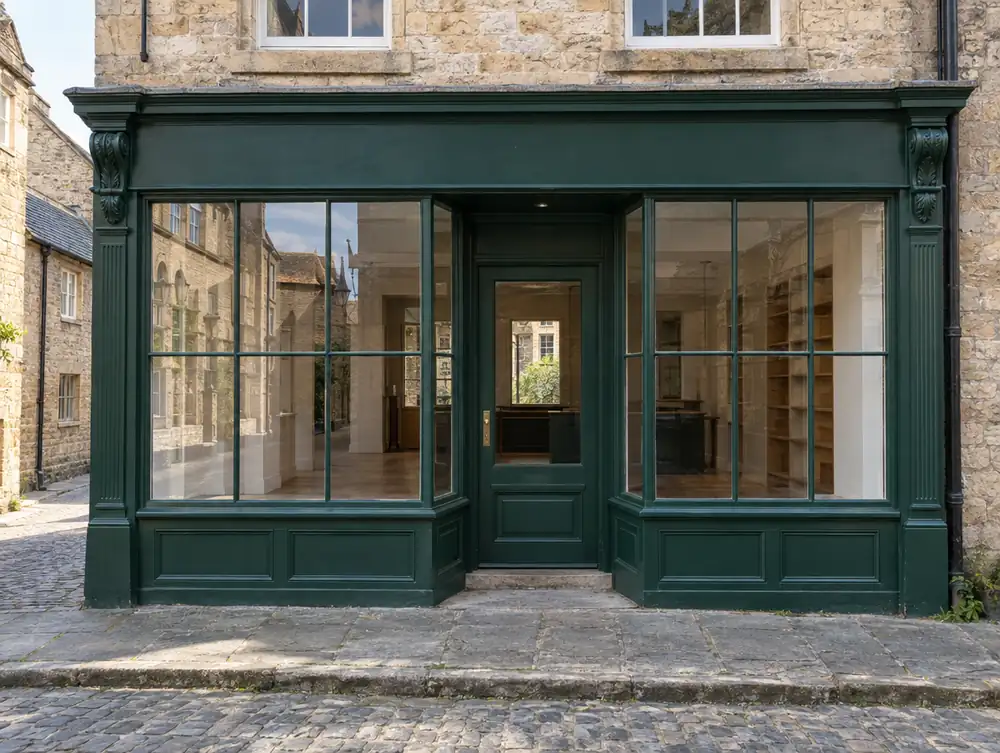
How do you design around the building when planning timber shopfronts in Bishopsworth?
Where a landlord in Bishopsworth has set rules for materials or colour, timber is usually an easy conversation. We'd prepare a drawing and paint reference for approval, and adjust the mouldings if the terms ask for something plainer.
A south or west-facing Bishopsworth frontage is hard on paint. We'd steer you toward a lighter colour or a more stable timber, and if the brand needs a dark finish, we'd plan a shorter repaint interval from the outset.
If you trade after dark in Bishopsworth, the view in matters more than the sign. A warm, evenly lit interior with light on the back wall will usually do more than a brighter fascia, because it gives the eye somewhere to go.
What might timber shopfronts cost in Bishopsworth?
We would budget £3,995 to £13,995 plus VAT for a typical frontage. Scope sets most of the figure, so a clear brief at the start does more for the budget than any later change of detail.
What permissions should you check for timber shopfronts in Bishopsworth?
Security grilles and shutters are named in England's rules: installing or replacing one on a shopfront sits outside the shop permitted development rights. The frontage itself is treated the same way, so for timber shopfronts at premises in the Bishopsworth area, building work that materially affects the appearance needs planning permission. Confirm the position with the council before anything is ordered.
For Bishopsworth, the usual route for planning and advert applications is through Bristol City Council, and we confirm that when we visit.
| Town | Bishopsworth |
|---|---|
| Area | Bristol |
| Postcode districts | BS13, BS14, BS3, BS41 |
| Planning authority | Bristol City Council |
| Building approval | Building Regulations (Approved Documents) |
| Distance from Great Barr | About 84 miles |
| Survey | Free for new work |
Does Bristol City Council publish shopfront guidance?
Yes, Shopfront Guidelines (Policy Advice Note No. 8). It tells applicants what the council expects from new and altered shopfronts. A few of the things it asks for:
- Stallrisers are strongly recommended for security, and can be reinforced with masonry or steel behind a panelled front.
- As a rule of thumb fascia depth is one-fifth of shopfront height, and a fascia should not span more than one property.
- External shutters are not suitable for listed buildings, shutters should preferably be internal in conservation areas, and housings should not project beyond fascias.
Questions about timber shopfronts in Bishopsworth
Can you fit a timber front around existing tiles in Bishopsworth?
Often, yes, and it's usually worth trying. If your stallriser or entrance has good original tile, we'd measure it carefully and scribe the new joinery to it.
Can you copy a timber shopfront I've seen in Bristol?
We can work from your photo and borrow what makes it succeed, including proportions, moulding sizes and colour. The front is then drawn to your own Bishopsworth opening.
Is timber a sensible choice for my Bishopsworth frontage?
Usually, if you're happy with a repaint every 5 to 7 years. A survey shows how exposed the front is and whether the structure behind it is sound, and we'll tell you if aluminium would serve you better.
Does a new shopfront in the Bishopsworth area need Building Regulations approval?
Assume yes until building control says otherwise. England has no like-for-like exemption, though registered installers can self-certify replacement windows and doors in non-dwellings. That route doesn't cover structural glass, curtain walling or revolving doors.
Does the Equality Act apply to a shop entrance in the Bishopsworth area?
Yes. The Equality Act 2010 applies in England, as across Great Britain, and it requires reasonable steps to remove, alter or avoid physical features that disadvantage disabled people. The duty is anticipatory, so it looks at disabled people generally, and a new Services Code replaced the 2011 Code on 5 August 2026.