An aluminium shopfront is a glazed frontage built from extruded aluminium sections, holding the display glass, entrance door, stallriser and fascia in one framed assembly. It suits retailers, restaurants and landlords who want slim lines, a hard-wearing coated finish and a front that asks for little upkeep.
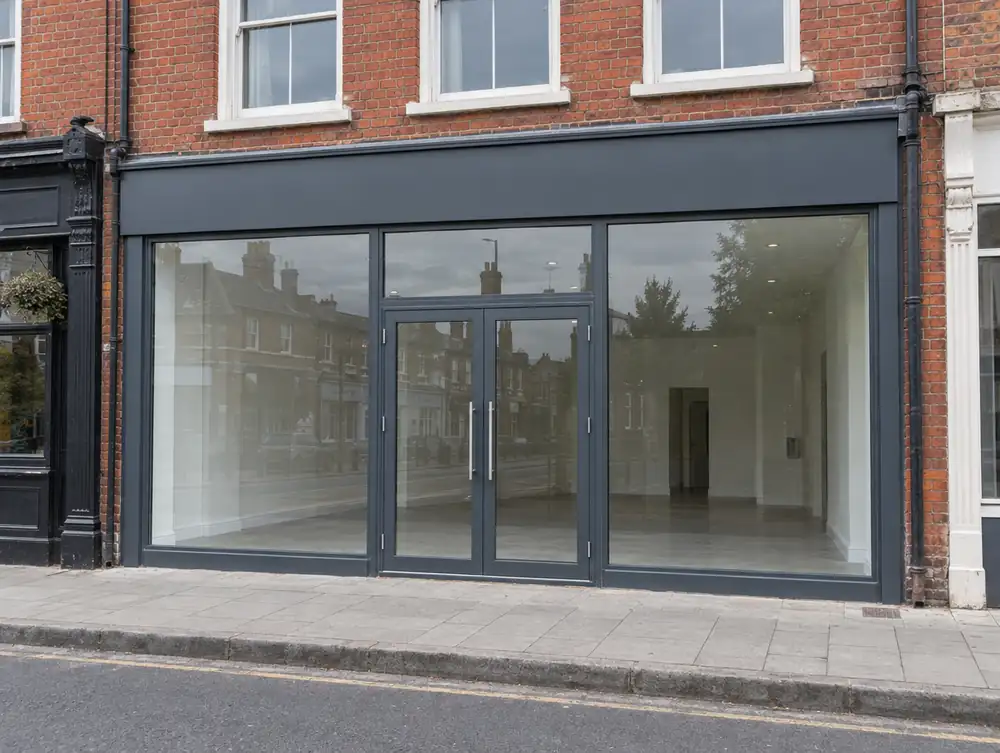
| Frame | Extruded aluminium box sections, typically 45 to 65mm face width and 100 to 150mm deep, thermally broken where double glazing is specified |
|---|---|
| Glass | 10.8mm or 11.5mm laminated to display panes, 10mm toughened to doors, double-glazed units on request |
| Finish | Polyester powder coat in any RAL colour, or anodised, in matt, satin or textured sheens |
| Door | Single or pair, on a floor spring or overhead closer to BS EN 1154 |
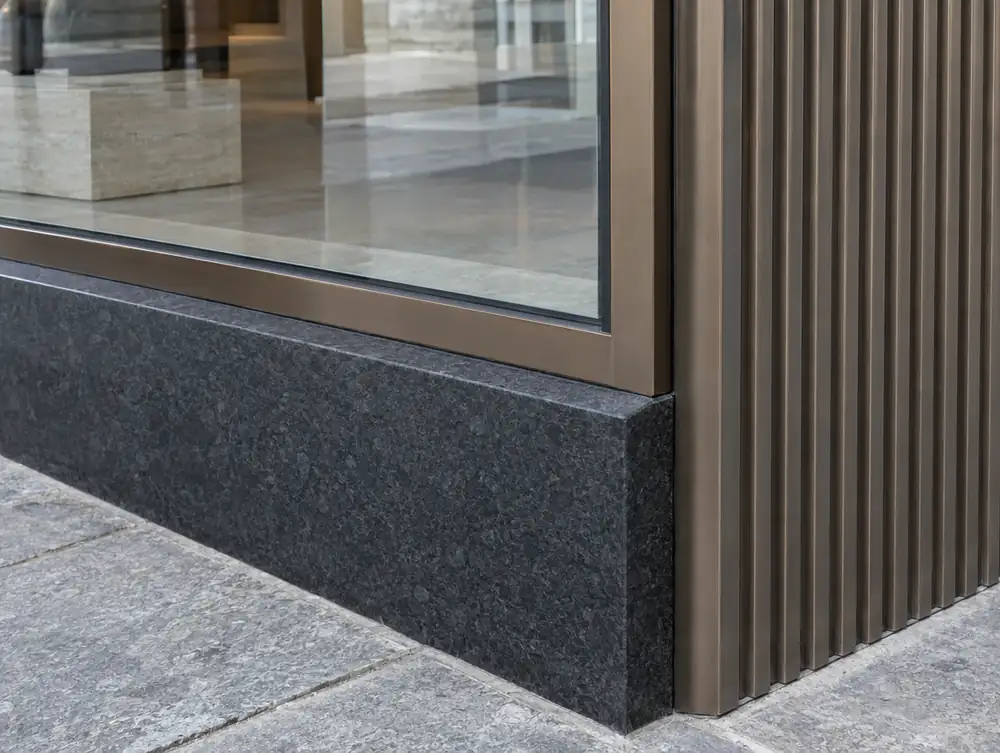
| Stallriser and fascia | Aluminium composite, brick slip, tile or stone stallriser, with a folded aluminium or composite fascia tray |
| Typical lead time | Typically 2 to 4 weeks to fabricate after drawings are signed off, then 1 to 5 days on site |
| Designed to meet | BS EN 14351-1 for windows, doorsets and screens, and BS EN 12600 for the glass, with glass certificates supplied where that applies |
| Comes with | Free measured survey, scale drawings, itemised quotation and a 10-year workmanship guarantee on the written terms in the quotation |
What makes an aluminium shopfront look expensive?
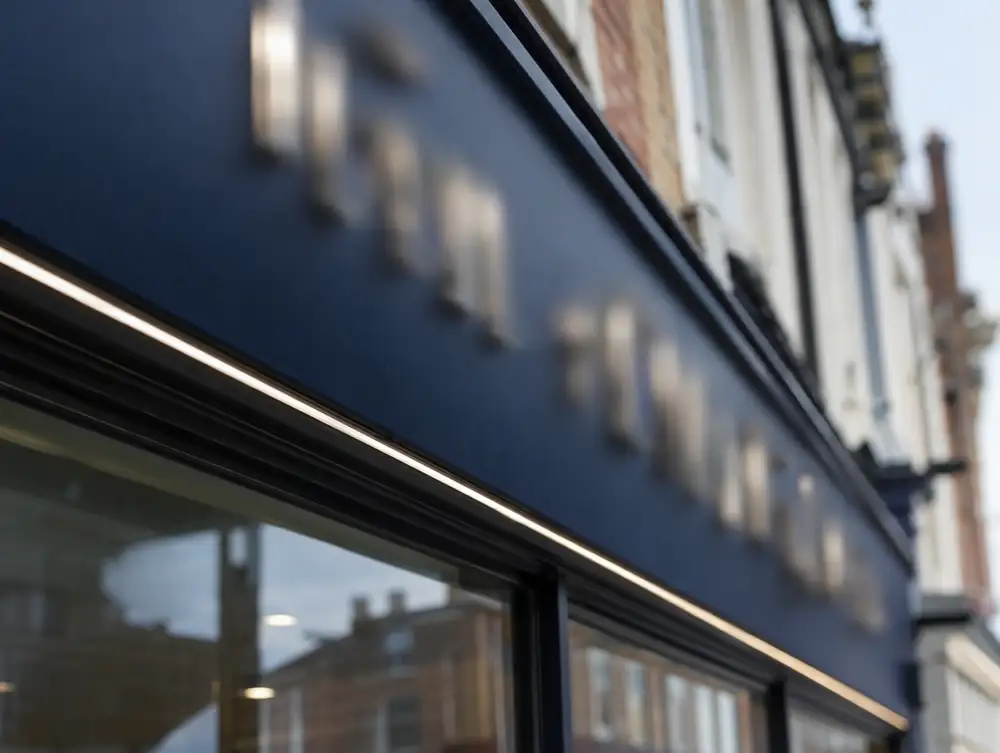
Proportion does most of the work. Two fronts can share the same extrusion and look nothing alike, because the eye reads stallriser height, fascia depth and mullion spacing long before it reads the metal.
We design from the building down. Mullions line up with the piers or upper windows where we can, the fascia stays shallow enough to leave any cornice visible, and the stallriser is set by the pavement and what you display. Most frontages settle at 450 to 600mm, but the drawing decides, and you sign off those dimensions before anything is ordered.
- Sightlines: a 50mm face reads far lighter than a 75mm one, and matching the door stiles to the frame stops the entrance looking like an afterthought.
- Glass line: set back 50 to 100mm from the pier face, the frame picks up a shadow in evening light. Set flush, the whole front goes flat.
- Head and cill: bury the head in the fascia and drop the cill behind the stallriser capping, and the glass appears to run edge to edge.
Where do aluminium shopfronts go wrong?
Most problems start behind the frame, where nobody looked. Take off an old fascia and you may find a timber beam with wet rot, or a steel with nothing to fix to, and a new front is only as straight as whatever it hangs from. Older boxed soffits can also contain asbestos cement, so we ask for a survey before strip-out.
Pavement fall catches people out next. A 1 in 40 slope across a 6m frontage drops 150mm, so the stallriser has to taper or step, or the door ends up with a ramp nobody drew. We take levels at both ends during the measure-up and draw the taper in from the start.
Water is the quiet one. Frames drain through weep slots in the cill section, and those slots vanish when a stallriser is tiled tight or a sealant bead runs across them. Trapped water then finds the fixings and appears indoors, where the glass usually gets the blame.
Which glass goes in an aluminium shopfront?
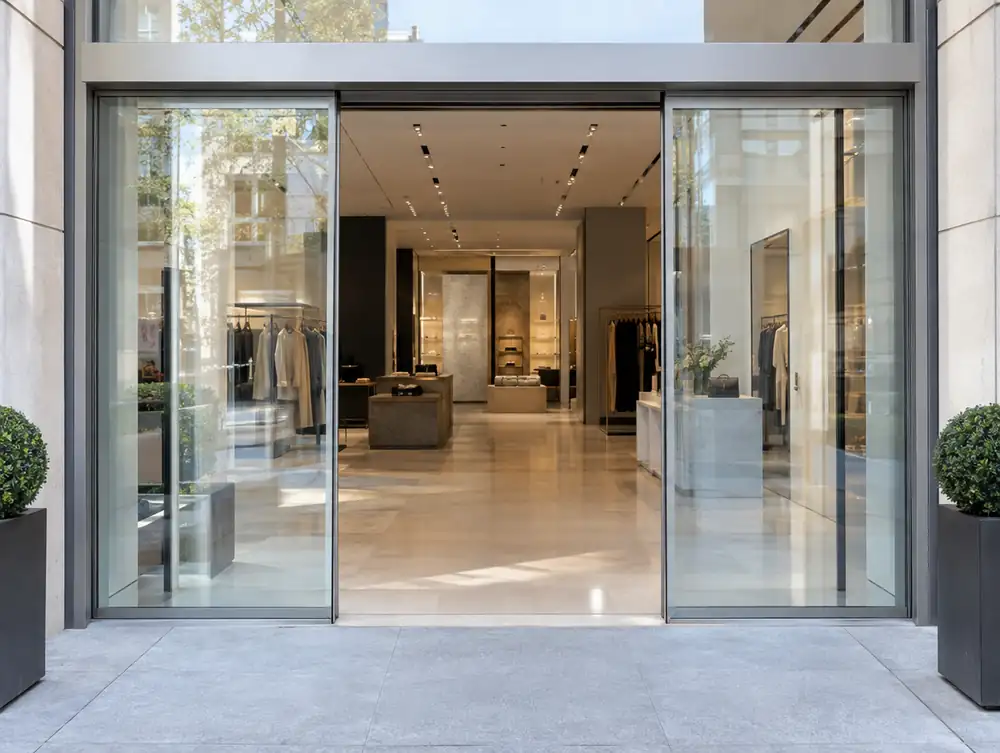
Laminated glass is the usual choice for display panes, with toughened glass in and around doors. A laminated pane stays in the frame when struck, held by its interlayer, so a break does not leave the shop open. Toughened glass resists a harder knock but falls out in small pieces when it goes, so it makes more sense in a door than across a window full of stock.
Single glazing is still normal on display panes. England's Approved Document L sets no maximum U-value for display windows, while pedestrian doors have a 1.6 W/m²K limit and high-usage entrance doors 3.0. Double-glazed units need a deeper, thermally broken section and add weight, so decide early: the frame depth changes, and the reveal changes with it.
What does an aluminium shopfront cost to look after?
Very little beyond cleaning and door adjustment. Wash the frames with mild detergent two to four times a year, and more often near the sea or a main road, because salt and traffic film sit on the coating and slowly dull it.
Door gear is where the real money goes. A floor spring or closer on a busy entrance needs checking every year, and seals and lock keeps wear out long before the frame does. Scratches in powder coat can be touched in, though a repair that matches from the pavement can still show at arm's length.
Qualicoat is the quality label for coatings on architectural aluminium, and Qualanod is the equivalent for anodising. If your landlord or architect names either one, ask to see the coater's current licence.
Which options can you choose from?
Standard box section
A framed grid with face widths around 50 to 65mm. Durable and straightforward, and the natural fit for parades and landlord fit-outs.
Slim sightline section
Narrower faces and concealed beads, so the frame recedes and the glass takes over. Pane sizes need more care to keep the front stiff.
Thermally broken section
A two-part section joined by an insulating strip, needed for double-glazed fronts. Expect a deeper frame and a higher price.
Slim steel-look frame
Thin black aluminium with applied glazing bars, giving the feel of an old steel screen at a fraction of the weight.
Flush-glazed front
Glass bonded to the frame with no external cap, for a smooth face with only fine joints showing.
Integrated shutter box
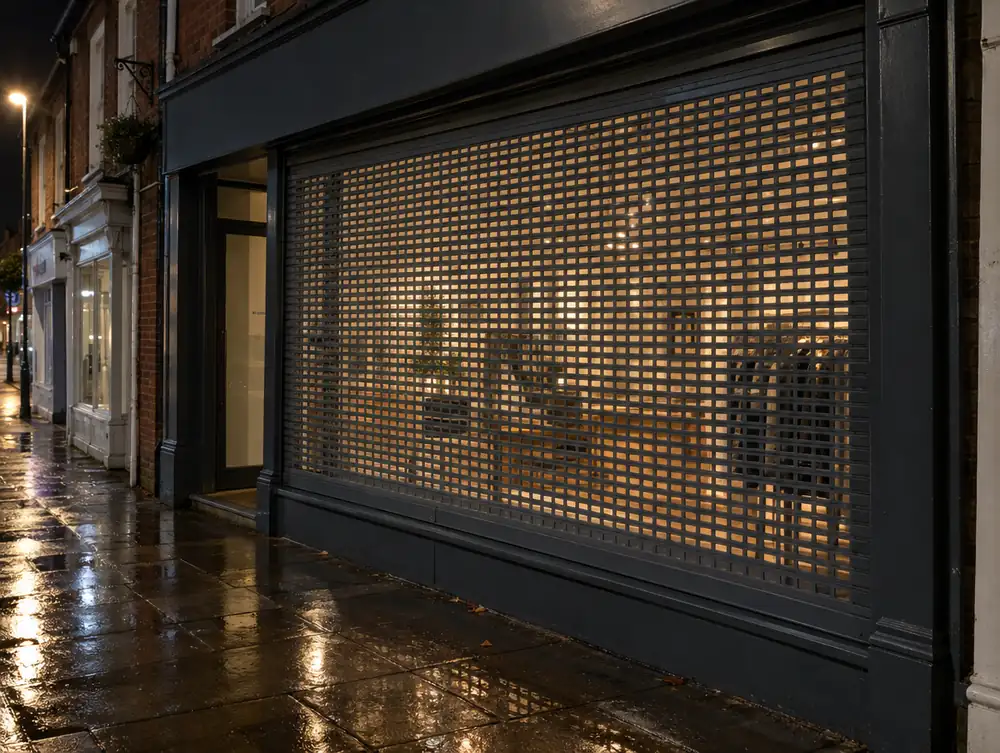
A perforated shutter housed behind the fascia and drawn in from the first sketch, so the box never sits proud of the frame.
How much does it cost?
Guide price: £2,495 to £11,995 plus VAT for a typical 3 to 7 m frontage. This is a budget figure, and your free survey gives you the real one.
Work out a guide price or see all our prices.
Common questions
How much does an aluminium shopfront cost?
An aluminium shopfront costs £2,495 to £11,995 plus VAT for a typical 3 to 7 m frontage. Width, glass type, the door and whether a sign and shutter are included move the figure most. Your own price comes from a measured survey, and the itemised quotation holds for 90 days.
How long does a new aluminium shopfront take?
Typically 2 to 4 weeks of fabrication after drawings are signed off, then 1 to 5 days on site. If the work needs consent, allow a further 4 to 8 weeks before that. Glass orders and surprises behind the old fascia are the usual causes of delay.
Do I need planning permission for an aluminium shopfront?
Usually yes, if the new front materially affects the appearance of the building, and swapping timber for aluminium normally will. We found no permitted development route for changing a shopfront in any nation, while a true like-for-like replacement usually needs no application. Your council confirms the position for the address.
Does a like-for-like replacement avoid Building Regulations?
Not automatically. England and Wales have no like-for-like exemption, so assume the work is notifiable unless building control says otherwise. Scotland needs no warrant for a door or window replaced with its frame, though the standards still apply and altering a wall or structure usually does need one. In Northern Ireland, expect a full plans application for a shop and check with Building Control.
How often does an aluminium shopfront need maintenance?
Clean it two to four times a year and have the door gear checked annually. Exposed sites near the sea or heavy traffic need cleaning more often. Frames never need painting, so the real upkeep is seals, closers and locks.
Can you match an existing colour or profile?
Colour, yes, in nearly every case, since powder coat covers the RAL range and a sample can be matched. Profile matching depends on which extrusions exist, so on a partial replacement we compare sections at survey and tell you how close it will get.
Is aluminium or timber right for my shopfront?
Aluminium makes sense where you want slim frames, large panes and low upkeep, and timber where the building calls for mouldings and depth. A coated frame holds its finish longer, while timber can be repaired and repainted for decades. On a listed building or in a conservation area the council may expect timber, so check before you settle on a section.