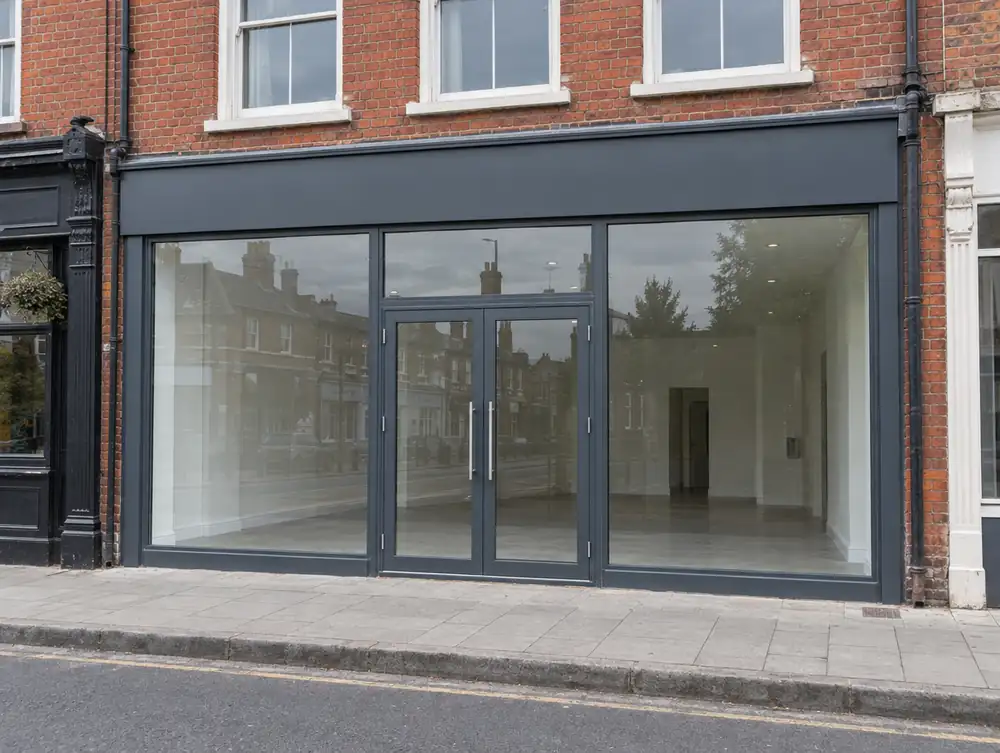
A fascia sign is the horizontal sign band above a shop window and door, carrying the business name. It suits any shop, restaurant, salon or showroom that wants to be read from across the street without shouting at the building.
| Panel materials | Aluminium composite 3 to 4mm, folded aluminium tray, painted hardwood or cast acrylic, finished in powder coat, vinyl or signwriter's enamel |
|---|---|
| Lettering | Flat-cut acrylic or aluminium 5 to 10mm thick, built-up metal letters 30 to 100mm deep, vinyl or hand painting |
| Typical fascia depth | Usually 400 to 700mm, set by the pilasters, the glass line and the first-floor sill |
| Letter size | Letters usually fill around 60% of the fascia depth, leaving a clear margin above and below |
| Fixings | Stainless fixings into a sound subframe, with slotted holes to allow for thermal movement |
| Rules designed around | The advertisement regulations for your nation, including height and letter limits for unlit signs |
| Typical lead time | Typically 2 to 4 weeks from approved artwork |
| Comes with | Measured survey, scale drawing on your elevation, removal of the old sign and making good |
How deep should a shop fascia be?
Most fascias look right at 400 to 700mm, and a useful check is about one-fifth of the total shopfront height. Anything deeper starts to press down on the glass and cuts across the building above.
The building sets the limits. A fascia should stop below the first-floor sill, sit between the pilasters and leave any cornice or corbels clear. If a past tenant has boxed out a deep fascia across them, taking it back can do more for the frontage than any sign.
Which fascia sign type suits my shop?
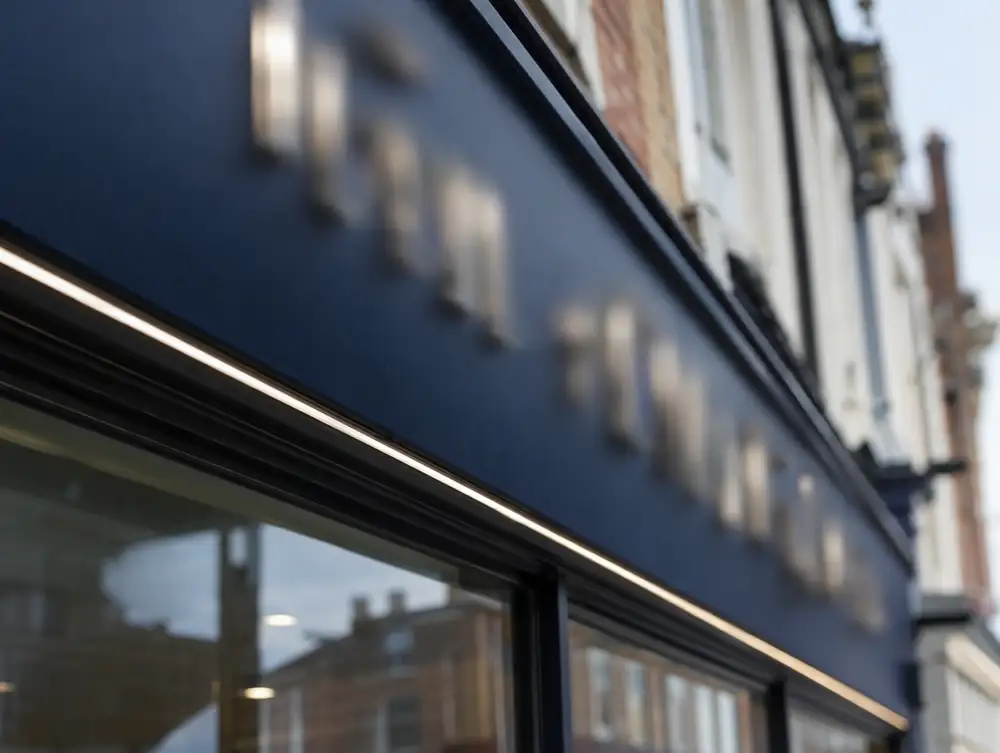
Built-up letters on a plain panel suit most premium frontages, because each letter casts its own shadow and the name gains depth without extra colour. The other routes each have a place.
- Flat-cut letters are crisper than vinyl and sit lower in cost than built-up metal.
- Hand-painted timber is the natural choice for a period frontage, and a good signwriter adds character no cutter can.
- A recessed tray with letters pushed through gives a very clean, architectural line.
- Printed composite panels suit short leases and complex artwork, and they show their age soonest.
Do I need advertisement consent for a fascia sign?
Often not for a modest unlit sign, because each UK nation allows some shop signs within set limits, but those limits differ. On a shop they only cover a wall containing a shop window, and lit signs fall under separate, tighter classes. Displaying an advert without consent is a criminal offence, so ask your council to confirm the position before the sign goes up.
Replacing the fascia itself can be a planning matter too. For the sign alone, these are the limits for unlit signs:
- England and Wales: Class 5 tops out at 4.6m, or the first-floor sill if lower, and 3.6m in special control areas.
- England: letters may reach 0.75m, or 0.3m in special control areas.
- Scotland: Class IV(1) stops at 4.6m or first-floor level, 3.6m in special control areas, with the same letter limits as England.
- Northern Ireland: Class 5 stops at 5m, or the first-floor sill if lower, with letters up to 0.3m.
Where do fascia signs go wrong?
Overcladding causes the most damage. A new panel screwed over the old fascia adds depth, traps water and hides whatever is rotting behind it, so we strip back to the subframe. Fixings are only as good as what they land in.
Heat is the quieter failure. A dark 6m composite panel can move 6 to 7mm between a cold night and a hot afternoon, and tight fixings make it bow until the reflection of the street goes wavy. Slotted holes and open joints let it move. Lettering fails differently: a name set too large leaves no margin, and the sign ends up reading like a banner.
What does a fascia sign cost to maintain?
Very little for metal and composite, beyond a wash at least twice a year. Printed faces are the exception, as vinyl typically lasts 5 to 7 years outdoors before reds and yellows start to fade, so budget for a new face if you choose one. Painted timber typically needs a fresh coat on a similar cycle, and a signwriter can touch up the lettering at the same visit.
Look at the top edge each spring, because that is where water gets in. A failed flashing costs little to fix early and a great deal once the subframe has gone soft.
Which options can you choose from?
Built-up metal letters
Fabricated letters stand proud of a plain panel and cast real shadow. They suit premium brands and take halo lighting later if the panel is prepared for it.
Flat-cut letters
Letters cut from aluminium or acrylic, pinned off the panel on short locators. Clean and sharp, at a lower cost than built-up work.
Hand-painted timber
Signwriter's enamel on a painted hardwood fascia, with gilding if you want it. It suits period frontages and can be repainted when the name changes.
Recessed tray
A folded aluminium tray with letters set into the face. It reads as part of the architecture and hides fixings and cables.
Printed panel
Direct print or vinyl on composite. It handles complex artwork and short leases well, and it has the shortest life outdoors.
How much does it cost?
Guide price: £395 to £1,995 plus VAT per sign. This is a budget figure, and your free survey gives you the real one.
Work out a guide price or see all our prices.
Common questions
How much does a fascia sign cost?
Fascia signs typically cost £395 to £1,995 plus VAT per sign. Length, lettering type and any repair to the fascia behind set the final figure. The quotation itemises removal, making good and access, so you can compare it fairly with others.
How long does a new fascia sign take?
Manufacture typically takes 2 to 4 weeks from approved artwork, and fitting usually takes a day. Artwork can add a week or two if a logo needs redrawing. Out-of-hours or closed-day installation can be arranged.
Does a fascia sign need advertisement consent?
It depends on size, height, position and lighting. A modest unlit sign on a shop often falls within the limits for your nation, while a sign in a conservation area or special control area needs a closer look. Your council can confirm, and displaying an advert without consent is a criminal offence.
How do I look after a fascia sign?
Wash it with mild detergent and a soft cloth, and avoid abrasive pads on vinyl or painted faces. Check the fixings and top edge at the same visit, ideally in spring. Built-up metal letters usually outlast the paint on the panel behind them.
Can my existing fascia be reused?
Often, yes, if the structure is sound and the proportions work. We check for soft timber, failed flashing and old fixing holes at survey. A sound fascia can be repainted or faced with a new panel, which keeps cost down.
How big should the letters on a shop sign be?
Usually about 60% of the fascia depth, which leaves a margin that lets the name breathe. A 250mm letter reads comfortably across most streets. Long names need a smaller size or a second line, and we test both on a scale drawing.
Can a fascia sign hide a shutter box?
Yes, if it is designed in. A shutter box is typically 200 to 300mm deep, so the fascia has to sit forward of it or the box has to move behind the structure. Adding one later usually spoils the proportions.