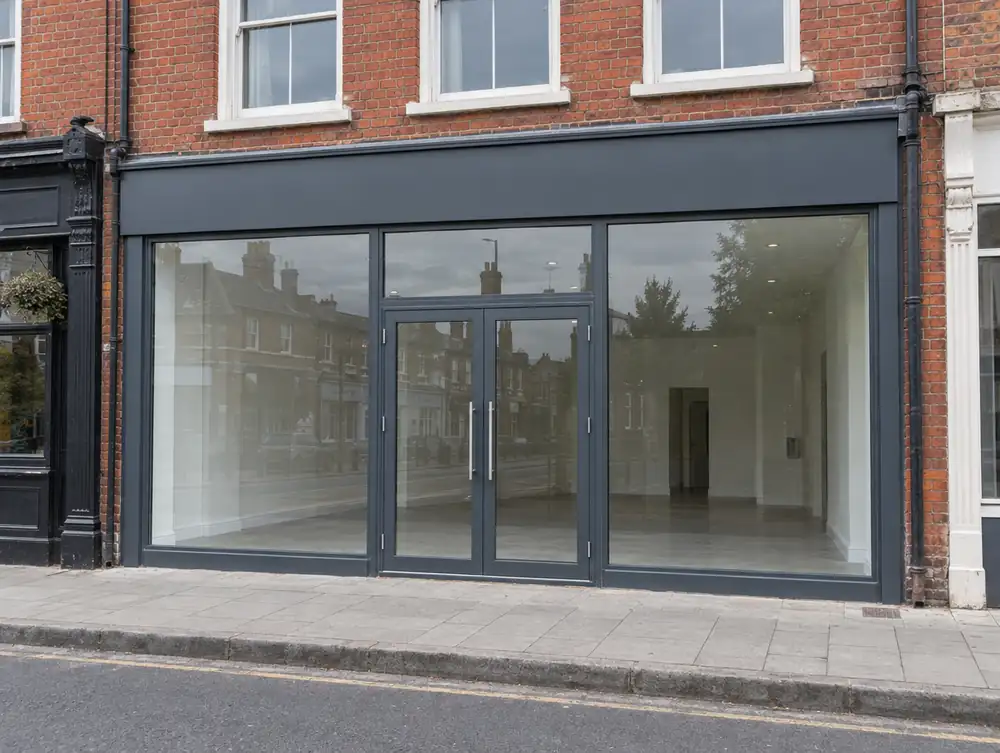
A bronze or metal shopfront uses architectural bronze, brass, stainless steel or blackened steel as the visible frame, fascia and door finish, usually as a fine metal skin over an engineered subframe. It suits jewellers, flagship stores, hotels and banks that want a frontage with real weight and are happy to budget for it.
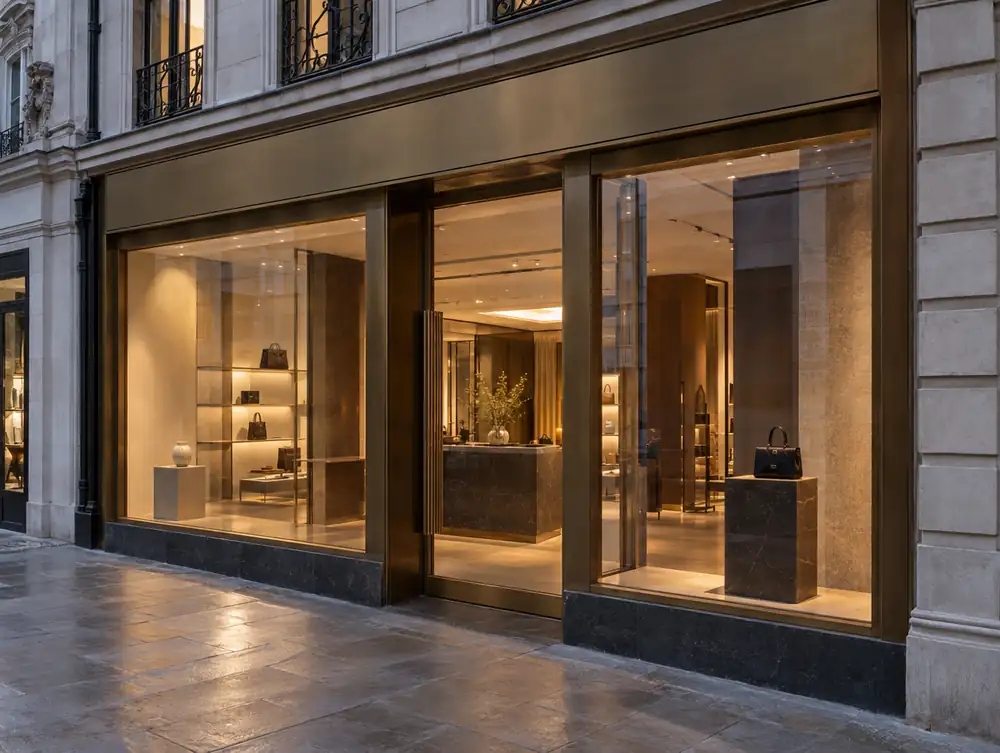
| Metals | Architectural bronze, brass, grade 316 stainless steel, blackened or patinated steel, bronze-tone anodised aluminium |
|---|---|
| Construction | Folded or extruded metal skin, typically 1.5 to 3mm thick, on an aluminium or steel subframe |
| Finishes | Brushed, satin, mirror, patinated, waxed or lacquered, with PVD colour available on stainless steel |
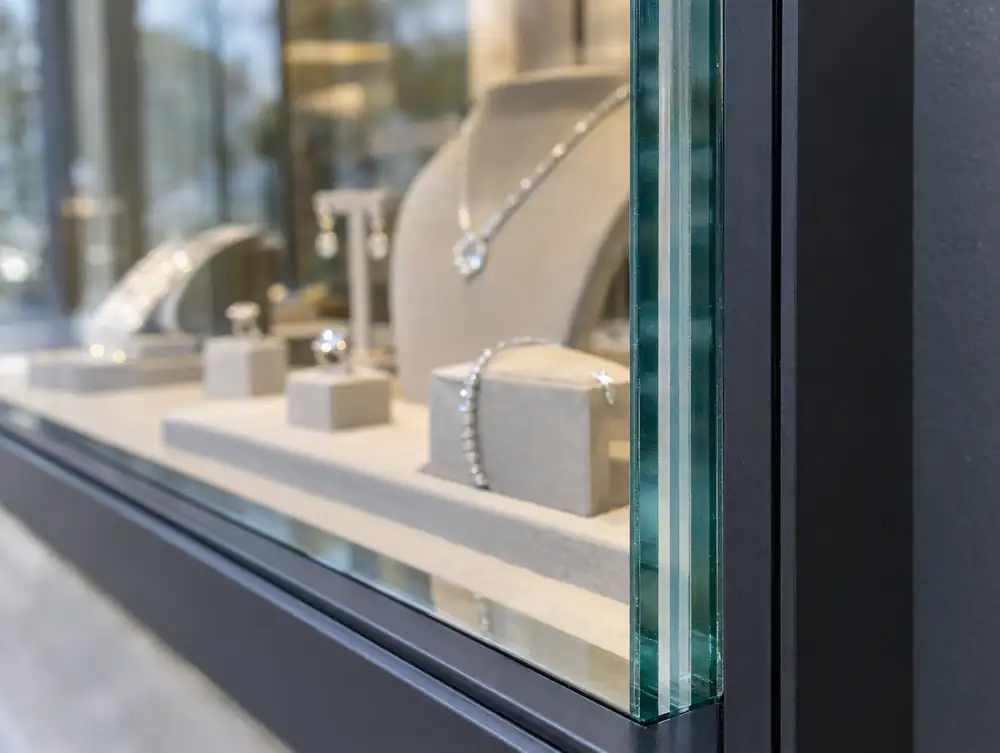
| Glass | 11.5mm laminated or toughened laminated panes, low-iron where interior colour matters |
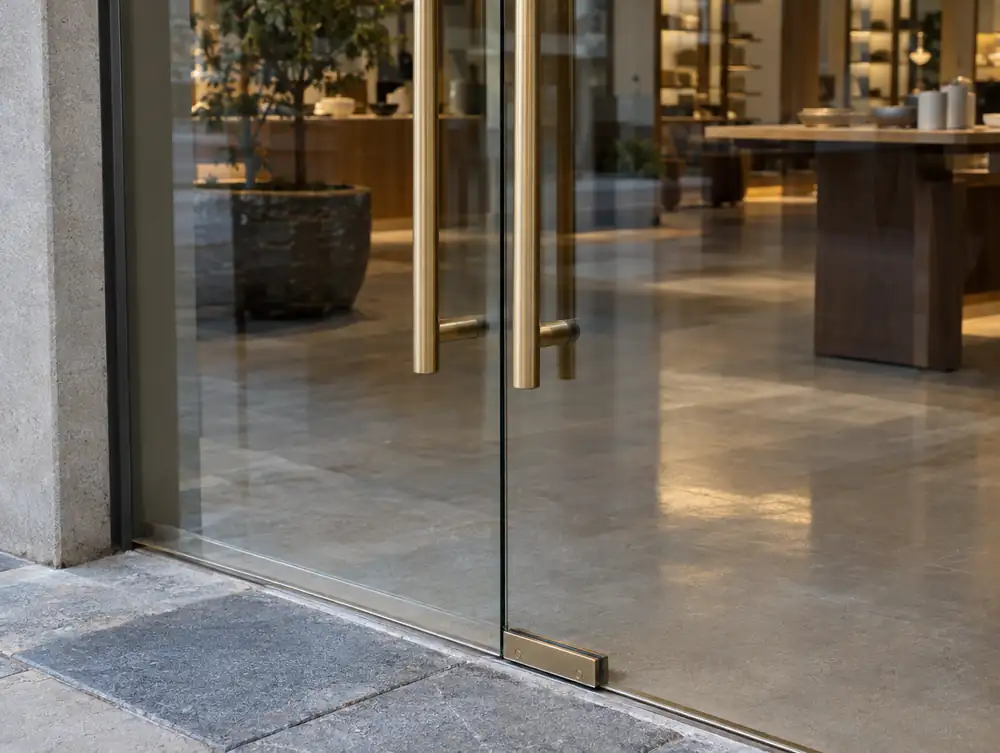
| Door furniture | Full-height pull handles, concealed locks and floor springs to BS EN 1154 |
| Typical lead time | Typically 8 to 14 weeks after samples and drawings are approved, then 3 to 7 days on site |
| Designed to meet | BS EN 14351-1 for screens and doorsets and BS EN 12600 for the glass. Qualanod is the quality label to ask about on anodised work |
| Comes with | Free measured survey, finish samples before ordering, scale drawings and a 10-year workmanship guarantee on the quotation's written terms |
What is the difference between bronze and a bronze finish?
Real bronze is a copper alloy that changes colour as it ages, while a bronze finish is a coating that stays as it was on day one. Both can look right. A real metal skin has depth and returns light softly, and it asks for regular care. Bronze-tone anodising or PVD holds its colour for years with less upkeep, at a lower price.
Very few bronze fronts are solid. A 2mm folded skin over an aluminium or steel subframe gives the same face at a fraction of the weight, and lets the glass, seals and drainage work like any modern front.
How do you design a metal shopfront so it feels permanent?
Use fewer lines than you think, keep them thin and let the material do the work. A 40mm bronze mullion with a tight shadow gap looks richer than a wide panel, because the eye reads precision as value.
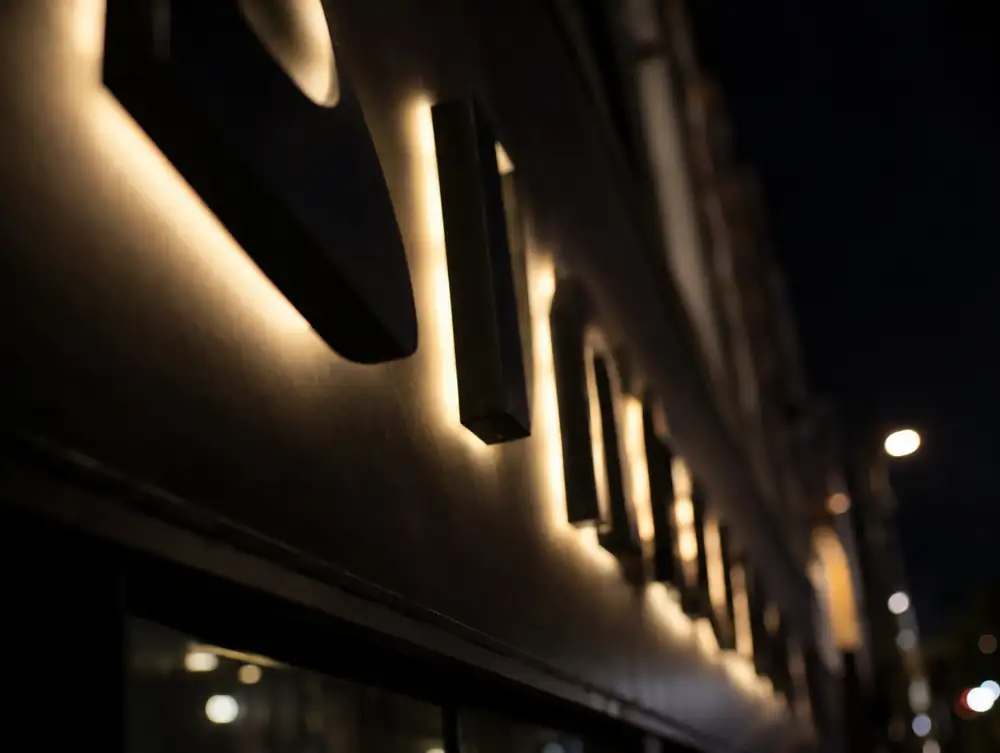
- Fascia: a flat metal band with set-back letters suits bronze better than a deep box. Keep the folds sharp and the returns deep enough to hide the fixings.
- Stallriser: low and solid, in metal or dark stone, so kicks and mop water meet something that can take them.
- Grain: brushed finishes run in one direction. Decide on vertical or horizontal at drawing stage and carry it across every joint.
- Reveal: a small shadow gap where metal meets masonry lets the building stay out of true without showing it.
Where do metal shopfronts go wrong?
Galvanic corrosion comes first. Bronze or copper touching aluminium or ordinary steel in rainwater will slowly eat the less noble metal, so every junction needs an isolating layer and every fixing needs the right grade. Near the coast this happens faster, and grade 316 stainless should be the minimum for anything exposed.
Colour mismatch comes next, and it surprises even experienced specifiers. Anodising takes differently on extruded sections and on sheet, because the alloys differ, so a frame and fascia from one order can come back in two shades. We approve samples from both forms before ordering, and we keep each front to one batch.
Hands leave their mark as well. On a live, unlacquered finish, door pulls polish bright where people touch them while the rest darkens. Some clients love that. If you don't, choose lacquer, knowing that it fails in patches and has to be stripped back rather than touched in.
What does a bronze or metal front cost to maintain?
Budget for more care than aluminium, and for a named person to give it. How much depends on the metal:
- Live bronze and brass: clean, then wax or oil every 6 to 12 months to keep the colour even.
- Stainless steel: rinse and wipe quarterly, more often near the sea, to keep brown tea-staining away.
- Blackened steel: wax yearly, and watch cut edges and fixings for rust.
- PVD and anodised finishes: mild detergent only, as harsh cleaners can mark the surface.
- Every metal: keep steel wool and abrasive pads away, because steel particles lodge in the surface and rust there.
Which options can you choose from?
Living bronze
Unlacquered bronze that darkens and deepens with age. The richest finish, and the most hands-on to keep.
Lacquered bronze or brass
A clear coat holds the colour for several years. Touch points wear first, and renewal means stripping back.
Bronze-tone anodised aluminium
An anodised finish that stays even and needs little upkeep, for long runs where budget matters.
PVD-coated stainless steel
A hard coloured layer on stainless, in bronze, champagne or black tones, with very good wear at door pulls.
Blackened steel
A dark, slightly uneven surface with a workshop character. It needs waxing, and it should stay out of constant wet.
Brushed stainless steel
Clean and hard-wearing, in grade 316 near the coast. It suits modern fronts and banks.
How much does it cost?
Guide price: £7,995 to £24,995 plus VAT for a typical frontage. This is a budget figure, and your free survey gives you the real one.
Work out a guide price or see all our prices.
Common questions
How much does a bronze shopfront cost?
A bronze or metal shopfront costs £7,995 to £24,995 plus VAT for a typical frontage. Real bronze and brass sit at the upper end, while bronze-tone anodising or PVD on stainless costs less for a similar look. Finish samples come before the order, so you can weigh the difference on your own elevation.
How long does a metal shopfront take?
Typically 8 to 14 weeks of making once samples and drawings are approved, plus 3 to 7 days on site. Sample approval is often the longest stage, because the finish has to be judged in daylight. If consent applies, allow 4 to 8 weeks or more before ordering.
Does a bronze shopfront need planning permission?
Usually, because a new metal front materially affects how the building looks, and no nation offers a permitted development route. The council will judge the design and materials, so samples and good drawings help. A change on a listed building will also need a conversation about listed building consent.
How often does a bronze shopfront need maintaining?
Clean and wax live bronze every 6 to 12 months. Lacquered or coated finishes need only a gentle wash, though lacquer has to be stripped and renewed when it starts to fail. Put a named person or contractor in charge, as an irregular routine shows up quickly as patchy colour.
Is it real bronze or a coating?
That is your choice, and the quotation will state which. Real bronze is usually a fine skin over a subframe, and a coating such as anodising or PVD gives a similar colour with less upkeep. Ask to see both at the survey, since the difference is easy to see side by side.
Can metal shopfronts be used near the sea?
Yes, with the right grades. Grade 316 stainless fixings, well-isolated junctions and a shorter cleaning cycle all matter on a coastal site. Blackened steel is the one to avoid, because salt finds any break in the wax.
Can you match a finish on existing doors or fittings?
Usually to within a close tone, but rarely exactly on an aged metal. We take a sample from the existing piece and make up new finishes to compare it in place. Where a true match is impossible, we'd separate old and new with a joint or a change of plane so the difference looks deliberate.