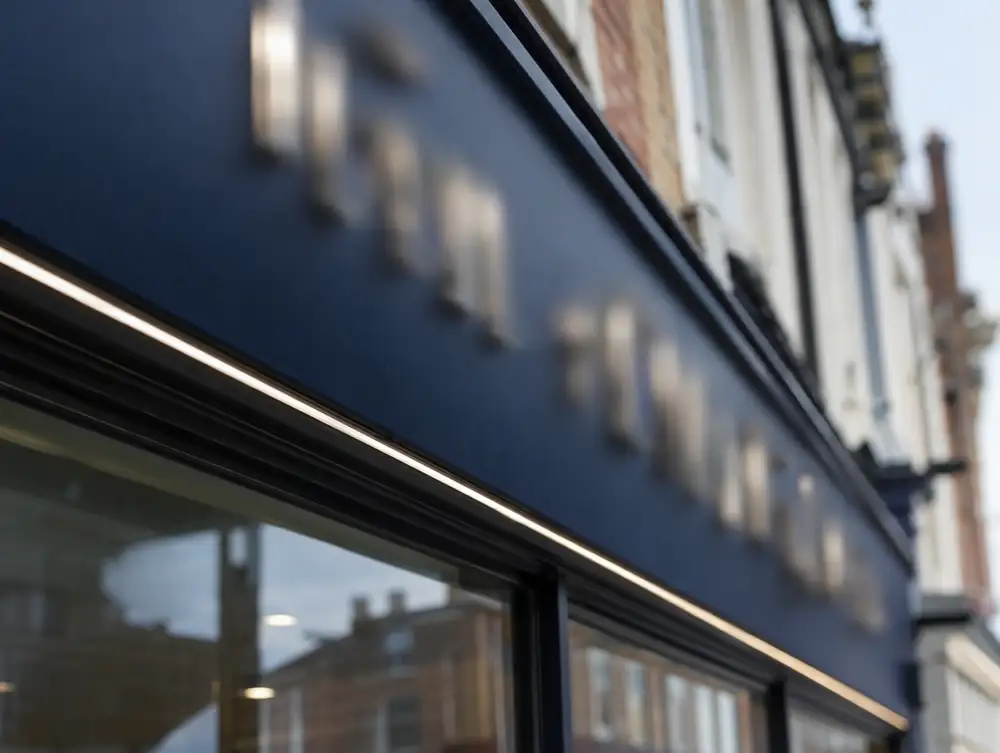
Illuminated signage is a shop sign lit by LEDs, placed behind the letters, inside them or in a slim lamp above them. It suits restaurants, bars, salons and late-opening shops that trade after dark and want the name to read as clearly at night as it does by day.
| Types | Halo-lit built-up letters, face-lit letters, trough lights, externally lit panels and lightboxes |
|---|---|
| Letter build | Stainless or aluminium letters with 50 to 100mm returns, with 5mm opal acrylic faces on face-lit types |
| Halo stand-off | Typically 25 to 40mm from the panel, set by testing the glow on your background |
| Light source | LED modules, usually 3000K warm white or 4000K neutral white |
| Power | Low-voltage LED drivers in a reachable, ventilated position, run from a timer or photocell |
| Brightness reference | England's lit-sign class sets 600 cd/m² up to 10m² and 300 above, and other nations differ |
| Typical lead time | Typically 3 to 5 weeks from approved artwork |
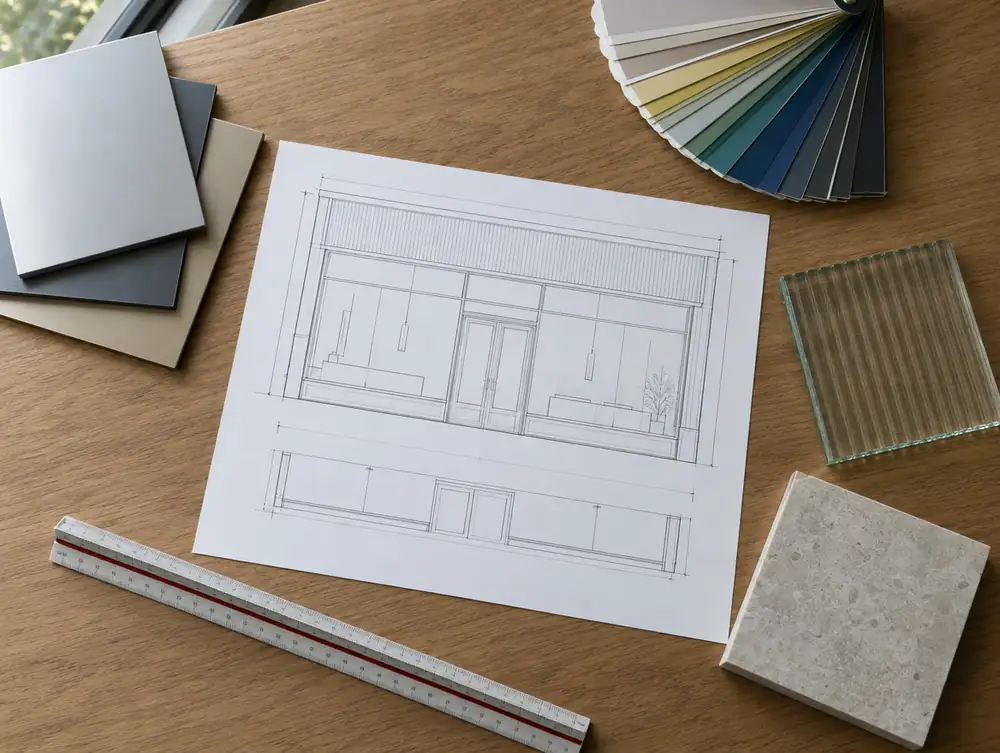
| Comes with | Measured survey, scale drawings, low-voltage wiring and testing, with the final connection made by a qualified electrician |
Which illuminated sign looks right on a shopfront?
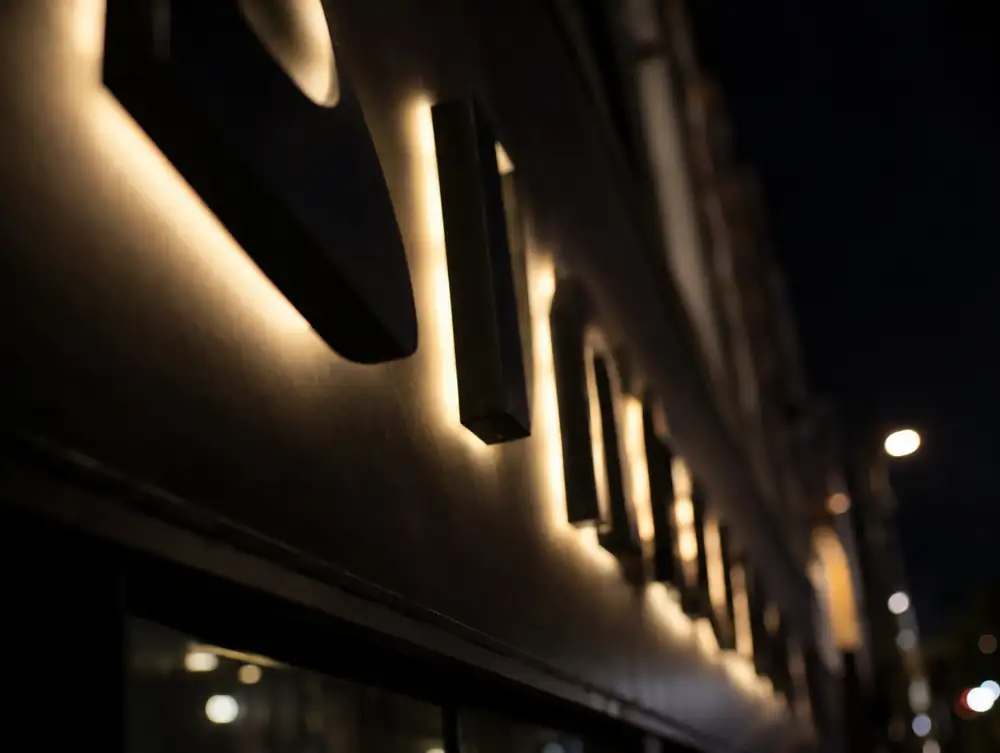
Halo-lit letters usually look the most considered, because the light falls on the panel behind while the letter itself stays dark. That reads as architecture more than advertising, and it flatters a premium brand.
- Face-lit letters are brighter and easier to read at distance, which helps a late-opening shop on a wide road.
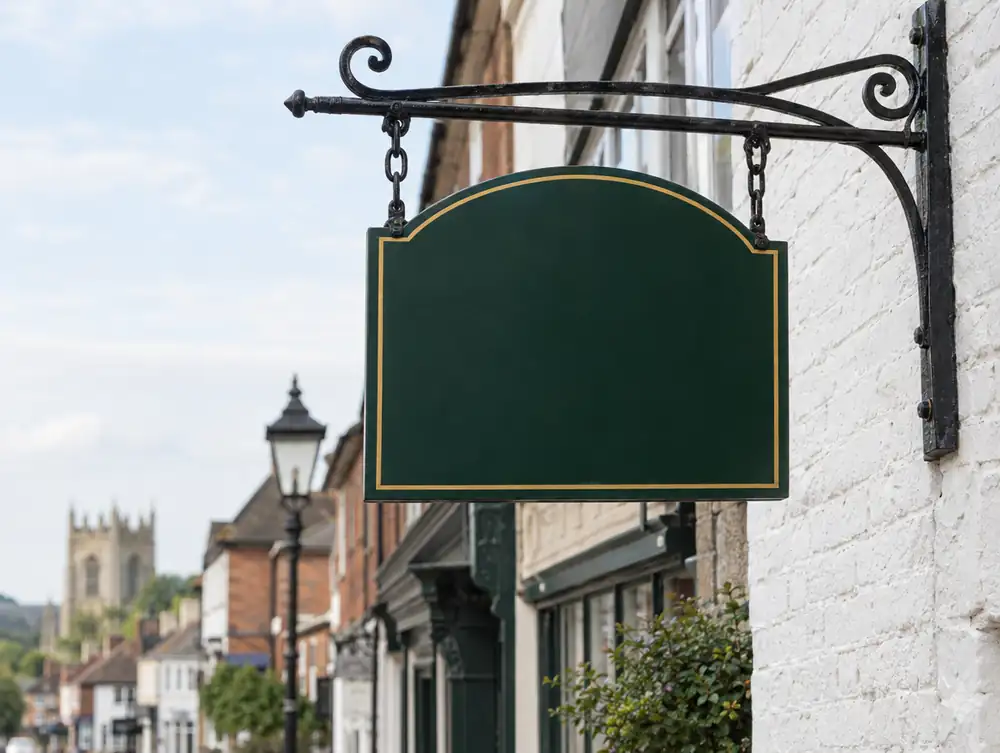
- A slim trough light above a painted sign suits timber and period frontages, and it keeps the sign's daytime character.
- Lightboxes make the whole panel glow. They are hard to justify on a premium frontage, and they fall outside the narrower consent classes.
Do illuminated signs need advertisement consent?
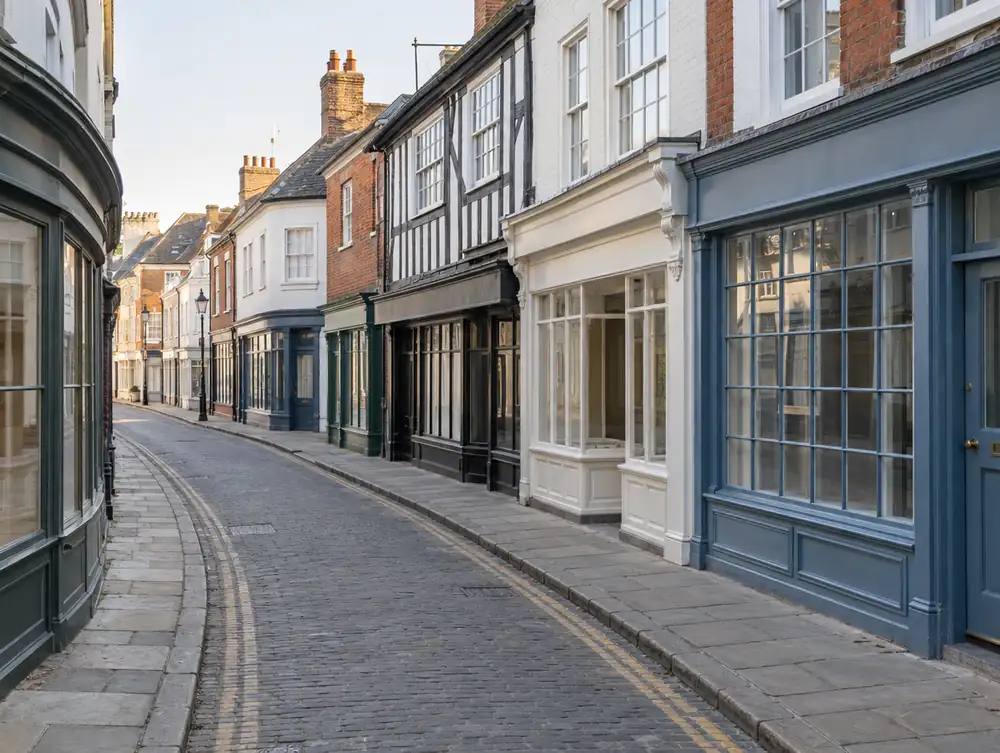
Often, and the limits are much tighter than for unlit signs. Each UK nation has a class for some lit shop signs, but it is unavailable in conservation areas, and in special control areas in England and Scotland.
- England and Wales: Class 4B covers halo or character-only lighting that is static, with the lowest part at least 2.5m up. Areas of Outstanding Natural Beauty, National Parks and the Broads are also excluded in England.
- Scotland: Class VI needs each character lit from within, at least 2.5m up, with no more than 0.25m projection, and static.
- Northern Ireland: Class 4(2) covers static halo or character-only lighting at least 2.5m up, and it excludes Areas of Outstanding Natural Beauty and National Parks as well.
How bright should a shop sign be?
Bright enough to read from the far pavement and no brighter, which is well below what modern LEDs can produce. Warm white at 3000K suits timber, brick and hospitality, while 4000K sits better with stainless steel and cooler brands.
Background matters as much as output. Halo light needs a matt, mid-toned surface to glow against, and on a gloss black fascia it nearly vanishes while the LEDs reflect in the paint. We test a sample letter on your finish before committing. If bedrooms sit above or opposite, a timer that dims or switches off late in the evening keeps the peace.
Where do illuminated signs go wrong?
Hot spots are the commonest fault. If LEDs sit too close to the face of a letter you see a row of dots, so letter depth has to suit the module spacing. Water comes second, as each letter needs small weep holes at its lowest point, or condensation collects and kills the modules.
Buried drivers cost the most later. A driver will fail long before the LEDs do, so we place it where someone can reach it without cutting a panel. LED batches also drift, and a single module replaced years later can leave one letter a slightly different white. Ask for a few spare modules from the original batch and keep them dry.
What does an illuminated sign cost to run?
Electricity is the smallest cost. A 100W sign on for eight hours a day uses about 290 kWh a year, and a timer or photocell cuts that further.
Drivers typically last 5 to 10 years, so allow for one change in the life of the sign, plus access to reach it. A yearly check of seals, weep holes and fixings will catch most trouble early, and a wipe of the faces keeps the light even.
Which options can you choose from?
Halo-lit letters
Light washes the panel behind solid letters. It gives a soft, expensive glow and needs the right background to work.
Face-lit letters
Opal acrylic faces glow from within metal returns. This is the most legible option at distance, with a brighter, more commercial feel.
Trough light
A slim LED bar above the fascia washes painted or applied letters. It suits timber frontages and keeps wiring discreet.
Individual spotlights
Small fittings on short arms pick out a painted sign. They suit modest period signs, although each fitting and cable adds to the fascia's clutter.
Lightbox
A fabricated tray with an opal face, lit evenly from behind. It reads at long range and is usually the hardest type to get approved.
Neon-style LED
Flexible LED tube shaped to a logo or script. It works well behind the glass for bars and cafes, where it reads as a window display.
How much does it cost?
Guide price: £895 to £3,995 plus VAT per sign. This is a budget figure, and your free survey gives you the real one.
Work out a guide price or see all our prices.
Common questions
How much does an illuminated shop sign cost?
Illuminated signs typically cost £895 to £3,995 plus VAT per sign. Letter count, build type and the distance to a power supply set the price. Electrical connection and access are shown as separate lines on the itemised quotation.
How long does an illuminated sign take?
Manufacture typically takes 3 to 5 weeks from approved artwork, and fitting usually takes one to two days. If advertisement consent is needed, allow for that first, as a decision typically takes 4 to 8 weeks.
Does a lit shop sign need advertisement consent?
Often yes, as lit signs fall under narrower classes than unlit ones. In each UK nation that class is unavailable in conservation areas, and it covers only certain lighting types at least 2.5m above ground. Your council confirms what applies to your premises.
What maintenance does an illuminated sign need?
A yearly check of seals, weep holes, drivers and fixings is usually enough. Wipe the faces when you clean the fascia, since dirt dims lit acrylic quickly. Expect to change a driver at some point, typically after 5 to 10 years.
What is the difference between halo-lit and face-lit letters?
Halo-lit letters have solid faces, and the light comes out of the back onto the panel behind. Face-lit letters glow through an opal front. Halo reads softer and more refined, while face-lit is brighter and easier to read at distance.
Can lighting be added to my existing sign?
Often, yes. A trough light can be added above most flat signs, while metal letters may be adapted for halo lighting if their backs can be opened and the panel takes a cable route. New lighting can bring a new consent question, so check first.
Can I have an illuminated sign in a conservation area?
Possibly, but only with express advertisement consent, because the lit class is unavailable there in all four nations. Councils often look more kindly on discreet external lighting or halo letters than on lightboxes, though the decision is theirs.