If you've seen a glass frontage you admire, the craft is usually in what you can't see. We design the hidden channels, fine joints and low-iron glass that give your Chester shop the same quiet look.
Expect us to measure the opening, photograph the existing front and check how materials will reach it on the day, at a time you have agreed.
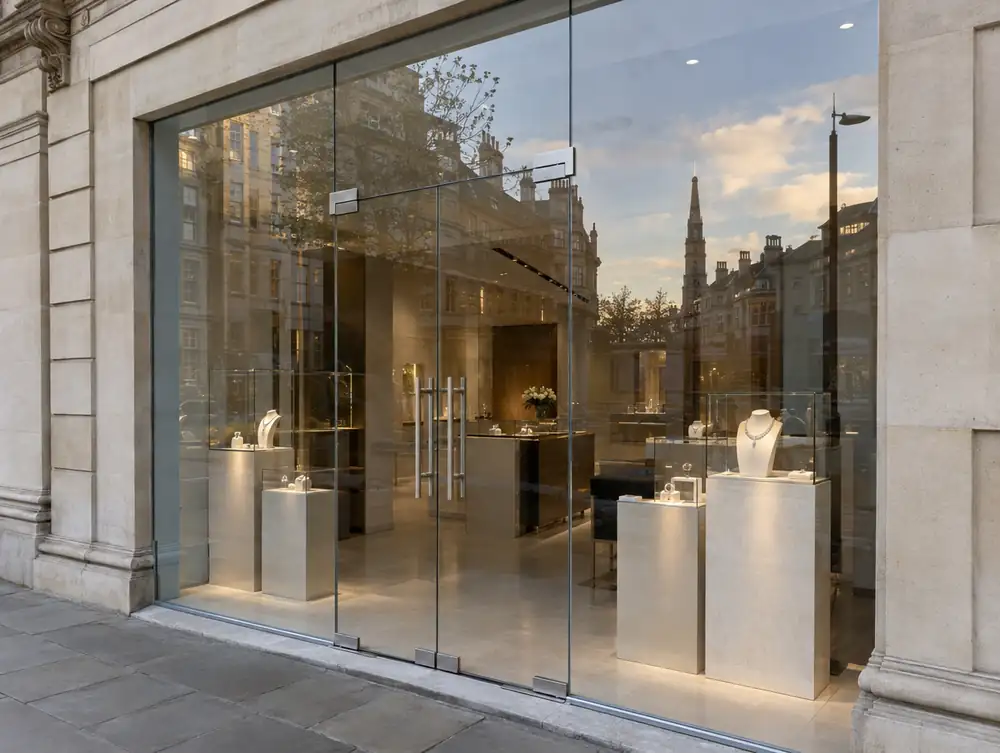
What goes into getting frameless glass shopfronts right in Chester?
For a brand taking frameless fronts through Chester and beyond, pane sizes rarely repeat because no two openings match. We'd fix the joint width, glass type and head detail as the brand standard, then measure each opening on its own.
Between two framed neighbours in a parade in Chester, a frameless front can look brilliant or bare. We'd hold the neighbouring fascia line and keep a slim plinth at their stallriser height, so the glass feels deliberate and the row still reads as a row.
Where a fascia has crept down over the years, lifting it back to its original line can add real height to the glass. Check what sits behind it first at Chester premises, since a shutter box or old beam may set the limit.
Which applications might frameless glass shopfronts in Chester involve?
A true like-for-like replacement usually needs no planning permission in England, because the external appearance isn't materially affected. New materials, a different glass line or altered proportions usually do count as material, so for frameless glass shopfronts at premises in the Chester area, an application is then likely. The council confirms which side of that line a job falls on.
Expect planning and advert applications here to go to Cheshire West and Chester Council in the normal way. We check what that means for your building when we survey it in Chester.
How much could frameless glass shopfronts in Chester cost you?
We would budget £4,995 to £15,995 plus VAT for a typical frontage. Scope sets most of the figure, so a clear brief at the start does more for the budget than any later change of detail.
| Town | Chester |
|---|---|
| Area | Cheshire |
| Postcode districts | CH1 |
| Planning authority | Cheshire West and Chester Council |
| Building approval | Building Regulations (Approved Documents) |
| Distance from Great Barr | About 60 miles |
| Survey | Free for new work |
Does Cheshire West and Chester Council publish shopfront guidance?
Yes, Chester Rows Design Guide (2022). It covers the Chester Rows only, so it doesn't apply across the whole council area. A few of the things it asks for:
- Existing stallrisers on the Rows must be preserved, or reinstated where missing.
- Box fascias that project from the building face are not acceptable, and fascia depths should be reduced where they overbear the frontage.
- Solid external roller shutters will not be permitted unless the need is robustly shown, with lattice grilles or internal roller shutters as alternatives.
Questions about frameless glass shopfronts in Chester
Can frameless glass go above a cellar in Chester?
Often, yes, with some redesign. A cellar or thin slab can rule out a recessed channel, so we'd clamp the glass to a strengthened threshold or add a low plinth to hold it.
Which glass should I choose for premises in Cheshire?
Clear toughened is the starting point, with low-iron for a whiter look and toughened laminated where you want the pane to stay put after a break. The right one depends on your stock, your street and your insurer.
How do you stop people walking into the glass at my Chester shop?
Markings on the glass are designed as part of the front. We can turn them into a pattern, logo or frosted band that suits your brand, placed where the eye naturally catches them.
Do roller shutters need planning permission in the Chester area?
Usually yes. Installing or replacing a security grill or shutter on a shopfront is expressly outside England's shop permitted development rights, so the only way to avoid an application is work that doesn't materially affect the appearance. Ask the council before ordering.
Do I need listed building consent for a shopfront in the Chester area?
Usually yes, if the building is listed. In England the local planning authority decides, and Historic England is notified of Grade I and II* works and specified Grade II works. Like-for-like repair may not need consent, so ask the council before work starts.