A fashion shopfront has to show clothes at true height, protect them from the sun and make the door easy to walk through. Most of that is settled by stallriser height, glass line and a window the dresser can work in.
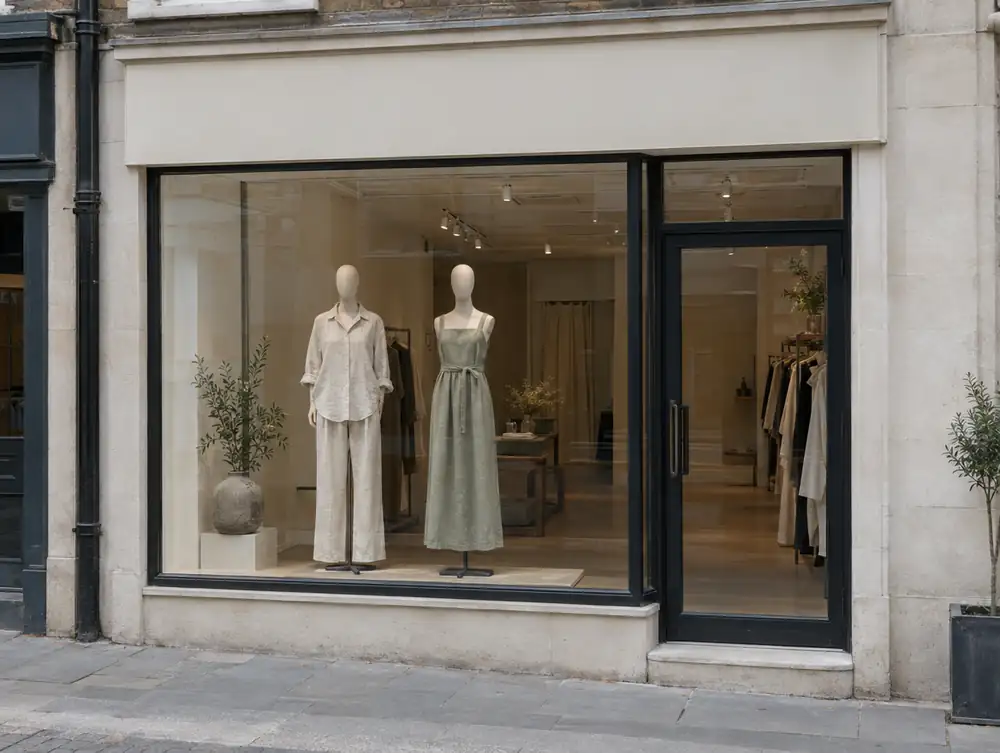
How high should a boutique stallriser be?
Around 300 to 450mm suits most fashion windows, because a mannequin on a low plinth then reads at true height from the pavement. Go higher and the window starts to feel like a display case. Drop lower and hems sit in the splash line.
That height sets everything above it, so we draw it against fascia depth and the first-floor sill before choosing a finish. A dark stallriser looks lower than it measures, while pale stone looks taller. We also judge it from across the road, because that is where the proportion of a whole front is read.
What does a window dresser need from a shopfront?
Easy access comes first: a door or lift-out panel at the back of the window, wide enough to carry a mannequin through upright. Dressers who have to climb a fixed back wall change the window less often, and the shop starts to look stale.
Evening light deserves the same care. Warm lamps aimed at the garment, with the window ceiling left dim, stop the glass turning into a mirror at dusk and let the front carry on selling after the door is locked.
- Fixing points and a hanging track in the window soffit, set out before the ceiling goes up
- Lighting hidden behind the fascia line, with sockets at floor level
- A floor finish that shrugs off plinths and steamer trolleys
- Low-iron glass if you sell whites, since standard glass adds a faint green cast
How do you stop a shop window fading stock?
Laminated glass does most of the work, because its interlayer filters much of the ultraviolet that bleaches cloth. Visible light still fades dark dyes, so a west-facing window may also want a blind or an awning for the hottest hours.
Ask your dresser how often pieces move. Anything left in one spot for a month will mark, whatever the glass.
Should a boutique door sit flush or in a recessed lobby?
On a narrow frontage a recessed lobby usually wins, since it adds glass, draws people off the pavement and gives you a second window to dress.
Two details decide whether it works. The floor has to stay level to the door, with a threshold of 15mm at most under guidance in all four UK nations. Recesses also collect litter overnight, so decide early where the closed-up line falls.
How do you secure a boutique and keep the window on show?
A perforated shutter set behind the glass keeps the display visible after closing and leaves the outer face of the building clean.
External shutters are expressly outside permitted development in England and Wales, so expect an application there. Scotland and Northern Ireland look at the effect on appearance, so ask the council there.
Common questions
What finish suits a fashion frontage?
Dark anodised or powder-coated aluminium is a safe start, with bronze for a grander address. Judge a sample against the fascia in daylight, because small colour chips mislead.
Can a shop window have no back wall?
Yes, and an open back sells the whole shop floor from the pavement. You lose a dressing stage, so it suits rails that look good from behind.
Can built-up letters copy our brand typeface?
Usually, yes. Letters are cut from your artwork, though very fine serifs may need thickening to stay strong and catch the light.
Will a landlord dictate our frontage?
Sometimes. Some leases and shopping estates set design rules, so check yours before drawings start.