From Derby to the furthest corner of Derbyshire, the sequence for stallrisers and cladding stays the same: survey, drawings, written price, then work on site. We travel from Great Barr in Birmingham and use vetted teams working under S&K Glazing.
Your frontage is read alongside its neighbours, so we note the fascia line, stallriser height and pilasters on either side before drawing stallrisers and cladding for Derbyshire premises. Matching those lines or breaking them on purpose can both work, whereas doing it by accident never does.
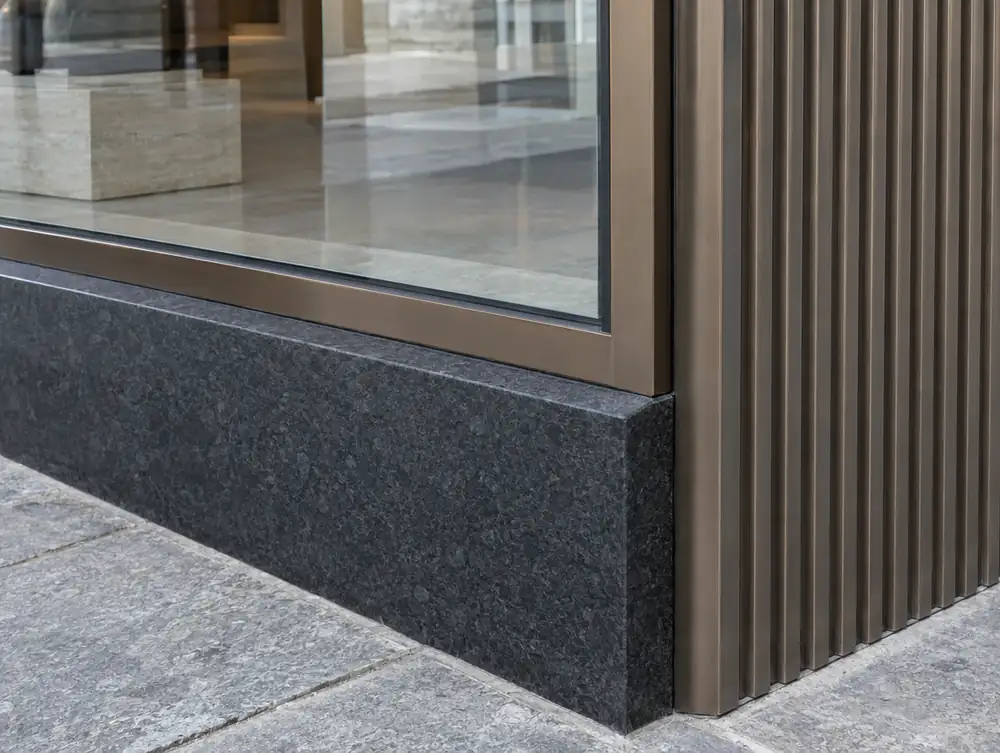
How should you approach stallrisers and cladding in Derbyshire?
A restaurant and a jeweller want very different stallrisers, even side by side. For premises in Derbyshire we set the height around what people do behind the glass, whether that is sitting, browsing or studying a tray.
Stripping an old facing can reveal what the building had first. If original tile or timber turns up on your premises in Derbyshire, we stop and talk to you, since repairing it may cost less than cladding over it.
What consents apply to stallrisers and cladding in Derbyshire?
A true like-for-like replacement usually needs no planning permission in England, because the external appearance isn't materially affected. New materials, a different glass line or altered proportions usually do count as material, so for stallrisers and cladding at premises in the Derbyshire area, an application is then likely. The council confirms which side of that line a job falls on.
How much do stallrisers and cladding cost in Derbyshire?
A sensible starting budget is £195 to £495 plus VAT per m². What shifts the figure is whatever can't be seen yet, such as the condition behind the old frontage or the services running through it.
| Area | Derbyshire |
|---|---|
| Nation | England |
| Towns covered | 22 |
| Main town | Derby |
| Planning regime | England: TCPA 1990 and the 2007 Advertisement Regulations |
| Building approval | Building Regulations (Approved Documents) |
| Survey | Free for new work, from our Great Barr base |
Questions about stallrisers and cladding in Derbyshire
Do you fit natural stone stallrisers across Derbyshire?
Yes. Stone is templated from the measured survey, then fixed with mechanical restraints and a ventilated cavity. Heavier stone may need a check of the wall behind before we confirm the thickness.
Can stallriser work on premises around Derby be done in a day?
A straightforward composite or painted panel often can, and fitting can be arranged on a closed day. Stone and tile take longer because of fixing and setting time, so we would agree a short phased plan.
Can you match an existing tiled stallriser on premises in Derbyshire?
Often, yes, though an exact glaze match can be difficult. We take a sample tile, compare it with what is available, and suggest a specialist tile or a change at a natural break if the colour cannot be found.
Do I need planning permission to change a shopfront in the Derbyshire area?
Usually yes, if the work materially affects the building's external appearance. England's shop permitted development rights exclude creating, altering or replacing a shopfront, so there is no shortcut. A true like-for-like replacement usually needs no application, and the council confirms the position.
Does a new shopfront in the Derbyshire area need Building Regulations approval?
Assume yes until building control says otherwise. England has no like-for-like exemption, though registered installers can self-certify replacement windows and doors in non-dwellings. That route doesn't cover structural glass, curtain walling or revolving doors.