Slim frames and low upkeep make aluminium a sound choice for retailers, restaurants and landlords in Collier Row. Each front is designed, made and fitted to the measured opening, with one contract covering glass, frame, sign and shutter.
Your survey is where the price gets real, because widths, heights, levels and access are all taken on site in Collier Row.
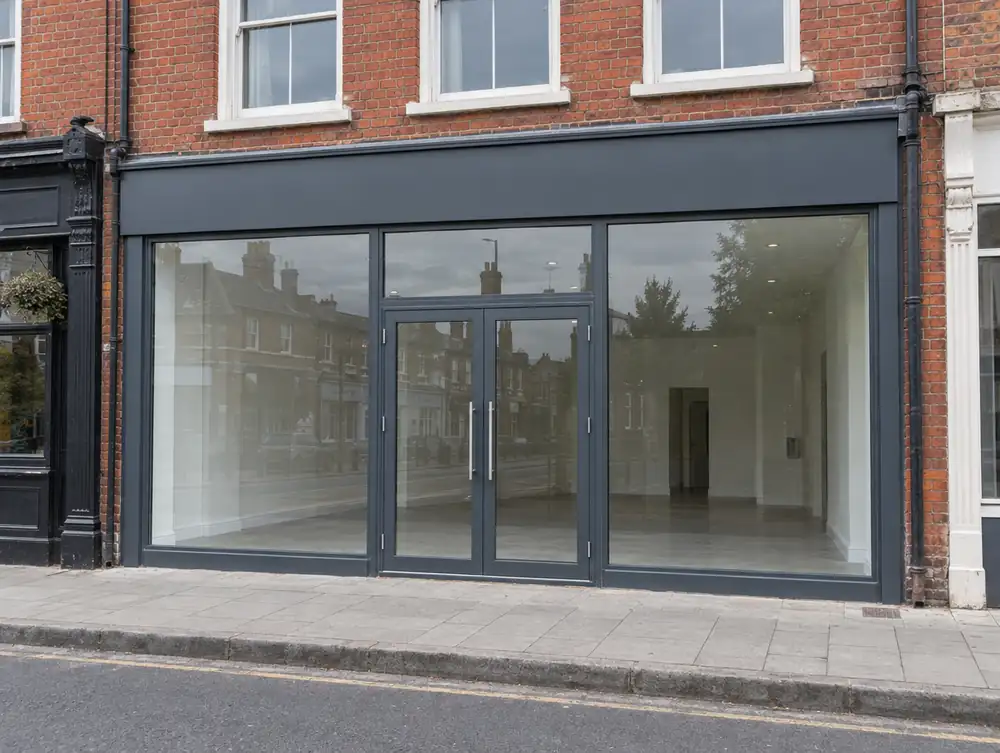
How do you design around the building when planning aluminium shopfronts in Collier Row?
Where Collier Row premises have a deep recessed entrance, it's usually worth keeping. The angled returns add display length and shelter, and a slim frame with soffit lighting turns a dark corner into the brightest part of the front in the evening.
On a corner plot, the side elevation does as much selling as the front. We'd run the stallriser and fascia round at one height and use a slim corner post in the frame colour, so anyone approaching your Collier Row premises from either direction sees one continuous shopfront.
If the pavement falls across your frontage, let the stallriser take up the slope and keep the glass line dead level. The eye reads the long horizontal, so Collier Row premises on a slope look settled once that line is true.
What permissions should you check for aluminium shopfronts in Collier Row?
Security grilles and shutters are named in England's rules: installing or replacing one on a shopfront sits outside the shop permitted development rights. The frontage itself is treated the same way, so for aluminium shopfronts at premises in the Collier Row area, building work that materially affects the appearance needs planning permission. Confirm the position with the council before anything is ordered.
Collier Row applications for planning permission or advertisement consent are normally handled by London Borough of Havering. Our survey includes a check of the position for your address.
What might aluminium shopfronts cost in Collier Row?
Until the survey is done, plan on £2,495 to £11,995 plus VAT for a typical 3 to 7 m frontage. Unusual sizes, fine detail and phased working push the figure up, while a simple brief and clear access keep it toward the lower end.
| Town | Collier Row |
|---|---|
| Area | Greater London |
| Postcode districts | RM1, RM2, RM5, RM7 |
| Planning authority | London Borough of Havering |
| Building approval | Building Regulations (Approved Documents) |
| Distance from Great Barr | About 110 miles |
| Survey | Free for new work |
Questions about aluminium shopfronts in Collier Row
Will an aluminium front make my Collier Row shop warmer?
It can, though the glass matters more than the frame. A thermally broken section with double-glazed units loses less heat than single glazing, and a well-sealed door is often the change you notice most on a cold day.
How does pricing work for Collier Row premises?
Every price comes from a measure-up, never a photograph. You get an itemised written quotation that holds for 90 days, and nothing is ordered until you accept it.
What do you need before surveying a unit in Collier Row?
An address, a few photos and a rough idea of what you have in mind are enough to book the survey. If you have a lease, a landlord's specification or brand guidelines, send those too, because they shape the drawing.
What rules apply to a fire exit door through a shopfront in the Collier Row area?
It must open in the direction of escape and can't be locked against immediate use, and a dedicated fire exit can't be a sliding or revolving door. In England that comes from article 14(2) of the Regulatory Reform (Fire Safety) Order 2005, and the duty sits with the responsible person, normally the employer or whoever controls the premises for a business, otherwise the owner. An outward door can clash with section 153 of the Highways Act 1980 where it opens onto the footway, so raise it early.
Does a new shopfront in the Collier Row area need Building Regulations approval?
Assume yes until building control says otherwise. England has no like-for-like exemption, though registered installers can self-certify replacement windows and doors in non-dwellings. That route doesn't cover structural glass, curtain walling or revolving doors.