Good automatic entrances look calm and quiet, with very little on show. For Covent Garden premises, that means hiding the operator, aligning the leaves and setting the door to your hours.
Expect us to measure the opening, photograph the existing front and check how materials will reach it on the day, at a time you have agreed.
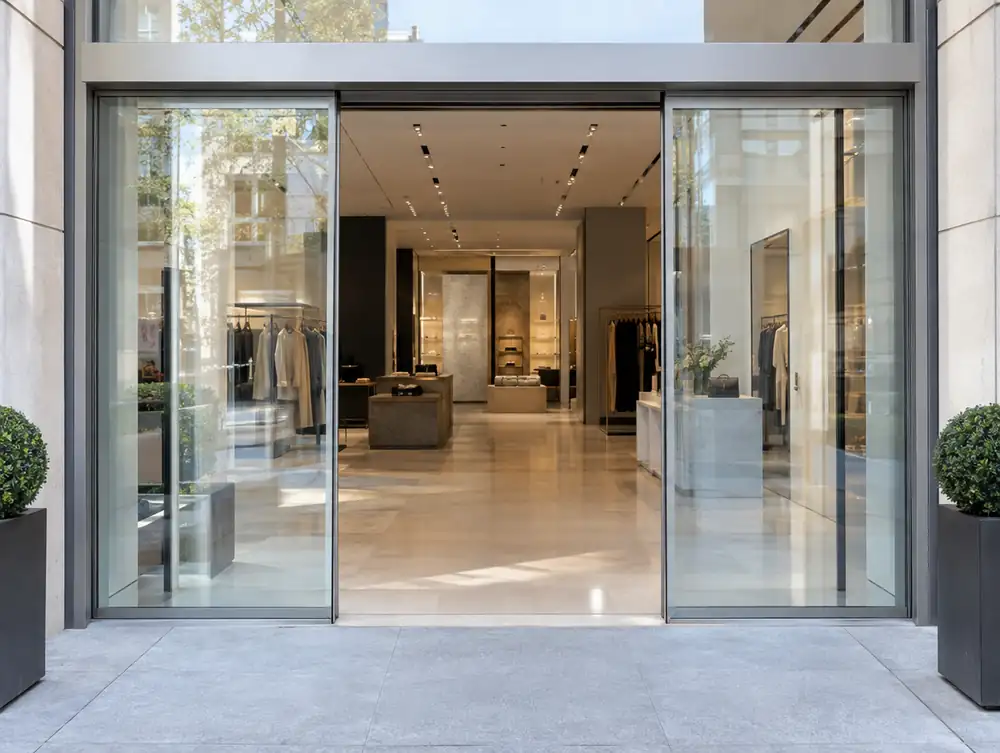
How do you design around the building when planning automatic sliding doors in Covent Garden?
Automatic doors suit a night fit in Covent Garden, because most of the work is at the head and the opening stays usable in stages. We'd fit the track and leaves out of hours, then commission the door before you open.
If your Covent Garden entrance catches low sun, infrared sensors can misread the light on the floor. We'd favour radar with a presence sensor set for those conditions, and consider solar control glass in the leaves.
Where a fascia has crept down over the years, lifting it back to its original line can add real height to the glass. Check what sits behind it first at Covent Garden premises, since a shutter box or old beam may set the limit.
What might automatic sliding doors cost in Covent Garden?
A sensible starting budget is £3,895 to £11,995 plus VAT per entrance. What shifts the figure is whatever can't be seen yet, such as the condition behind the old frontage or the services running through it.
What permissions should you check for automatic sliding doors in Covent Garden?
Security grilles and shutters are named in England's rules: installing or replacing one on a shopfront sits outside the shop permitted development rights. The frontage itself is treated the same way, so for automatic sliding doors at premises in the Covent Garden area, building work that materially affects the appearance needs planning permission. Confirm the position with the council before anything is ordered.
For Covent Garden, the usual route for planning and advert applications is through Westminster City Council, and we confirm that when we visit.
| Town | Covent Garden |
|---|---|
| Area | Greater London |
| Postcode districts | WC2 |
| Planning authority | Westminster City Council |
| Building approval | Building Regulations (Approved Documents) |
| Distance from Great Barr | About 104 miles |
| Survey | Free for new work |
Does Westminster City Council publish shopfront guidance?
Yes, Shopfronts, Blinds and Signs - A Guide to their Design (1993). It tells applicants what the council expects from new and altered shopfronts. A few of the things it asks for:
- Roller shutters will not normally be given consent, and internally fitted brick-bond grilles are the preferred solution.
- Large internally lit box signs are generally inappropriate, while externally lit fascias and back-lit or halo-lit letters are accepted.
- Projecting signs need at least 2.6m clearance above the pavement and should sit at fascia level, centred on a pilaster.
Questions about automatic sliding doors in Covent Garden
How noisy would an automatic door be at my Covent Garden shop?
A healthy door is very quiet, and you'd normally hear only a soft hum. Noise usually means worn rollers or grit in the guide, which a service will put right.
What will people on the street see at my Covent Garden entrance?
Ideally, very little. The drive sits behind the fascia, the leaves line up with the screens beside them, and the frame colour matches the rest of your front.
Who installs automatic doors in Covent Garden?
Vetted door teams working under S&K Glazing handle the fit and set-up, travelling from Great Barr. Your agreement is with S&K Glazing Limited, and one person stays your point of call.
Do roller shutters need planning permission in the Covent Garden area?
Usually yes. Installing or replacing a security grill or shutter on a shopfront is expressly outside England's shop permitted development rights, so the only way to avoid an application is work that doesn't materially affect the appearance. Ask the council before ordering.
Does a new shopfront in the Covent Garden area need Building Regulations approval?
Assume yes until building control says otherwise. England has no like-for-like exemption, though registered installers can self-certify replacement windows and doors in non-dwellings. That route doesn't cover structural glass, curtain walling or revolving doors.