Our fee for planning and consent support in Lincolnshire is written and itemised before any work starts, which gives you time to take it to a landlord, a partner or a board.
What sits behind the existing fascia often decides the job. Old beams, abandoned cable runs and earlier frames are common finds, which is why our visit to Lincolnshire premises looks past the surface before anything is drawn or priced for planning and consent support.
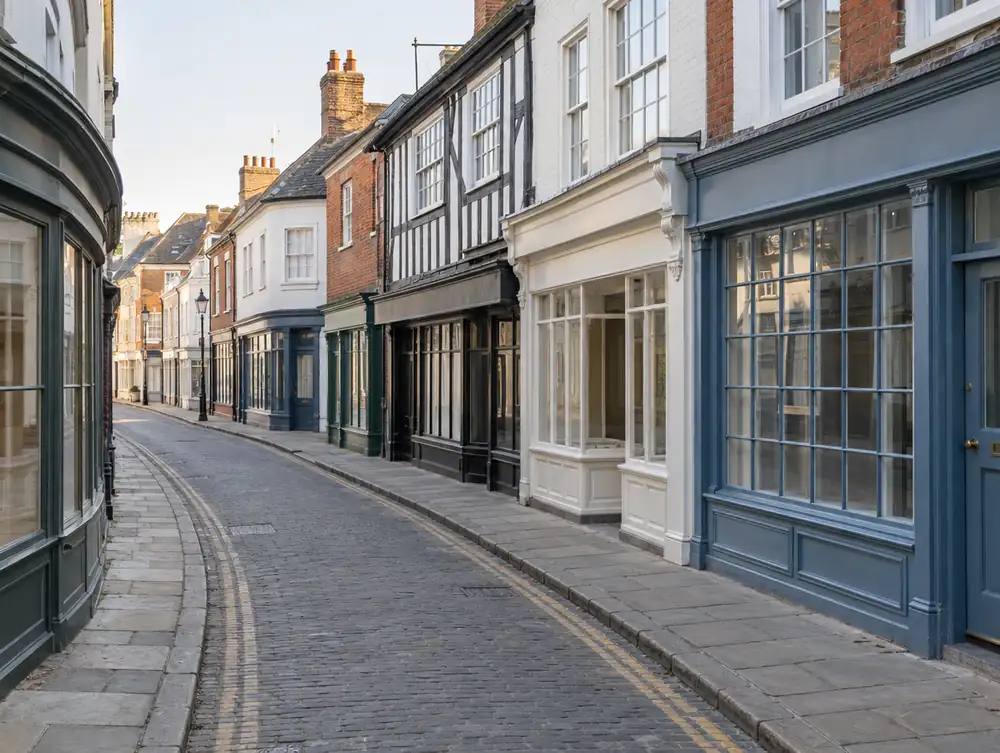
What should you look for from planning and consent support in Lincolnshire?
Timing matters as much as paperwork. If your premises around Lincoln have an opening date, we work back from it and leave room for questions from the case officer before anything is ordered.
Older buildings need more evidence. If your premises in Lincolnshire have surviving features, we photograph and draw them before the design is fixed, so the submission shows what will be kept.
What consents apply to shopfront work in Lincolnshire?
A true like-for-like replacement usually needs no planning permission in England, because the external appearance isn't materially affected. New materials, a different glass line or altered proportions usually do count as material, so for shopfront work at premises in the Lincolnshire area, an application is then likely. The council confirms which side of that line a job falls on.
How much does planning and consent support cost in Lincolnshire?
A sensible starting budget is £395 to £1,295 plus VAT per application, plus the council's fee. What shifts the figure is whatever can't be seen yet, such as the condition behind the old frontage or the services running through it.
| Area | Lincolnshire |
|---|---|
| Nation | England |
| Towns covered | 17 |
| Main town | Lincoln |
| Planning regime | England: TCPA 1990 and the 2007 Advertisement Regulations |
| Building approval | Building Regulations (Approved Documents) |
| Survey | Free for new work, from our Great Barr base |
Does South Kesteven District Council publish shopfront guidance?
Yes, South Kesteven Shopfront Design Guide (2024). It tells applicants what the council expects from new and altered shopfronts. A few of the things it asks for:
- Retractable shutters should sit inside the building hidden behind the fascia, and external roller shutters are not acceptable on listed buildings.
- Fascias that are boxed in or project excessively are unsuitable, and signs should not be built out on an extra box or board.
- External illumination is the only acceptable option for traditional shopfronts, using static single-colour LED where lighting is accepted.
Questions about planning and consent support in Lincolnshire
Can the sign and shopfront be drawn together for premises in Lincolnshire?
Yes, and that is how we prefer to work. One drawing set shows the frontage as it will really look, which helps everyone reviewing it.
What photographs help with an application near Lincoln?
Straight-on views of the frontage, views along the street in both directions and close-ups of any older details. We take photographs at survey, and yours can add useful history.
Will you answer the officer's questions on premises in Lincolnshire?
Yes, your named contact handles queries about the drawings and the design. We let you know what was asked and what we replied, so you stay informed.
Does the Equality Act apply to a shop entrance in the Lincolnshire area?
Yes. The Equality Act 2010 applies in England, as across Great Britain, and it requires reasonable steps to remove, alter or avoid physical features that disadvantage disabled people. The duty is anticipatory, so it looks at disabled people generally, and a new Services Code replaced the 2011 Code on 5 August 2026.
Does a new shopfront in the Lincolnshire area need Building Regulations approval?
Assume yes until building control says otherwise. England has no like-for-like exemption, though registered installers can self-certify replacement windows and doors in non-dwellings. That route doesn't cover structural glass, curtain walling or revolving doors.