Across Kent, timber is the material we suggest when a building has proportions worth respecting. For Herne Bay premises, we set the stallriser, pilasters and fascia from the elevation above, then detail the joinery to match.
It helps if you can be there when we visit Herne Bay, since five minutes walking the frontage together answers more than a long email.
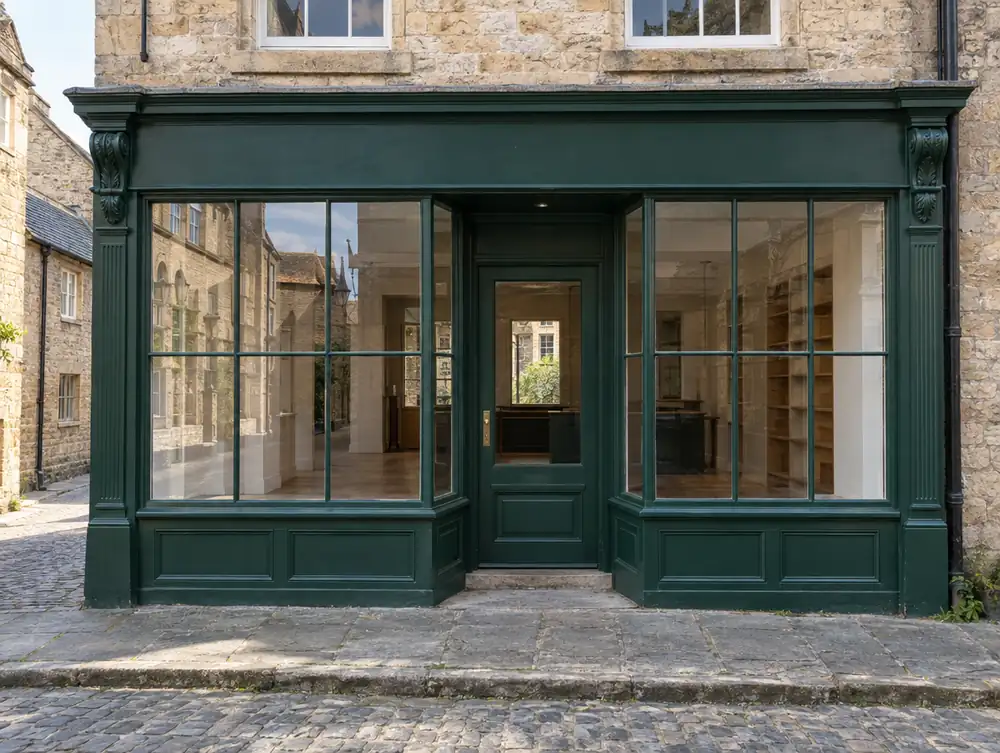
What makes timber shopfronts work well on Herne Bay premises?
In a parade of mixed fronts in Herne Bay, painted timber can lift a unit without shouting. We'd take the height of the neighbouring cills and fascias, then let the depth of the mouldings and a considered colour do the talking.
Where a landlord in Herne Bay has set rules for materials or colour, timber is usually an easy conversation. We'd prepare a drawing and paint reference for approval, and adjust the mouldings if the terms ask for something plainer.
A corner unit has two fronts to think about, and the return elevation often does as much selling as the main one. If that is your layout in Herne Bay, carry the fascia and glass line round the corner and treat both faces as one composition.
How much should you set aside for timber shopfronts in Herne Bay?
As a working budget, use £3,995 to £13,995 plus VAT for a typical frontage. Your place inside that range for timber shopfronts depends mostly on how much of the existing frontage can stay and how much has to be put right first.
Could timber shopfronts in Herne Bay need planning permission?
England has no permitted development route for changing a shopfront. Part 7 Class A of the General Permitted Development Order 2015 excludes creating, altering or replacing one, and it allows no alterations at all on article 2(3) land. That leaves two outcomes for timber shopfronts at premises in the Herne Bay area: a planning application, or work that doesn't materially affect the external appearance.
For Herne Bay, the usual route for planning and advert applications is through Canterbury City Council, and we confirm that when we visit.
| Town | Herne Bay |
|---|---|
| Area | Kent |
| Postcode districts | CT6 |
| Planning authority | Canterbury City Council |
| Building approval | Building Regulations (Approved Documents) |
| Distance from Great Barr | About 153 miles |
| Survey | Free for new work |
Does Canterbury City Council publish shopfront guidance?
Yes, Shopfront design Supplementary Planning Document (2020). It tells applicants what the council expects from new and altered shopfronts. A few of the things it asks for:
- Fascia depth must not exceed the depth of the console, or one-fifth of the distance from console to pavement.
- External solid roller shutters are not normally supported in conservation areas or main shopping streets and are unacceptable on listed buildings.
- Internally lit box signs, illuminated letters and window neon are unsuitable in conservation areas, with external lighting only for premises open at night.
Questions about timber shopfronts in Herne Bay
What should I budget for looking after a timber front in Herne Bay?
A repaint every 5 to 7 years, plus a yearly wash and touch-up of the cills. Door gear needs checking too, since seasonal movement can throw a door out of line.
Can you fit a timber front around existing tiles in Herne Bay?
Often, yes, and it's usually worth trying. If your stallriser or entrance has good original tile, we'd measure it carefully and scribe the new joinery to it.
Is timber a sensible choice for my Herne Bay frontage?
Usually, if you're happy with a repaint every 5 to 7 years. A survey shows how exposed the front is and whether the structure behind it is sound, and we'll tell you if aluminium would serve you better.
Do roller shutters need planning permission in the Herne Bay area?
Usually yes. Installing or replacing a security grill or shutter on a shopfront is expressly outside England's shop permitted development rights, so the only way to avoid an application is work that doesn't materially affect the appearance. Ask the council before ordering.
Does a new shopfront in the Herne Bay area need Building Regulations approval?
Assume yes until building control says otherwise. England has no like-for-like exemption, though registered installers can self-certify replacement windows and doors in non-dwellings. That route doesn't cover structural glass, curtain walling or revolving doors.