Changes affecting the character of a listed shopfront need listed building consent, which is separate from planning permission. The local planning authority decides in England, planning authorities and Welsh Ministers in Wales, the planning authority in Scotland and councils in Northern Ireland. Unauthorised works are a criminal offence, so get the council's view in writing before anything is touched.
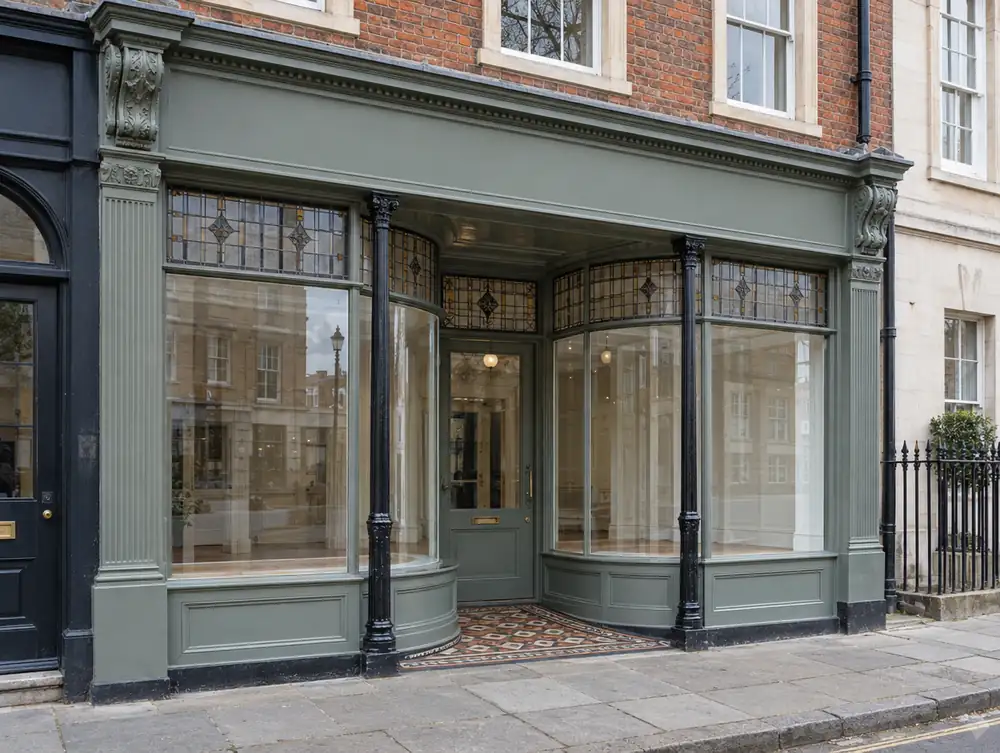
Do I need listed building consent to change a shopfront?
Yes, in nearly every case where the work changes the look, the fabric or the character of the front. All four nations require listed building consent, under different laws and with different bodies involved, and it runs alongside any planning or advertisement application.
Treat this one seriously, because unauthorised works are a criminal offence. Wales is the nation most likely to trip up an older guide or template, since the Historic Environment (Wales) Act 2023 took full effect on 4 November 2024 and the 1990 Act no longer applies there.
In England, Historic England is notified of all Grade I and II* works and specified Grade II works. Scotland's rules mean Ministers are notified if Historic Environment Scotland objects. In practice a straightforward case stays with the council, while a sensitive one can involve more voices and take longer.
| Nation | Law | Who decides | National body |
|---|---|---|---|
| England | Planning (Listed Buildings and Conservation Areas) Act 1990 | Local planning authority | Historic England |
| Wales | Historic Environment (Wales) Act 2023 | Planning authorities and Welsh Ministers | Cadw |
| Scotland | Planning (Listed Buildings and Conservation Areas) (Scotland) Act 1997 | Planning authority | Historic Environment Scotland, on some applications |
| Northern Ireland | Planning Act (Northern Ireland) 2011, s.85 | Councils | DfC Historic Environment Division, statutory consultee |
What counts as repair and what counts as alteration?
Like-for-like repair may not need consent, and anything that changes the design, material or method probably will. Historic England's wording is that such repair "may not need" consent, which is a long way from a guarantee. Across the border, Historic Environment Scotland says window and door changes almost certainly need consent, and that is a sensible assumption to carry into all four nations.
A true repair uses the same species of timber, the same profile and the same way of doing the job. Splicing a new length into a decayed pilaster base counts. Replacing the whole pilaster because splicing is awkward does not, and neither does swapping putty for silicone or lime for cement.
Ask the council for its view in writing and describe the work precisely. An email from the conservation officer agreeing that a named repair needs no consent is worth keeping with the deeds, because a future buyer's solicitor may well ask about it.
Can I fit thicker or double-glazed glass in a listed shopfront?
Often not without changes that need consent, and sometimes not at all. Historic England warns that heavier glass can affect a shop front's structure, and that warning deserves respect. Slender glazing bars and old cills were built to carry much thinner sheets, and a laminated pane weighs noticeably more than the glass it replaces.
Old rebates are usually too shallow for a sealed unit, so double glazing means cutting away original wood or adding deep beads, which is the very harm consent exists to prevent. Where heat loss or security is a real issue, thin laminated glass or a discreet internal screen may offer a better route.
Keep any historic glass you have. Cylinder glass has a slight ripple that catches evening light in a way modern float never will, and once it is broken it is hard to replace in kind. Taking those panes out needs care: warm the putty, work slowly and store them upright on felt.
How do I protect original features during the work?
Number it, photograph it and protect it before anything moves. Every removed piece gets a tag and a location on a marked-up elevation, so that it returns to the same place and nobody has to guess in six weeks' time.
Old tiled stallrisers, mosaic thresholds and cast-iron columns need boarding and padding for the whole job, as a dropped tool does damage that can't be undone. Fixings should go into mortar joints where possible. Power tools and nail guns have no place near thin old joinery, and neither does a pressure washer.
Stop if you find something unexpected. Earlier signwriting behind a fascia, a concealed console or a stone panel may interest the conservation officer, and revealing it may also be good news for your scheme. Tell the officer, photograph it and wait for a reply before you carry on.
What should a listed building consent application include?
It normally needs measured drawings, a heritage statement, a schedule of works and details of every new material. Councils list their own requirements, so start there. In Scotland, Historic Environment Scotland's Managing Change: Shopfronts and Signs is the guidance to read before drawing.
The heritage statement explains what is significant about the front and why your proposal is acceptable, and a modest case can be a short document. Drawings at 1:20 with details at 1:5 show the mouldings and junctions in enough depth for an officer to judge them. Listed building consent carries no fee in England, but other applications for the same job may well do so, and the council confirms the position elsewhere.
How do signs, shutters and access work on a listed building?
Treat every new fixing as needing consent until you are told otherwise, even where the advertisement rules allow the sign. Painted letters leave no holes, which is one reason they do so well here. Lit signs mean cable routes as well as letters, and those routes have to be drawn.
An external shutter is rarely acceptable, so security usually comes from laminated glass and something discreet inside the line of the window. Access is the harder conversation. The Equality Act 2010 in Great Britain and the Disability Discrimination Act 1995 in Northern Ireland both ask for reasonable steps on physical features, and we would treat listing as shaping how you meet that duty, never as a reason to ignore it. A portable ramp, a second entrance or a gently regraded threshold may each be worth raising with the officer.
Common questions
How do I find out if my building is listed?
Ask the council's planning department, or check with the national body: Historic England, Cadw, Historic Environment Scotland or the Historic Environment Division in Northern Ireland. It is worth asking too whether the listing covers attached structures.
Does the grade change what I need to do?
Consent is needed at any grade. In England the grade affects whether Historic England is notified, and that can add scrutiny to a higher-grade application.
Can I replace a modern shopfront on a listed building?
Often, yes, and councils may welcome a poor later front being replaced with something better. It still needs consent, so the design should come from evidence of what the building had or suits.
How much does listed shopfront work cost?
Heritage work is £8,495 to £24,995 plus VAT for a typical frontage, and a survey is needed before any firm figure. Repairing what survives can sometimes cost less than the full replacement people expect.