Shopfront refurbishment means repairing and renewing an existing frontage, keeping the sound parts and replacing what has failed. It suits owners and tenants whose frame is still solid but whose paint, glass, signs or doors have aged, and anyone wanting a better frontage with less disruption than full replacement.
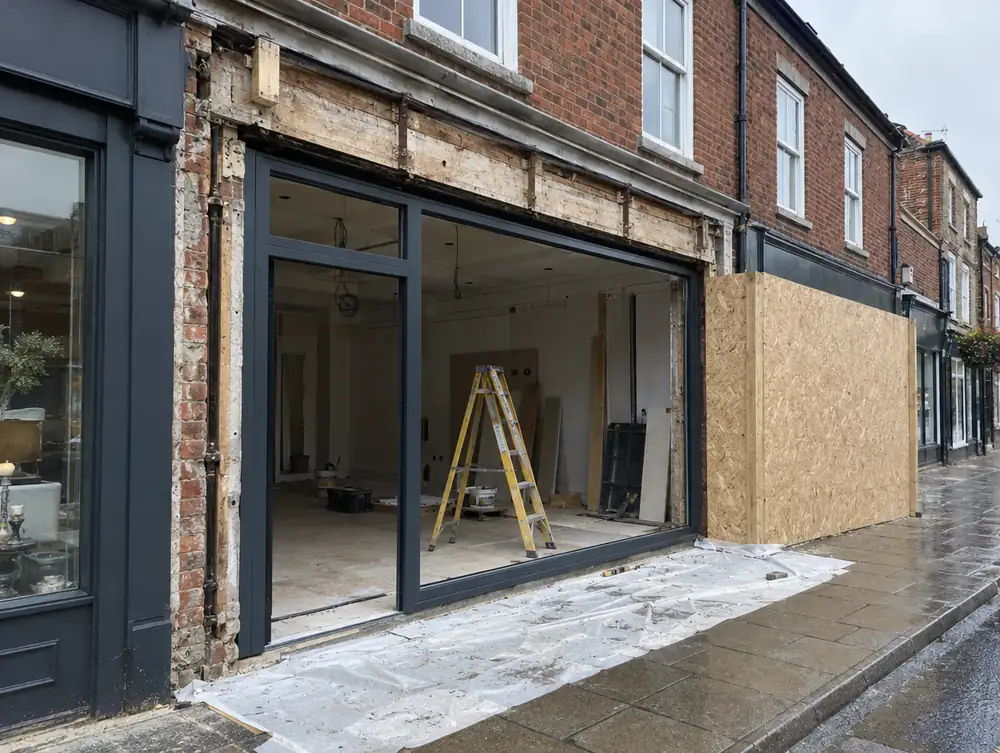
| Typical scope | Recoating or repainting, reglazing, new fascia and sign, door gear, stallriser repairs and lighting |
|---|---|
| Aluminium frames | On-site spray recoat after keying and priming, with new gaskets and seals |
| Timber frames | Hardwood splice repairs, resin repairs to small areas, then primer and exterior paint system |
| Glass | Replacement panes to suit position, with safety glass in critical locations |
| Doors | New closers, locks, handles, pivots and weather seals, checked for clear width and threshold |
| Reference standards | BS EN 12600:2002 for glass impact and BS EN 1154:1997 for door closers, where those parts are replaced |
| Typical lead time | Typically 2 to 4 weeks from signed drawings, then 2 to 7 days on site |
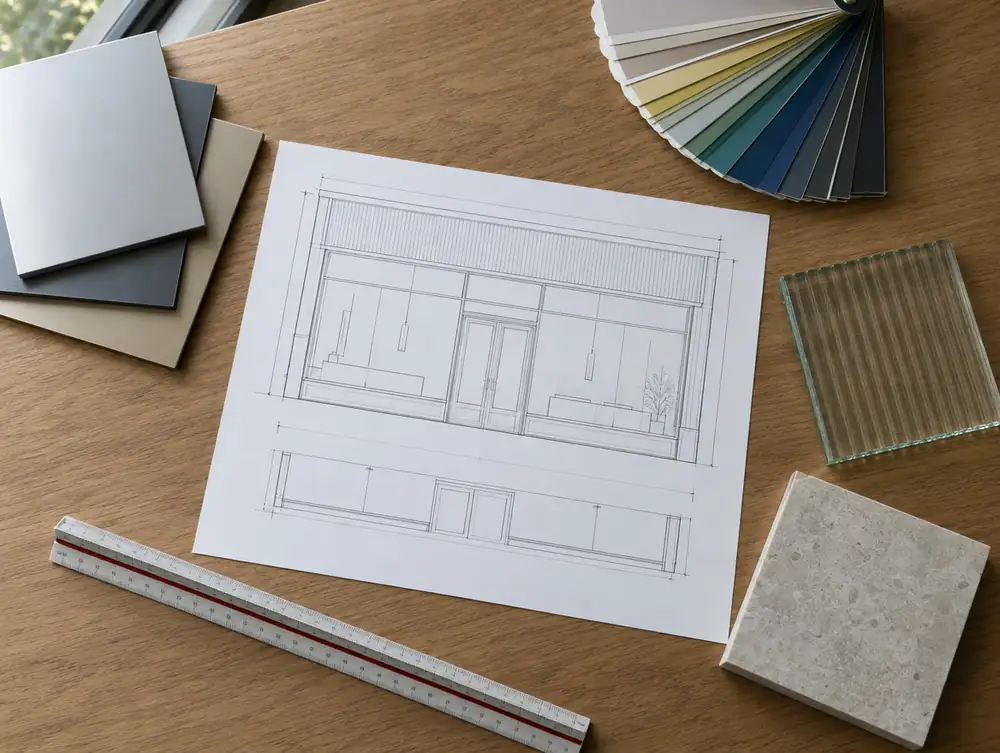
| Comes with | Measured survey, condition notes with photographs, scale drawings and an itemised quotation |
Should I refurbish or replace my shopfront?
Refurbish if the frame and structure are sound, and replace if they are not. Stand back and ask whether the problem is the finish or the bones. Aluminium frames usually outlast their paint, and timber can be repaired joint by joint, so a dated frontage is often a good frontage in poor clothes.
Replacement starts to make sense when the frame is out of square, the door opening is too narrow, the proportions are wrong, or the repairs would touch most of the joints. We price both where the answer is close, so the decision rests on real numbers.
What can usually be saved?
More than most people expect, particularly once later panels come off. These are the parts we look at first.
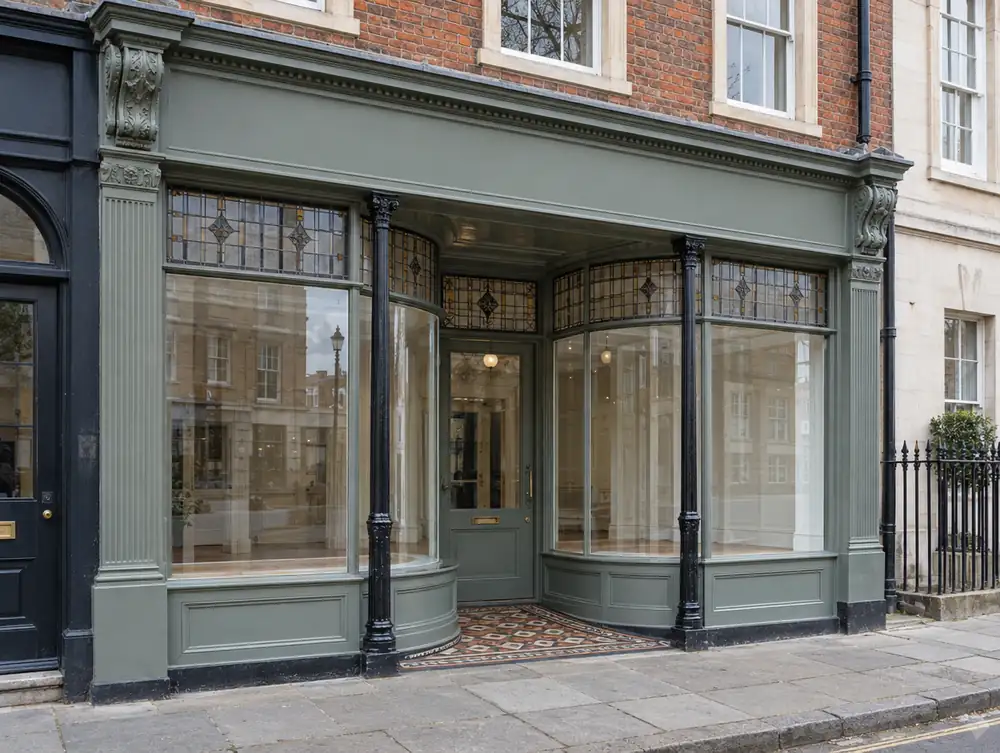
- Pilasters, corbels and cornices, which are often boxed in behind a later fascia.
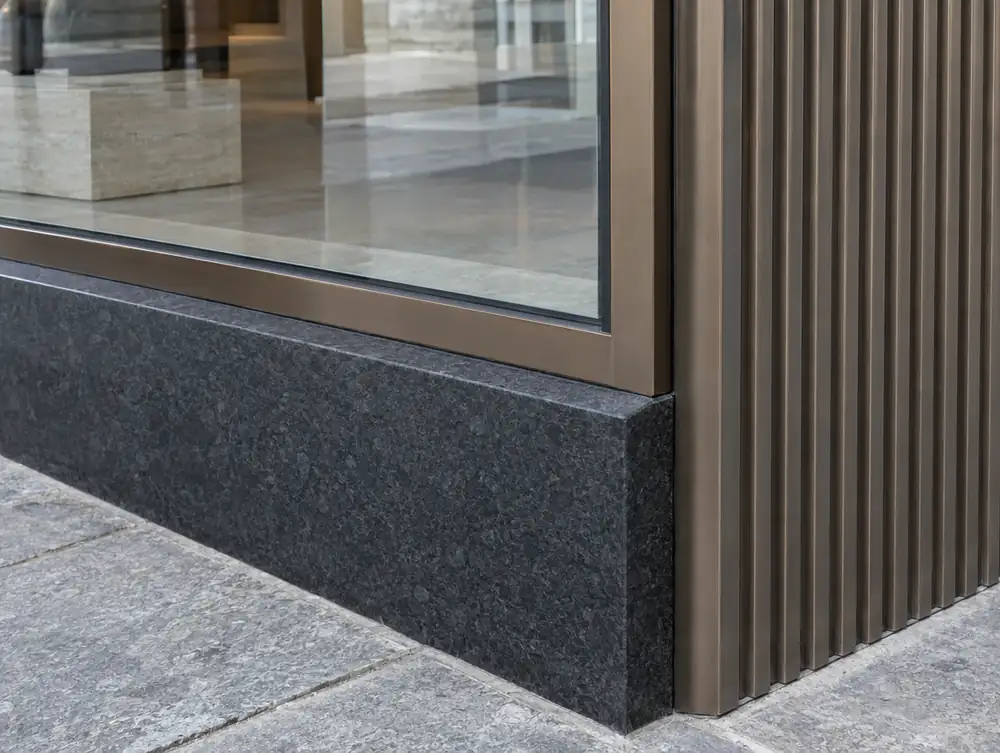
- Original stallrisers in tile, marble or panelled timber, which can be cleaned and repaired.
- Timber frames with sound upper sections, where only the sills and bottom rails have decayed.
- Mosaic or terrazzo thresholds, which can give a modern entrance real character.
- Aluminium frames that are straight and tight at the corners, whatever colour they have faded to.
Does a shopfront refurbishment need consent?
Usually not for a true like-for-like repair, because the appearance stays the same. A new colour, material or sign can be a different matter, so check before you commit. Signs have their own advertisement rules in every nation.
Listed buildings need more care. Historic England says like-for-like repair may not need consent, while Historic Environment Scotland says window and door changes almost certainly do. Building rules are separate again. England and Wales have no like-for-like exemption for replacement windows and doors, Scotland needs no warrant for a door or window replaced with its frame, though the standards still apply, and Northern Ireland only exempts dwellings. Your council confirms the position.
Where do refurbishments go wrong?
Hidden condition is the main risk. Rot often runs behind a sound-looking fascia, so we open up sample areas at survey and allow for what we find. Older fascias and soffits can also conceal asbestos cement, and anything suspicious is tested before it is drilled or cut.
Coatings fail for simple reasons. Paint over old silicone will not stay on, and a spray recoat over chalky powder coat peels within a couple of years unless it is keyed and primed. Masking matters as well, because overspray on neighbouring brick costs more to remove than to prevent. Old glass needs a look too. Check the corner of each pane for an etched safety mark, as glass in a door or at low level may have been fitted before anyone asked.
What does a refurbished frontage cost to keep?
Usually less than the patch repairs it replaces. Budget for a wash twice a year, and allow for repainting timber every 5 to 7 years. A site-applied recoat on aluminium typically lasts 7 to 10 years, a shorter life than a factory powder coat, so treat it as a good second life for the frame.
Door gear wants attention sooner. Closers need adjusting once or twice a year on a busy door, and they typically last 5 to 10 years. Keep a note of colour references from the job, so touch-ups match.
Which options can you choose from?
Sign and colour refresh
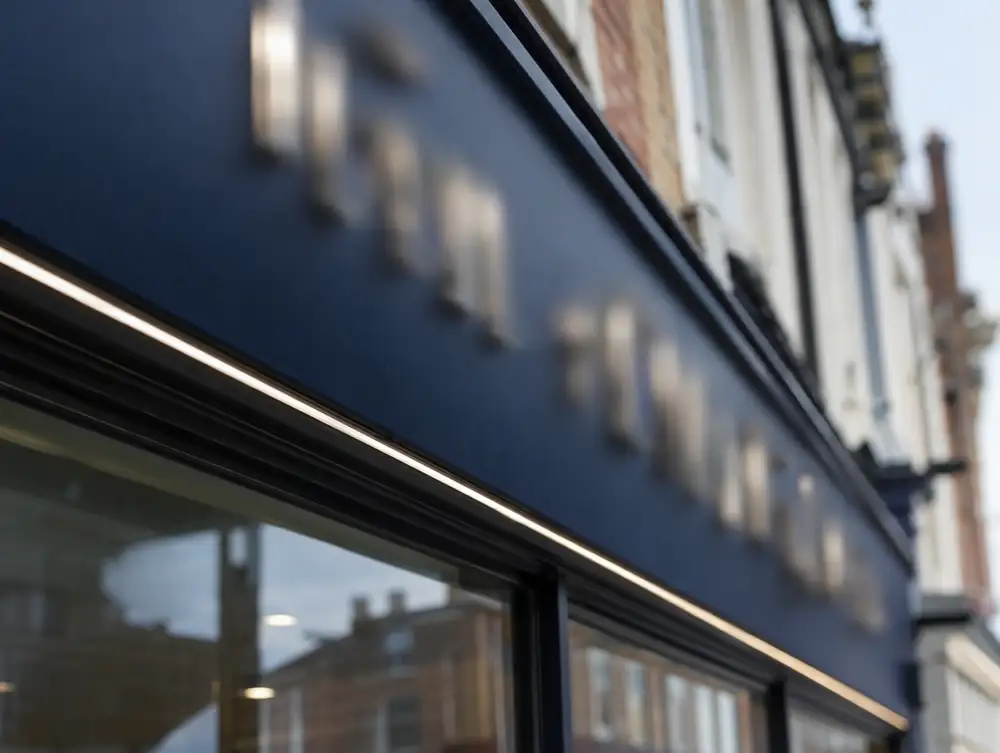
New fascia sign and a recoated frame. It gives the biggest visual change for the smallest disruption.
Frame recoat
Aluminium keyed, primed and sprayed on site in a new RAL colour. It suits frames that are sound but faded or dated.
Door and threshold upgrade
New closers, handles, seals and a lower threshold. It makes the entrance easier to use and improves the feel of the whole frontage.
Reglaze
New panes in existing frames, including safety or laminated glass where it is needed. We check that frames can take the weight first.
Timber repair and repaint
Decayed sections spliced with hardwood, then a full paint system. It keeps original joinery in service for many more years.
Strip back and restore
Later panels removed and original features repaired, with new parts drawn to suit. It suits older buildings with something worth finding.
How much does it cost?
Guide price: £1,995 to £8,995 plus VAT depending on what is kept. This is a budget figure, and your free survey gives you the real one.
Work out a guide price or see all our prices.
Common questions
How much does a shopfront refurbishment cost?
A refurbishment typically costs £1,995 to £8,995 plus VAT depending on what is kept. The figure depends on the condition of the frame, the amount of glass and whether a new sign is included. Hidden damage is the main unknown, so we open up sample areas before pricing.
How long does a shopfront refurbishment take?
Parts and materials typically take 2 to 4 weeks from signed drawings, and site work typically takes 2 to 7 days. Timber repairs need drying time between coats, so they sit towards the longer end. Work can be phased around trading.
Do I need planning permission to refurbish a shopfront?
Usually not for like-for-like repair, because the appearance is not materially affected. A change of colour, material or sign may need consent, and listed buildings call for more care. Ask your council before you start.
How do I keep a refurbished shopfront in good order?
Wash the frame and glass twice a year, and repaint timber before bare wood shows. Have door closers adjusted when they start to slam or drag. A short yearly look at seals and sills will catch small problems early.
Can an aluminium shopfront be resprayed on site?
Yes. The frame is cleaned, keyed, primed and sprayed in place, with the glass and neighbouring surfaces masked. A site coat typically lasts 7 to 10 years, and good preparation is what gets it there.
Does refurbishment cost less than replacement?
Usually yes, when the frame is sound. The saving shrinks if most joints need repair or the door opening has to change. We can price both side by side, so you are comparing real figures.
Can existing frames take laminated or double glazing?
Sometimes. The rebate has to be deep enough, and the frame has to carry the extra weight, which is why older timber or slim aluminium needs checking first. Where it falls short, we may reglaze only the panes that matter most.