For a boutique, salon, office or restaurant in Edinburgh, the ideal door almost disappears. Toughened glass gets close, provided the floor and head are detailed properly.
Bring whatever you have to the survey in Edinburgh: brand guidelines, lease plans, old drawings or a photo of a frontage you admire.
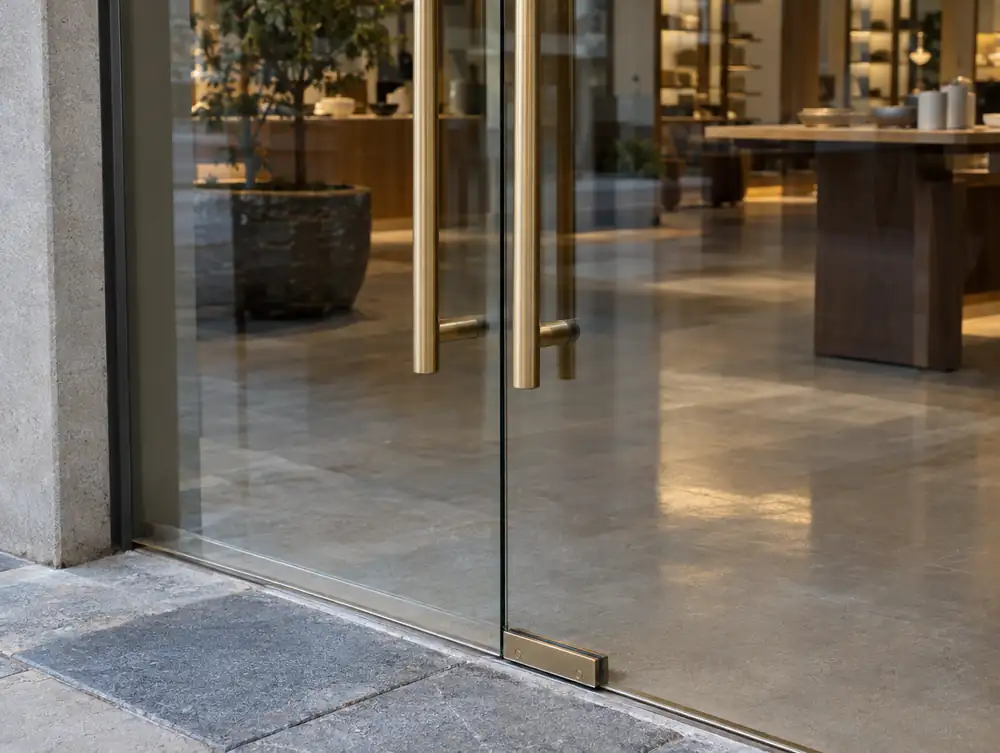
What goes into getting frameless glass doors right in Edinburgh?
A narrow Edinburgh unit benefits from a door that takes up no visual width. We'd use a single glass leaf hung beside one clear pane, so the entrance and the display read as one view into the shop.
In a deep recess, a frameless door gets natural shelter and can sit back from the street. At Edinburgh premises with that layout, we'd choose glass side returns so the recess stays bright and the door stays obvious.
A corner unit has two fronts to think about, and the return elevation often does as much selling as the main one. If that is your layout in Edinburgh, carry the fascia and glass line round the corner and treat both faces as one composition.
Which applications might frameless glass doors in Edinburgh involve?
Section 26 of the Town and Country Planning (Scotland) Act 1997 sets the test: work that doesn't materially affect the external appearance isn't development. For frameless glass doors at premises in the Edinburgh area, anything that does needs planning permission, and a true like-for-like replacement usually doesn't. The council confirms how that applies to each site.
We confirm the position at survey, because a boundary or a special designation can change who handles the file, but applications from Edinburgh premises normally go to City of Edinburgh Council.
How much could frameless glass doors in Edinburgh cost you?
The guide for frameless glass doors is £1,495 to £4,495 plus VAT per door set. Expect the lower end for simple work with clear access, and the upper end where detail, finish or awkward conditions add hours.
| Town | Edinburgh |
|---|---|
| Area | Edinburgh and the Lothians |
| Postcode districts | EH1, EH2, EH3, EH8 |
| Planning authority | City of Edinburgh Council |
| Building approval | Building warrant (Technical Handbook) |
| Distance from Great Barr | About 241 miles |
| Survey | Free for new work |
Does The City of Edinburgh Council publish shopfront guidance?
Yes, Guidance for Businesses (2024). It tells applicants what the council expects from new and altered shopfronts. A few of the things it asks for:
- Fascias should not exceed one-fifth of the overall frontage height, and applied fascia boards are normally unacceptable.
- Individual lettering should not exceed two-thirds of the fascia depth, up to a maximum of 450mm.
- Solid roller shutters are unacceptable, externally mounted shutters will not be considered acceptable, and toughened glass is the most appropriate security method.
Questions about frameless glass doors in Edinburgh
Can I have my logo on a glass door in Edinburgh?
Yes. Etched, frosted or printed logos work well, and they can double as the marking that stops people walking into the glass.
How long will my Edinburgh entrance be out of use?
Usually only a few hours, if the floor needs no work. Doors are often fitted outside trading hours, so you can open as normal.
What upkeep does a frameless door need in Edinburgh?
A yearly check of the spring and fittings keeps it right, plus regular cleaning. Ask staff to tell you if the door starts to drift, as small adjustments stop bigger problems later.
Do roller shutters need planning permission in the Edinburgh area?
Usually yes, if they materially affect the external appearance. Class 9A doesn't name shutters, so in Scotland treat them as falling to the appearance test rather than assuming a permitted development route. Ask the council before ordering, as this is a reading of the rules and not an official statement.
Do I need planning permission to alter a shopfront in the Edinburgh area?
Usually yes, if the work materially affects the external appearance. Class 9A, Scotland's shop permitted development right, doesn't cover work that alters or extends beyond the existing front. A true like-for-like replacement usually needs no permission, and the council confirms the position.