Evening trade in Featherstone depends on being found. A well-lit name helps people pick out your door at a distance, and good lighting design does that without glare.
A survey in Featherstone usually starts outside, looking at the whole elevation before any tape comes out, because the frontage has to answer the building above it.
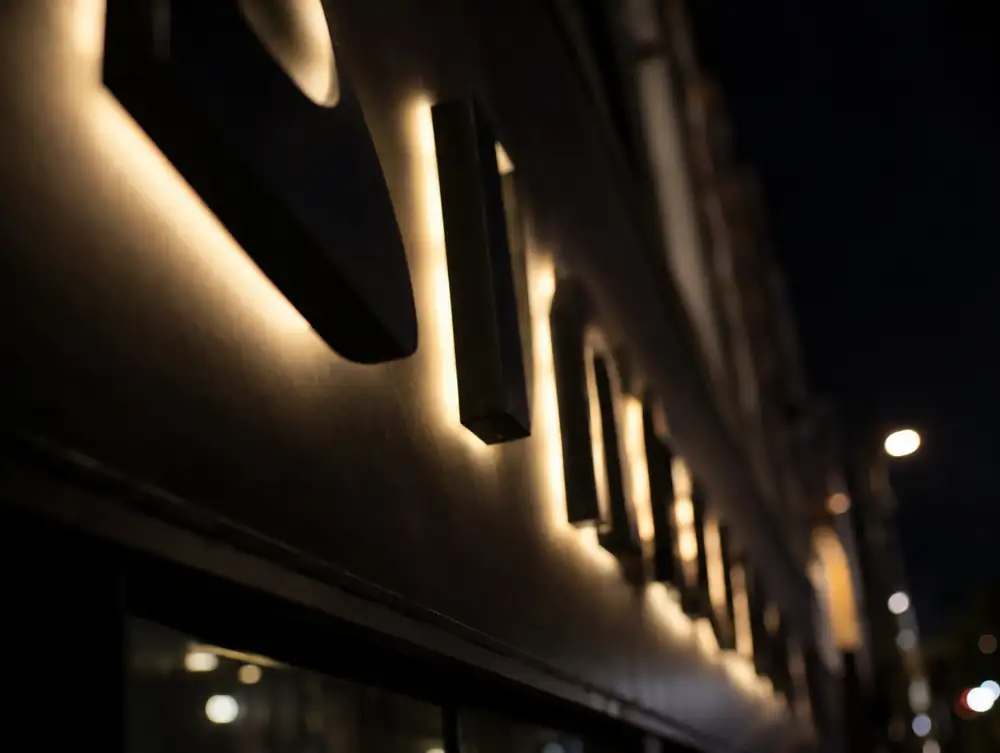
How do you design around the building when planning illuminated signage in Featherstone?
If there are flats above your Featherstone premises, we would keep the output modest and put the sign on a timer. A warm white at lower brightness is kinder to neighbours and still does its job.
Should your Featherstone premises close early, a photocell and timer can keep the sign on through the evening footfall and off for the rest of the night. It costs very little and helps the frontage look looked-after.
If the pavement falls across your frontage, let the stallriser take up the slope and keep the glass line dead level. The eye reads the long horizontal, so Featherstone premises on a slope look settled once that line is true.
What permissions should you check for illuminated signage in Featherstone?
Security grilles and shutters are named in England's rules: installing or replacing one on a shopfront sits outside the shop permitted development rights. The frontage itself is treated the same way, so for illuminated signage at premises in the Featherstone area, building work that materially affects the appearance needs planning permission. Confirm the position with the council before anything is ordered.
In England, signs at premises in the Featherstone area come under the 2007 Advertisement Regulations. An unlit fascia sign generally needs no application under Class 5 of Schedule 3 if it sits on a wall containing a shop window, tops out at 4.6m or the first-floor sill if that is lower, and keeps letters to 0.75m high. Displaying a sign without the consent it needs is a criminal offence, so check before it goes up.
For Featherstone, the usual route for planning and advert applications is through South Staffordshire Council, and we confirm that when we visit.
What might illuminated signage cost in Featherstone?
We would budget £895 to £3,995 plus VAT per sign. Scope sets most of the figure, so a clear brief at the start does more for the budget than any later change of detail.
| Town | Featherstone |
|---|---|
| Area | Staffordshire |
| Postcode districts | WS6, WV10, WV11, WV9 |
| Planning authority | South Staffordshire Council |
| Building approval | Building Regulations (Approved Documents) |
| Distance from Great Barr | About 10 miles |
| Survey | Free for new work |
Questions about illuminated signage in Featherstone
Can you replace a lightbox on my Featherstone premises?
Yes. We take the old box down, check the wall and supply behind it, then fit the new sign. Built-up letters will often need a new panel, because the old box leaves a mark on the fascia.
Do you supply lit signs for premises across Staffordshire?
Yes. We travel from Great Barr, with vetted teams working under S&K Glazing and one named contact for the job. The same scale drawing and sign-off process applies wherever your premises are.
Which illuminated sign suits a restaurant in Featherstone?
Halo-lit letters in a warm white usually suit restaurants, as they feel calm and considered. A trough light over a painted sign is a good alternative for a more traditional room.
Does the Equality Act apply to a shop entrance in the Featherstone area?
Yes. The Equality Act 2010 applies in England, as across Great Britain, and it requires reasonable steps to remove, alter or avoid physical features that disadvantage disabled people. The duty is anticipatory, so it looks at disabled people generally, and a new Services Code replaced the 2011 Code on 5 August 2026.
Does a new shopfront in the Featherstone area need Building Regulations approval?
Assume yes until building control says otherwise. England has no like-for-like exemption, though registered installers can self-certify replacement windows and doors in non-dwellings. That route doesn't cover structural glass, curtain walling or revolving doors.