Replacing tired glazing on Catford premises is often a chance to rethink the whole elevation. We survey the existing frame and fixings, then advise whether a new curtain wall or a more modest reglaze makes sense.
Please have keys to any meter cupboards and shutter housings to hand when we survey in Catford, because what sits behind them can change the drawing.
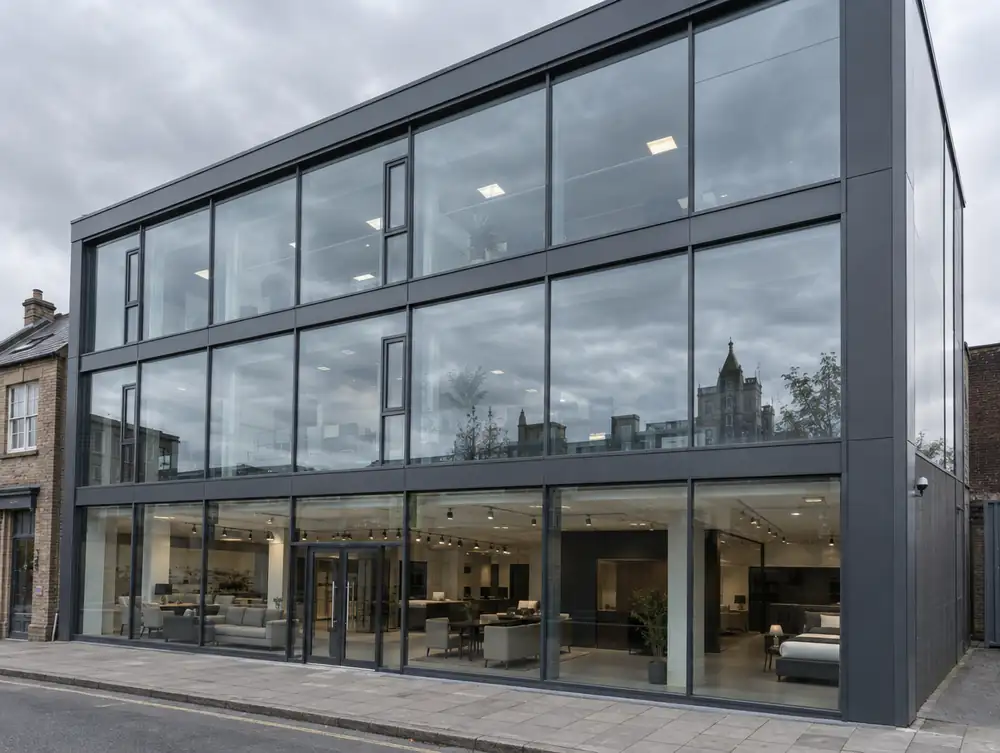
How would we approach curtain walling for your Catford premises?
Where your frontage in Catford faces open ground, wind load can push mullions a size deeper than a sheltered terrace would need. We check exposure for your elevation, so the sections are no heavier than they have to be.
If the frontage joins a neighbouring building in Catford, we draw that junction in full at design stage. The last mullion, the flashing and the movement joint are details people notice from the pavement.
If there are storeys above the shop, the frontage should feel like the base of the building and not a sign stuck on it. Lining up mullions with the windows overhead is a small move that settles the whole elevation at Catford premises.
What consents could affect curtain walling in Catford?
For curtain walling at premises in the Catford area, the deciding question in England is whether the building work materially affects the external appearance. If it does, planning permission is needed, while a true like-for-like replacement usually needs none. The council confirms the position for each site.
Expect planning and advert applications here to go to London Borough of Lewisham in the normal way. We check what that means for your building when we survey it in Catford.
What should you budget for curtain walling in Catford?
We would budget £550 to £1,250 plus VAT per m². Scope sets most of the figure, so a clear brief at the start does more for the budget than any later change of detail.
| Town | Catford |
|---|---|
| Area | Greater London |
| Postcode districts | SE13, SE23, SE4, SE6 |
| Planning authority | London Borough of Lewisham |
| Building approval | Building Regulations (Approved Documents) |
| Distance from Great Barr | About 111 miles |
| Survey | Free for new work |
Does Lewisham Council publish shopfront guidance?
Yes, Shopfront design guide, a supplementary planning document (2006). It tells applicants what the council expects from new and altered shopfronts. A few of the things it asks for:
- Fascias should generally be about 600mm high, never more than 900mm, and should not run unbroken across separate buildings.
- Solid external roller shutters are not acceptable, and open mesh or grille shutters should be powder coated with the box hidden behind the fascia.
- Internally lit fascia boxes are not allowed in conservation areas, with external lighting preferred.
Questions about curtain walling in Catford
How disruptive is curtain walling for neighbours in Catford?
Most disruption comes from access equipment and deliveries, not from noisy work. We plan unloading and any scaffold around nearby premises, and we keep the working area screened and tidy at the end of each shift.
Can part of an elevation in Catford be done first?
Yes, provided the break falls at a sensible mullion. Phasing can spread cost and disruption, although two visits usually cost more than one. We would draw the whole elevation first so the second phase matches.
What should I send before a survey of my Catford premises?
The address, a few photographs and any existing drawings are enough to start. Tell us how the building is used and which floors stay occupied, because that shapes the access plan.
Does a new shopfront in the Catford area need Building Regulations approval?
Assume yes until building control says otherwise. England has no like-for-like exemption, though registered installers can self-certify replacement windows and doors in non-dwellings. That route doesn't cover structural glass, curtain walling or revolving doors.
Do I need listed building consent for a shopfront in the Catford area?
Usually yes, if the building is listed. In England the local planning authority decides, and Historic England is notified of Grade I and II* works and specified Grade II works. Like-for-like repair may not need consent, so ask the council before work starts.