Anyone weighing up a glazed elevation in Highgate needs frame, glass and fixings designed together. All three sit under one contract with S&K Glazing, with a named contact from survey to handover.
It helps if you can be there when we visit Highgate, since five minutes walking the frontage together answers more than a long email.
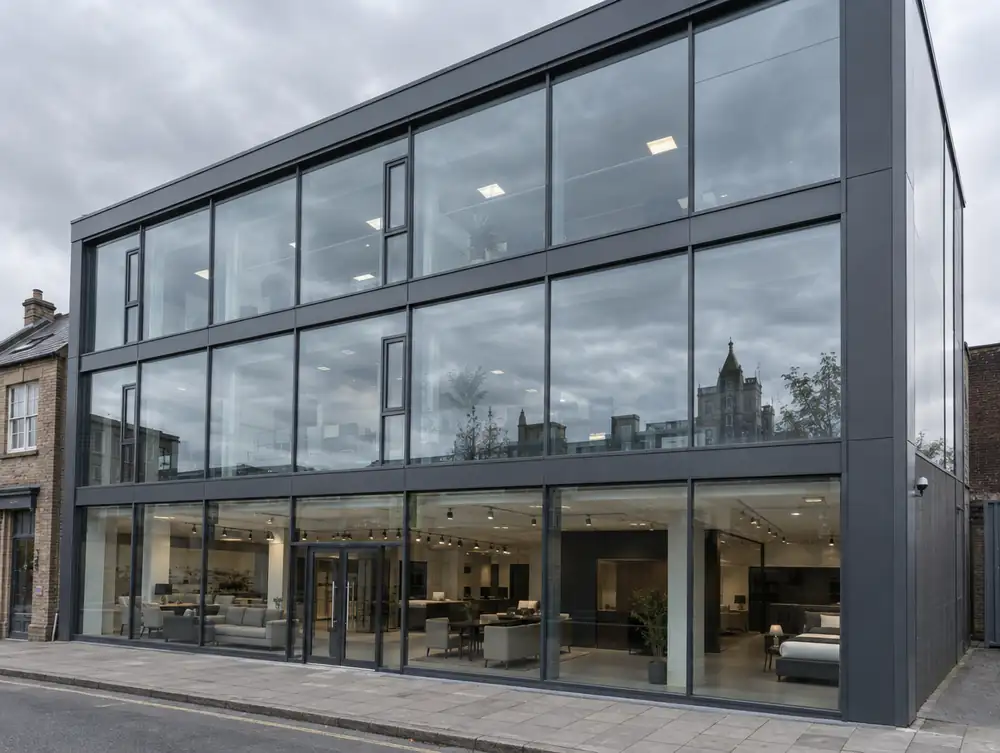
How do you design around the building when planning curtain walling in Highgate?
Where the elevation faces south or west, solar control glass can do more for comfort than any blind. If it looks north, we would usually keep the glass clear and neutral, so the building does not turn dull on a grey day.
Where your frontage in Highgate faces open ground, wind load can push mullions a size deeper than a sheltered terrace would need. We check exposure for your elevation, so the sections are no heavier than they have to be.
If there are storeys above the shop, the frontage should feel like the base of the building and not a sign stuck on it. Lining up mullions with the windows overhead is a small move that settles the whole elevation at Highgate premises.
What permissions should you check for curtain walling in Highgate?
Security grilles and shutters are named in England's rules: installing or replacing one on a shopfront sits outside the shop permitted development rights. The frontage itself is treated the same way, so for curtain walling at premises in the Highgate area, building work that materially affects the appearance needs planning permission. Confirm the position with the council before anything is ordered.
For Highgate, the usual route for planning and advert applications is through London Borough of Camden, and we confirm that when we visit.
What might curtain walling cost in Highgate?
Allow £550 to £1,250 plus VAT per m². Size and specification set most of that figure for curtain walling, and the rest depends on what the survey finds on site.
| Town | Highgate |
|---|---|
| Area | Greater London |
| Postcode districts | N19, N6, NW3, NW5 |
| Planning authority | London Borough of Camden |
| Building approval | Building Regulations (Approved Documents) |
| Distance from Great Barr | About 101 miles |
| Survey | Free for new work |
Does London Borough of Camden publish shopfront guidance?
Yes, Camden Planning Guidance: Design (Chapter 6: Shopfronts) (2021). It tells applicants what the council expects from new and altered shopfronts. A few of the things it asks for:
- Existing stall risers should be kept, and new ones should be at least 300mm high or reach the top of the pilaster base or door panel.
- Solid shutters are only acceptable in exceptional circumstances, and internal security measures are strongly encouraged.
- Uncoated shutters, galvanised steel, milled finishes and anodised aluminium are not acceptable finishes.
Questions about curtain walling in Highgate
Can you replace failing curtain walling on premises in Highgate?
Yes. We survey the frame, brackets and seals first, because some elevations only need new glass and gaskets. If the frame itself has failed, we draw a replacement that can be phased around the building's use.
Is curtain walling right for a single-storey unit in Highgate?
Usually not. A well-designed aluminium shopfront will span most single-storey openings with slimmer sections and lower cost. Curtain walling starts to make sense once the glass runs past a floor edge or the opening is unusually tall.
What should I send before a survey of my Highgate premises?
The address, a few photographs and any existing drawings are enough to start. Tell us how the building is used and which floors stay occupied, because that shapes the access plan.
Do I need listed building consent for a shopfront in the Highgate area?
Usually yes, if the building is listed. In England the local planning authority decides, and Historic England is notified of Grade I and II* works and specified Grade II works. Like-for-like repair may not need consent, so ask the council before work starts.
Do I need planning permission to change a shopfront in the Highgate area?
Usually yes, if the work materially affects the building's external appearance. England's shop permitted development rights exclude creating, altering or replacing a shopfront, so there is no shortcut. A true like-for-like replacement usually needs no application, and the council confirms the position.