Each frameless door for Little Venice premises is made to a final check measure, never to a rough size. We travel from Great Barr to fit it, and you'll have one named contact from start to finish.
Please have keys to any meter cupboards and shutter housings to hand when we survey in Little Venice, because what sits behind them can change the drawing.
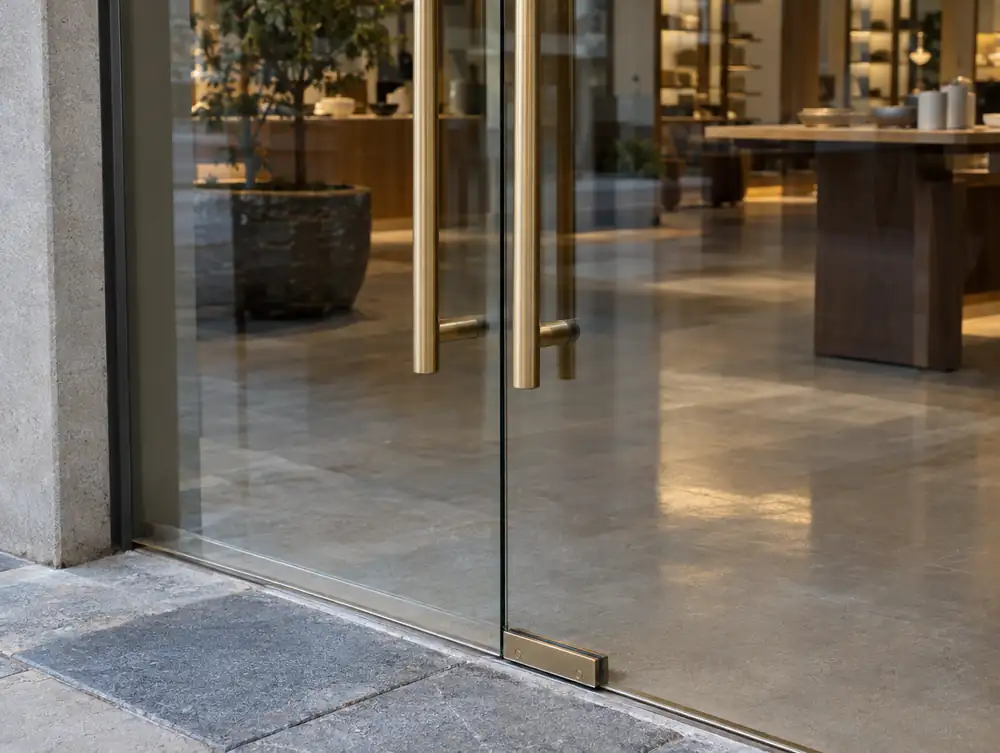
What makes frameless glass doors work well on Little Venice premises?
If a landlord in Little Venice controls the frontage, a glass door is often an easy approval because so little changes visually. We'd supply a drawing showing the door, the fittings and any markings on the glass.
For a brand with branches beyond Little Venice, we'd fix the handle, fitting finish and manifestation as a standard. The glass is then made to each opening, so all the doors match despite different sizes.
If the pavement falls across your frontage, let the stallriser take up the slope and keep the glass line dead level. The eye reads the long horizontal, so Little Venice premises on a slope look settled once that line is true.
Could frameless glass doors in Little Venice need planning permission?
Security grilles and shutters are named in England's rules: installing or replacing one on a shopfront sits outside the shop permitted development rights. The frontage itself is treated the same way, so for frameless glass doors at premises in the Little Venice area, building work that materially affects the appearance needs planning permission. Confirm the position with the council before anything is ordered.
Planning and advert applications for Little Venice premises normally go to Westminster City Council. We check the position for your address at survey.
How much should you set aside for frameless glass doors in Little Venice?
We would budget £1,495 to £4,495 plus VAT per door set. Scope sets most of the figure, so a clear brief at the start does more for the budget than any later change of detail.
| Town | Little Venice |
|---|---|
| Area | Greater London |
| Postcode districts | NW8, W1H, W2, W9 |
| Planning authority | Westminster City Council |
| Building approval | Building Regulations (Approved Documents) |
| Distance from Great Barr | About 102 miles |
| Survey | Free for new work |
Does Westminster City Council publish shopfront guidance?
Yes, Shopfronts, Blinds and Signs - A Guide to their Design (1993). It tells applicants what the council expects from new and altered shopfronts. A few of the things it asks for:
- Roller shutters will not normally be given consent, and internally fitted brick-bond grilles are the preferred solution.
- Large internally lit box signs are generally inappropriate, while externally lit fascias and back-lit or halo-lit letters are accepted.
- Projecting signs need at least 2.6m clearance above the pavement and should sit at fascia level, centred on a pilaster.
Questions about frameless glass doors in Little Venice
Can my Little Venice premises take a frameless glass door?
Most can, once the floor and opening have been checked. The survey shows whether a floor spring will fit, and if not, a concealed closer in a transom does the same job.
Can I have my logo on a glass door in Little Venice?
Yes. Etched, frosted or printed logos work well, and they can double as the marking that stops people walking into the glass.
Will a glass door be safe with children around in my Little Venice shop?
Toughened glass is strong and breaks into small pieces, so it is a good choice for a family-facing shop. The main risks are finger traps at the hinge side, which careful spring settings and guards can reduce.
Does a new shopfront in the Little Venice area need Building Regulations approval?
Assume yes until building control says otherwise. England has no like-for-like exemption, though registered installers can self-certify replacement windows and doors in non-dwellings. That route doesn't cover structural glass, curtain walling or revolving doors.
Do roller shutters need planning permission in the Little Venice area?
Usually yes. Installing or replacing a security grill or shutter on a shopfront is expressly outside England's shop permitted development rights, so the only way to avoid an application is work that doesn't materially affect the appearance. Ask the council before ordering.