Frameless glass turns a shopfront in Stamford into a window on the whole interior, with no mullions in the way. We measure the opening, check the structure overhead and draw every joint before the glass is ordered.
Expect us to measure the opening, photograph the existing front and check how materials will reach it on the day, at a time you have agreed.
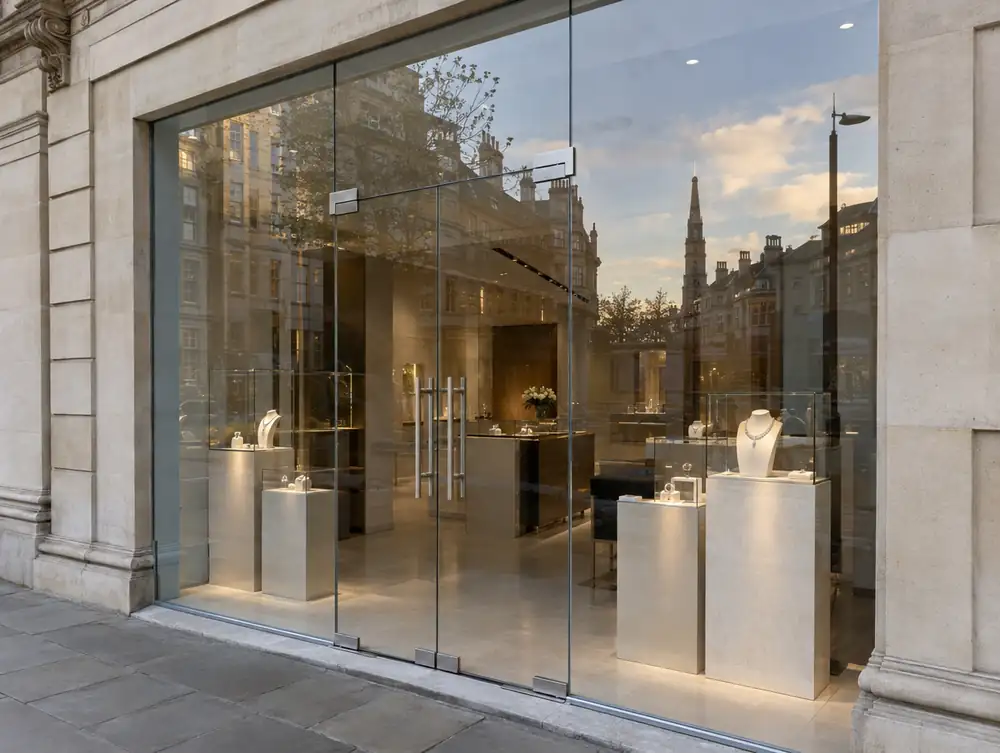
What should you think about before commissioning frameless glass shopfronts in Stamford?
On a south or west-facing Stamford frontage, a wall of clear glass will warm the shop and fade stock. We'd look at solar control coatings, blinds hidden in a ceiling slot or a retractable awning, and weigh up any loss of clarity with you.
For a brand taking frameless fronts through Stamford and beyond, pane sizes rarely repeat because no two openings match. We'd fix the joint width, glass type and head detail as the brand standard, then measure each opening on its own.
Where units share one long run of fascia, breaking the height makes you stand out for the wrong reason. If that describes your Stamford parade, keep the line and win attention with lettering, lighting and what's in the window.
What is a realistic budget for frameless glass shopfronts in Stamford?
Allow £4,995 to £15,995 plus VAT for a typical frontage. Size and specification set most of that figure for frameless glass shopfronts, and the rest depends on what the survey finds on site.
Who approves frameless glass shopfronts in Stamford?
For frameless glass shopfronts at premises in the Stamford area, the deciding question in England is whether the building work materially affects the external appearance. If it does, planning permission is needed, while a true like-for-like replacement usually needs none. The council confirms the position for each site.
For Stamford, the usual route for planning and advert applications is through South Kesteven District Council, and we confirm that when we visit.
| Town | Stamford |
|---|---|
| Area | Lincolnshire |
| Postcode districts | PE9 |
| Planning authority | South Kesteven District Council |
| Building approval | Building Regulations (Approved Documents) |
| Distance from Great Barr | About 60 miles |
| Survey | Free for new work |
Does South Kesteven District Council publish shopfront guidance?
Yes, South Kesteven Shopfront Design Guide (2024). It tells applicants what the council expects from new and altered shopfronts. A few of the things it asks for:
- Retractable shutters should sit inside the building hidden behind the fascia, and external roller shutters are not acceptable on listed buildings.
- Fascias that are boxed in or project excessively are unsuitable, and signs should not be built out on an extra box or board.
- External illumination is the only acceptable option for traditional shopfronts, using static single-colour LED where lighting is accepted.
Questions about frameless glass shopfronts in Stamford
Can I see how the joints will look on my Stamford front?
Yes. The scale drawings show every joint and door line, and you sign off the layout before the glass is ordered. If the joint colour matters, ask at the survey and we'll bring samples.
Which glass should I choose for premises in Lincolnshire?
Clear toughened is the starting point, with low-iron for a whiter look and toughened laminated where you want the pane to stay put after a break. The right one depends on your stock, your street and your insurer.
How much of my Stamford shop will people see from the pavement?
All of it, which is both the point and the risk. Shelving backs, till positions and ceiling services become part of the front once the frames have gone, so we'd plan that view with you.
Does a new shopfront in the Stamford area need Building Regulations approval?
Assume yes until building control says otherwise. England has no like-for-like exemption, though registered installers can self-certify replacement windows and doors in non-dwellings. That route doesn't cover structural glass, curtain walling or revolving doors.
Do I need listed building consent for a shopfront in the Stamford area?
Usually yes, if the building is listed. In England the local planning authority decides, and Historic England is notified of Grade I and II* works and specified Grade II works. Like-for-like repair may not need consent, so ask the council before work starts.