Good automatic entrances look calm and quiet, with very little on show. For Blackwall premises, that means hiding the operator, aligning the leaves and setting the door to your hours.
Surveys for Blackwall are booked with you directly. Tell us your quieter days and we'll work around them.
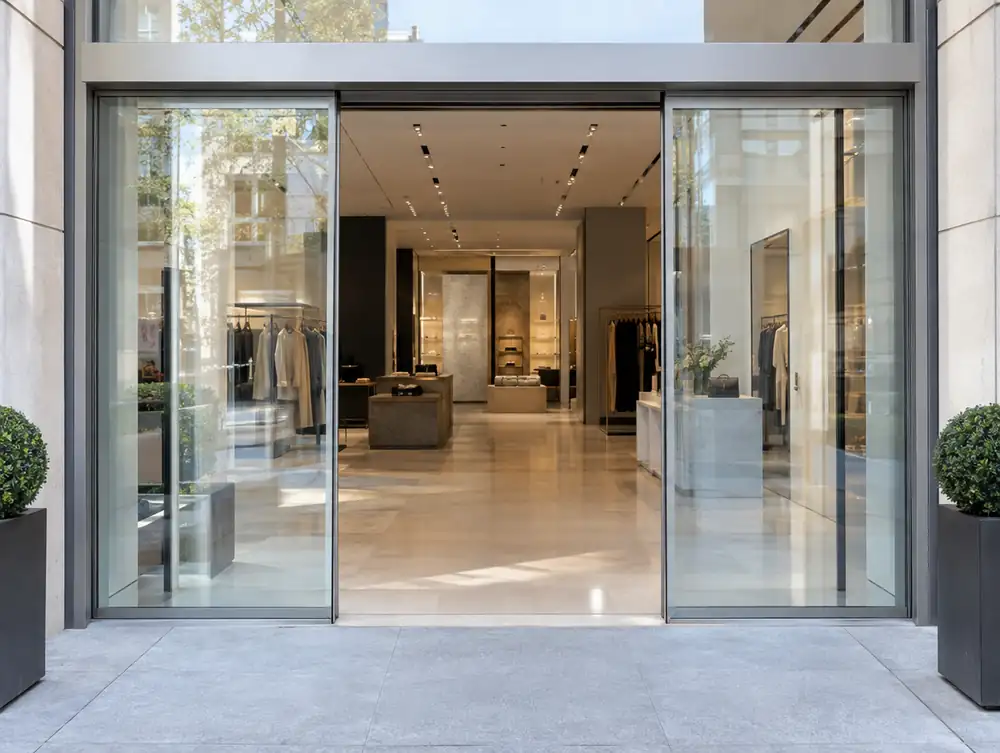
How do you design around the building when planning automatic sliding doors in Blackwall?
In a parade in Blackwall with a narrow pavement, the sensor set-up is the first job. We'd angle the radar so people walking past don't trigger the door, and keep the leaves in line with the neighbouring frontage.
A corner unit in Blackwall can often move its entrance to the angle, where two directions of footfall meet. We'd look at a curved or canted door set, and check the wind on both streets before fixing the position.
If the pavement falls across your frontage, let the stallriser take up the slope and keep the glass line dead level. The eye reads the long horizontal, so Blackwall premises on a slope look settled once that line is true.
What might automatic sliding doors cost in Blackwall?
Until the survey is done, plan on £3,895 to £11,995 plus VAT per entrance. Unusual sizes, fine detail and phased working push the figure up, while a simple brief and clear access keep it toward the lower end.
What permissions should you check for automatic sliding doors in Blackwall?
Security grilles and shutters are named in England's rules: installing or replacing one on a shopfront sits outside the shop permitted development rights. The frontage itself is treated the same way, so for automatic sliding doors at premises in the Blackwall area, building work that materially affects the appearance needs planning permission. Confirm the position with the council before anything is ordered.
Blackwall applications for planning permission or advertisement consent are normally handled by London Borough of Tower Hamlets. Our survey includes a check of the position for your address.
| Town | Blackwall |
|---|---|
| Area | Greater London |
| Postcode districts | E13, E14, E16, E3 |
| Planning authority | London Borough of Tower Hamlets |
| Building approval | Building Regulations (Approved Documents) |
| Distance from Great Barr | About 108 miles |
| Survey | Free for new work |
Does London Borough of Tower Hamlets publish shopfront guidance?
Yes, Shopfronts and Roller Shutter Grilles. It tells applicants what the council expects from new and altered shopfronts. A few of the things it asks for:
- Stallrisers are always required on traditional shopfronts.
- Fascias should normally be no more than 500mm deep and no higher than ground floor level.
- External roller shutter boxes will not be permitted, and shutters should wherever possible be an integral feature of the shopfront.
Questions about automatic sliding doors in Blackwall
How noisy would an automatic door be at my Blackwall shop?
A healthy door is very quiet, and you'd normally hear only a soft hum. Noise usually means worn rollers or grit in the guide, which a service will put right.
What do I need to arrange for a door in Blackwall?
Usually just a power supply near the head, and we'll tell you exactly what at survey. We can bring that into the one contract if you'd rather not chase an electrician.
Who installs automatic doors in Blackwall?
Vetted door teams working under S&K Glazing handle the fit and set-up, travelling from Great Barr. Your agreement is with S&K Glazing Limited, and one person stays your point of call.
Do I need planning permission to change a shopfront in the Blackwall area?
Usually yes, if the work materially affects the building's external appearance. England's shop permitted development rights exclude creating, altering or replacing a shopfront, so there is no shortcut. A true like-for-like replacement usually needs no application, and the council confirms the position.
Does a new shopfront in the Blackwall area need Building Regulations approval?
Assume yes until building control says otherwise. England has no like-for-like exemption, though registered installers can self-certify replacement windows and doors in non-dwellings. That route doesn't cover structural glass, curtain walling or revolving doors.