Good planning and consent support starts with the building, so the first step for any premises in the Highlands and Moray is a measured visit. Everything we draw or submit after that rests on real dimensions.
Access gets as much attention as appearance at survey. Where a vehicle can stop, how long sections reach the opening and how the pavement stays safe for the public all shape the programme for planning and consent support in the Highlands and Moray.
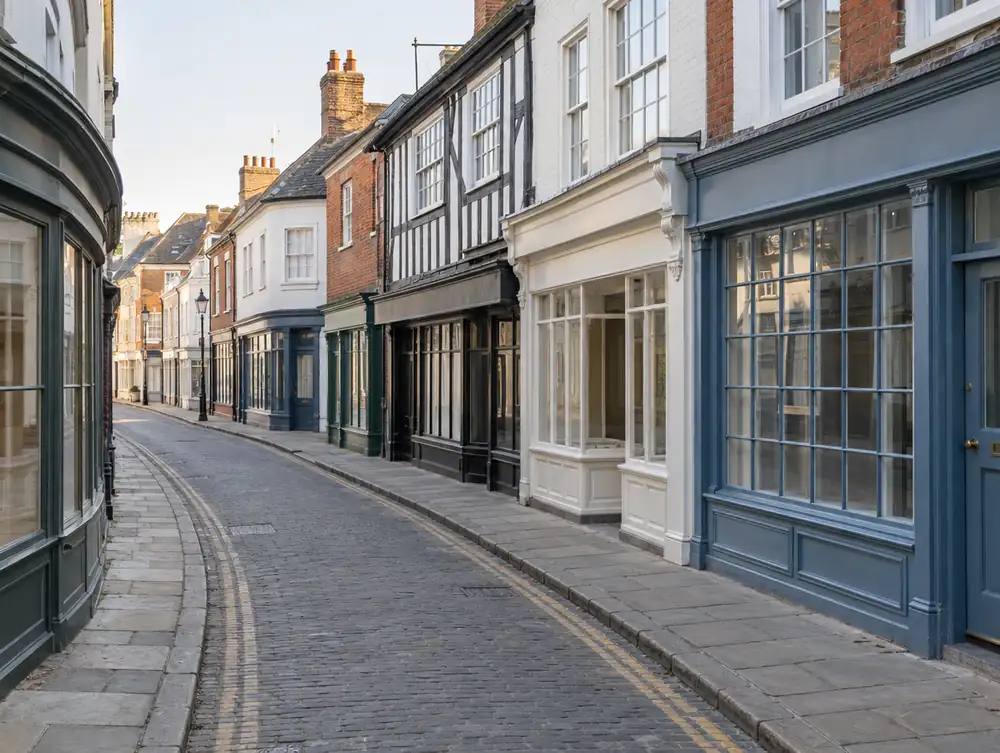
What should you settle before committing to planning and consent support in the Highlands and Moray?
Good applications start with good photographs. For premises across the Highlands and Moray we record the frontage, its neighbours and the wider street at survey, so the drawings show your proposal in context.
Neighbouring frontages are part of the case. On a unit in the Highlands and Moray we note sign heights, colours and materials nearby, so the design can show why it belongs.
What consents apply to shopfront work in the Highlands and Moray?
Scottish guidance says like-for-like windows need no permission, and a true like-for-like frontage replacement usually follows the same logic. Class 7A covers altering or replacing an existing window, but it doesn't mention shopfronts, so ask before relying on it for a display window. For shopfront work at premises in the Highlands and Moray area, a material effect on the external appearance means planning permission, and the council confirms the position.
How much does planning and consent support cost in the Highlands and Moray?
A sensible starting budget is £395 to £1,295 plus VAT per application, plus the council's fee. What shifts the figure is whatever can't be seen yet, such as the condition behind the old frontage or the services running through it.
| Area | Highlands and Moray |
|---|---|
| Nation | Scotland |
| Towns covered | 5 |
| Main town | Inverness |
| Planning regime | Scotland: 1997 Planning Act and the 1984 Advertisement Regulations |
| Building approval | Building warrant (Technical Handbook) |
| Survey | By arrangement |
Does The Highland Council publish shopfront guidance?
Yes, Shopfront Design Guide: Planning Guidance (2018). It tells applicants what the council expects from new and altered shopfronts. A few of the things it asks for:
- Stallrisers should be at least 400mm high, and glazing to ground level is generally not acceptable on traditional shopfronts.
- Fascias must not be internally lit or span more than one building, and lettering should fill no more than two-thirds of the fascia.
- Solid shutters are not supported, and external retractable shuttering is unlikely to be acceptable in conservation areas or on listed buildings.
Questions about planning and consent support in the Highlands and Moray
Will you answer the officer's questions on premises in the Highlands and Moray?
Yes, your named contact handles queries about the drawings and the design. We let you know what was asked and what we replied, so you stay informed.
Do you prepare applications for premises across the Highlands and Moray?
Yes. We measure, draw and prepare the application, then submit it and answer the officer's questions. The decision itself is never ours to make, and we will always be plain about that.
How early should I start if I have an opening date in the Highlands and Moray?
As early as you can, ideally before you commit to the date. Design, drawings and a decision can take months together, so we would map it out with you at the first meeting.
Do I need planning permission to alter a shopfront in the Highlands and Moray area?
Usually yes, if the work materially affects the external appearance. Class 9A, Scotland's shop permitted development right, doesn't cover work that alters or extends beyond the existing front. A true like-for-like replacement usually needs no permission, and the council confirms the position.
Do I need a building warrant for a shopfront in the Highlands and Moray area?
Usually yes in Scotland, if the work alters a wall or structure. Schedule 3 of the Building (Scotland) Regulations 2004 lists some work that needs no warrant, such as replacing a door or window with its frame, but the standards still apply. Shopfronts aren't named there, so ask the council before relying on it.