One contract covers the frontage when you come to us for multi-site rollouts in the Highlands and Moray, so glass, frame, sign and shutter aren't separate trades to chase. You also keep one named contact from first visit to handover.
Most frontages share something with someone, be that a door to the flats above, a meter cupboard or a pilaster on the boundary. We pick those up early on multi-site rollouts in the Highlands and Moray, because they are far easier to design around than to discover on the day.
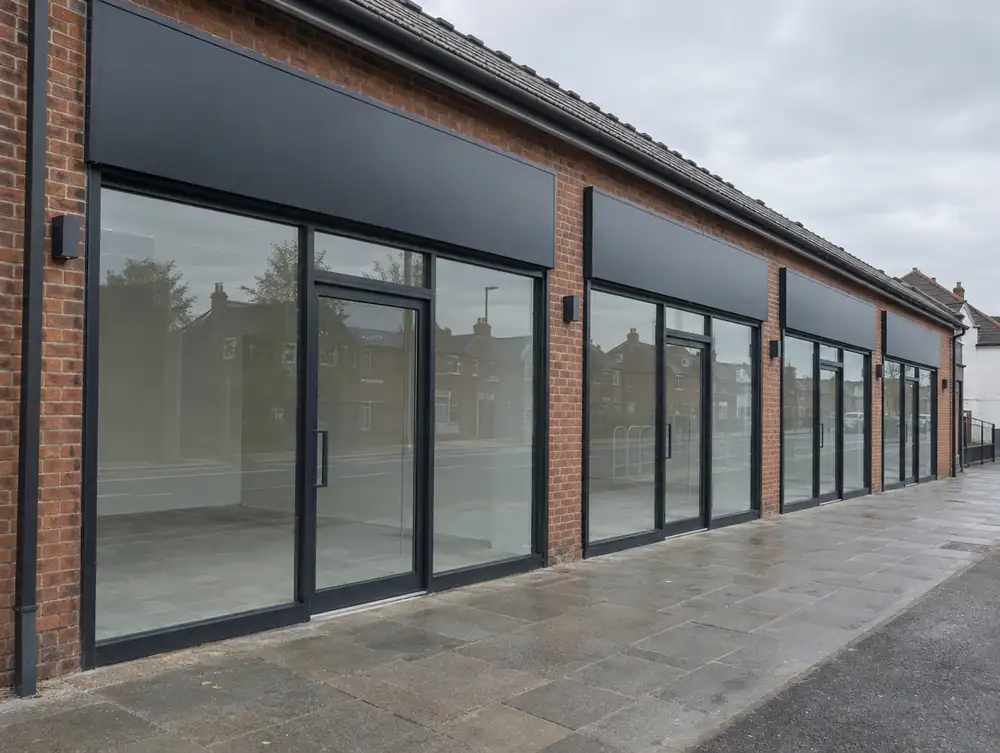
What makes multi-site rollouts work well for premises in the Highlands and Moray?
Trading patterns vary by site. Within Highlands and Moray, we would agree fit dates with each manager, since a lunchtime food unit and an evening bar have very different quiet hours.
Site managers need one clear message. For premises across the Highlands and Moray, we would send each a short notice with dates, access needs and a named contact, so nobody is caught out on the morning.
What consents apply to multi-site rollouts in the Highlands and Moray?
Shutters aren't named in Class 9A, so in Scotland they usually fall to the appearance test. The same goes for multi-site rollouts at premises in the Highlands and Moray area: building work that materially affects the external appearance needs planning permission, and a true like-for-like usually doesn't. Ask the council to confirm the position for your site.
| Area | Highlands and Moray |
|---|---|
| Nation | Scotland |
| Towns covered | 5 |
| Main town | Inverness |
| Planning regime | Scotland: 1997 Planning Act and the 1984 Advertisement Regulations |
| Building approval | Building warrant (Technical Handbook) |
| Survey | By arrangement |
Does The Highland Council publish shopfront guidance?
Yes, Shopfront Design Guide: Planning Guidance (2018). It tells applicants what the council expects from new and altered shopfronts. A few of the things it asks for:
- Stallrisers should be at least 400mm high, and glazing to ground level is generally not acceptable on traditional shopfronts.
- Fascias must not be internally lit or span more than one building, and lettering should fill no more than two-thirds of the fascia.
- Solid shutters are not supported, and external retractable shuttering is unlikely to be acceptable in conservation areas or on listed buildings.
Questions about multi-site rollouts in the Highlands and Moray
How would site surveys in the Highlands and Moray be arranged?
We would agree a route and dates with you, then visit each sample site at a time that suits the manager. A survey usually takes a couple of hours and needs little from the staff on site.
How would work on premises in the Highlands and Moray fit around trading?
Fit dates would be set site by site, with closed-day or out-of-hours installation where needed. We would share the plan with each manager before the crew arrives.
Would one person manage all my sites around Inverness?
Yes, you would have one named contact for the programme. Vetted teams working under S&K Glazing would carry out the work, with each site following the same drawings and checks.
Does the Equality Act cover a shop entrance in the Highlands and Moray area?
Yes. The Equality Act 2010 applies in Scotland as part of Great Britain, and its anticipatory duty expects reasonable steps to remove, alter or avoid physical features that disadvantage disabled people generally. BS 8300-2:2018 is the current British Standard for accessible buildings.
Do I need listed building consent for a shopfront in the Highlands and Moray area?
Almost certainly, if the building is listed and windows or doors are changing, according to Historic Environment Scotland. The planning authority decides, and Historic Environment Scotland is consulted on some applications. Scottish Ministers are notified if it objects.