A multi-site rollout is a coordinated programme to design, consent and fit matching frontages across a group of premises. It suits retail chains, restaurant groups, franchises, banks and landlords who want a consistent look and one point of contact.
| Start point | Measured surveys of a sample of sites, chosen to show the full range of buildings in the estate |
|---|---|
| Design standard | A kit of parts covering frame, fascia, sign, door and lighting, with rules for adapting each |
| Drawings | A scale drawing set for each site, with signed-off dimensions |
| Consents | A site-by-site tracker covering planning, advertisement, listed building and building approval by nation |
| Contract | One contract with S&K Glazing Limited, with one named contact for the programme |
| Safety duties | CDM 2015 in Great Britain and CDM (NI) 2016 in Northern Ireland, with roles agreed at the start |
| Typical timescale | Typically 8 to 16 weeks to a first pilot site, then batches to an agreed programme |
| Pricing | Priced per estate after surveying sample sites, with a schedule of rates for repeat items |
How would a shopfront rollout be run?
A rollout would run in six stages, and every site would follow the same path. The aim is to make the hundredth decision as easy as the first.
- Survey a sample of sites, including the awkward ones, and record each building's constraints.
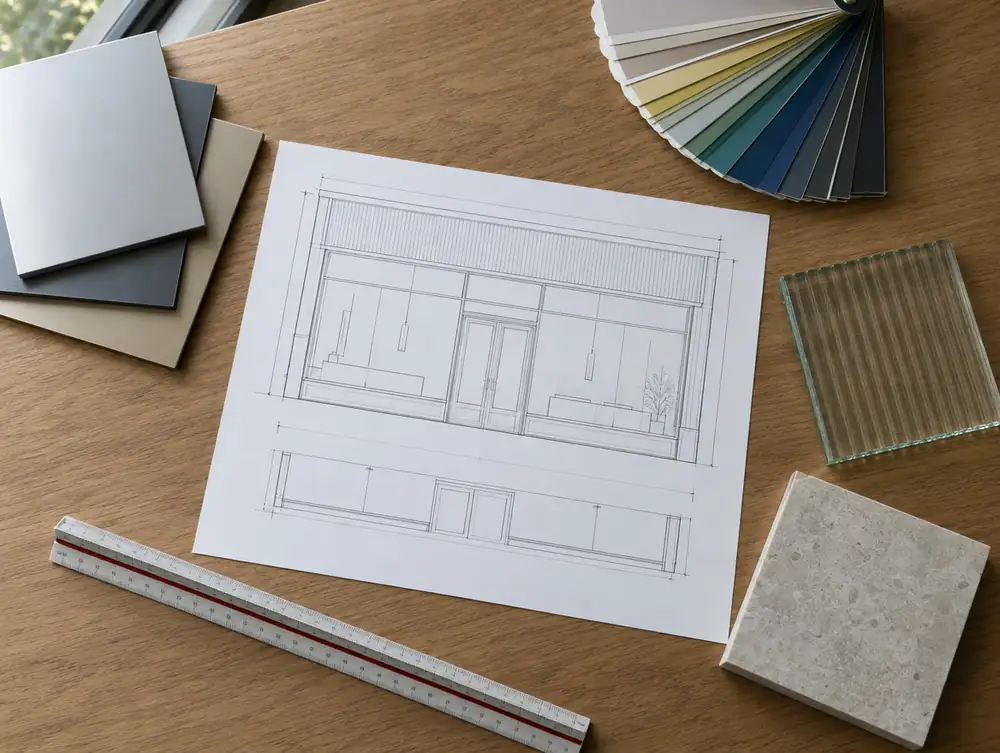
- Draw a kit of parts and agree the rules for adapting it.
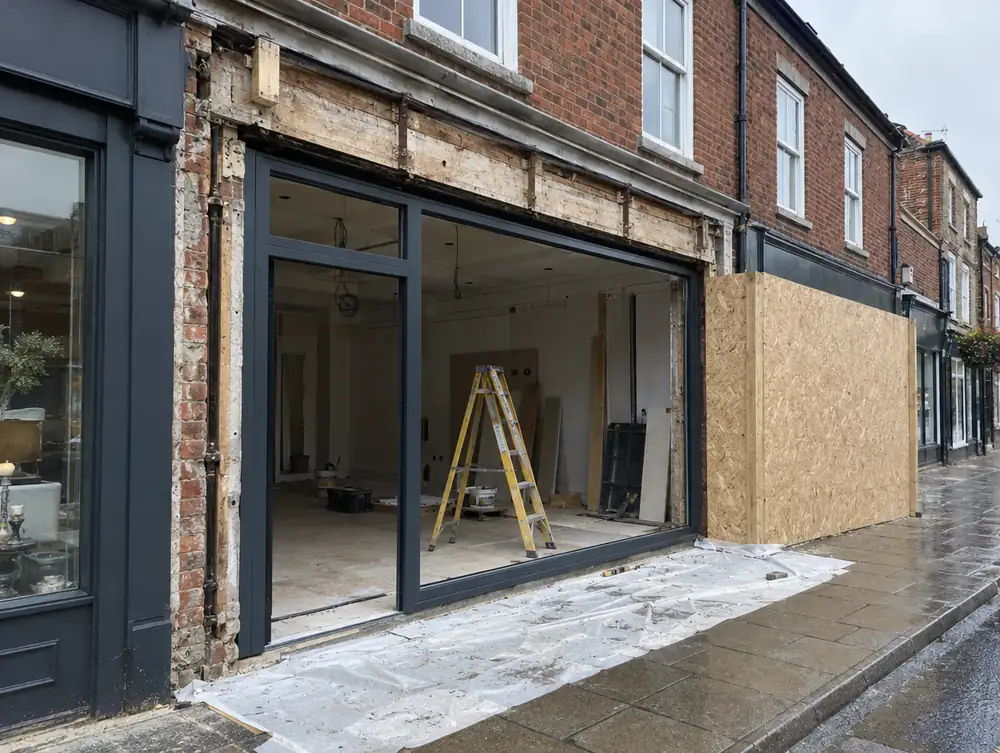
- Build a pilot site, then stand in front of it and fix what the drawings missed.
- Open a consent tracker for every address and submit applications in batches.
- Manufacture in batches that follow consent, so nothing sits in storage waiting for a decision.
- Snag each site against its drawings and hand over one set of records for the estate.
How do you keep a brand consistent across different buildings?
Fix the ratios and let the dimensions move. Fascia depths will not match from site to site, so a good standard sets letter height as a share of the fascia, along with margins, colours and finishes, and lets size follow the building.
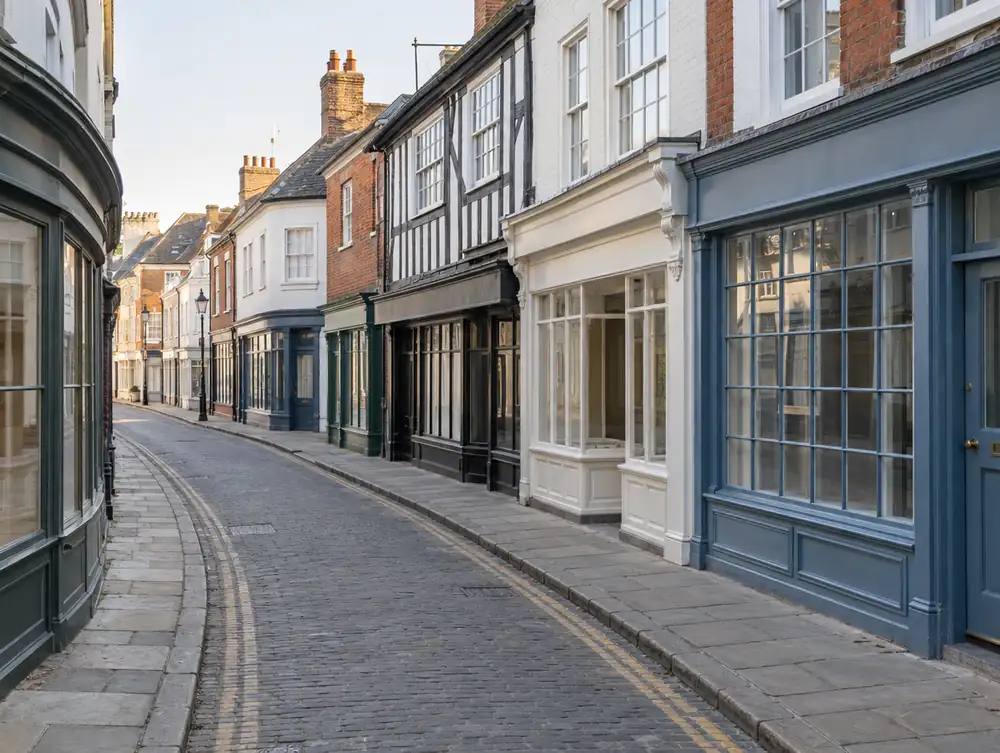
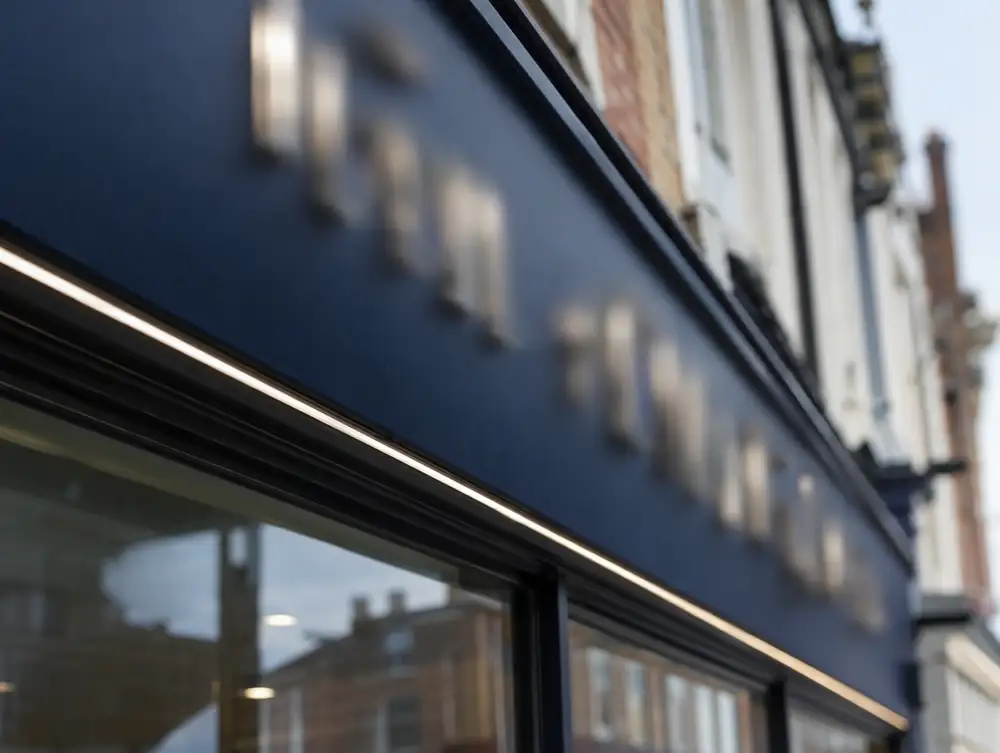
Exceptions need a plan too. A listed building may need painted timber and an unlit sign where the rest of the estate uses aluminium and halo letters, and it will still read as the same brand if the colour, type and proportions hold. Light matters as much as paint. One LED colour temperature and output across every site does more for consistency at night than any logo rule.
How are consents handled across several councils and nations?
Site by site, because each address has its own decision-maker and the four nations run different systems. We prepare the drawings and applications, and each council decides.
- Lit-sign classes are unavailable in conservation areas in all four nations, so the standard needs an unlit fallback.
- Listed sites need listed building consent as well as planning.
- Building approval differs by nation, including building warrants in Scotland.
- Fees and timescales vary, so a tracker keeps the true position on every site.
Where do rollouts go wrong?
Most failures trace back to a standard drawn for an ideal unit. Real estates have shallow fascias, recessed doors and landlords with their own rules, so the pilot should be a difficult site. Ordering signs for every address before consent is the next risk, followed by mixed LED batches that leave two sites a visibly different white.
Duties need settling early as well. Under CDM 2015 in Great Britain, a business commissioning work is likely to be a commercial client, and with more than one contractor it appoints a principal designer and principal contractor. A project is notified to HSE by F10 if it runs over 30 working days with more than 20 workers at once, or exceeds 500 worker days. Northern Ireland uses the NI10 form to HSENI.
What does an estate cost to maintain after a rollout?
Usually less per site than a mixed estate, provided parts and records are controlled. A common door closer, glass type and LED driver means fewer spares and quicker repairs.
We would hand over a register with one row per site, listing finishes, glass sizes, sign files and service dates. Add a small stock of spare letters and modules from the original batch, and a damaged sign can be put right without remaking the whole set. Planned yearly checks then replace much of the reactive spend.
Which options can you choose from?
Pilot then batches
One difficult site first, then regional groups. This is the route with the least risk for a new brand standard.
Rebrand refresh
New signs, paint and lighting on existing frames. It moves a whole estate quickly, with little disruption.
Full frontage replacement
New shopfront, entrance and sign at each address. It suits estates where frames and doors have reached the end of their life.
As leases renew
Sites are upgraded when each lease event comes up. The cost is spread over years, and the standard has to stay stable.
Landlord estate programme
A frontage standard for a parade or portfolio, offered to tenants as units turn over. It lifts the whole asset gradually.
How much does it cost?
Rollouts are priced per estate, after we survey a sample of your sites.
Work out a guide price or see all our prices.
Common questions
How much does a multi-site rollout cost?
A rollout is priced per estate, after we survey a sample of your sites. Repeat items then go on a schedule of rates, with site-specific work quoted on top. A figure before that survey would only be a guess.
How long does a rollout take?
It depends on the number of sites and the consents needed. A first pilot site typically takes 8 to 16 weeks from the start of design, and later sites follow in batches. We would set the programme after the sample surveys.
Who handles the consents on a rollout?
We would prepare the drawings and applications for each address and track them centrally, and each council decides. An outcome cannot be promised, so the programme should allow for a site that needs a different design. Fees are paid per application.
How is maintenance handled after a rollout?
A site register, a spares list and a planned yearly check form the core of it. Common parts keep stock small and repairs simple. Repairs are charged call-outs, and planned visits reduce how often you need them.
Can some sites differ from the standard?
Yes, and some will have to. Listed buildings, sensitive areas and shopping centre rules may all call for a variation. We would agree the limits of that variation in the standard, so the brand stays recognisable.
How many sites make a rollout worthwhile?
Two or more can benefit, because a shared design and specification saves repeat work. Batching manufacture and fitting starts to pay off as the numbers rise. A sample survey would show where the savings really sit.
What is the first step in a rollout?
Send a list of addresses with a short brief and any brand guidelines. We would then pick a sample of sites to survey, including the most difficult. The kit of parts and the programme follow from what those surveys find.