Each frameless door for Chelsea premises is made to a final check measure, never to a rough size. We travel from Great Barr to fit it, and you'll have one named contact from start to finish.
A survey in Chelsea usually starts outside, looking at the whole elevation before any tape comes out, because the frontage has to answer the building above it.
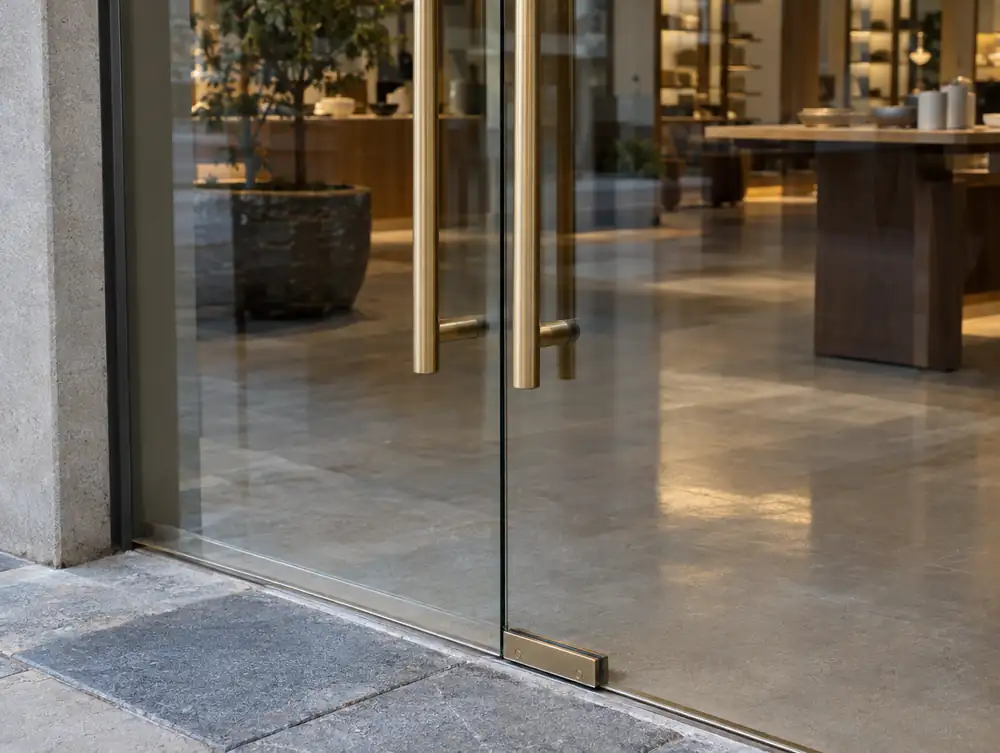
Where should you begin with frameless glass doors in Chelsea?
If a landlord in Chelsea controls the frontage, a glass door is often an easy approval because so little changes visually. We'd supply a drawing showing the door, the fittings and any markings on the glass.
On a sunny Chelsea frontage, dark door handles can get uncomfortably hot and fingermarks on the glass show up more. We'd favour brushed finishes, and a full-height handle keeps hands on the metal and off the pane.
A corner unit has two fronts to think about, and the return elevation often does as much selling as the main one. If that is your layout in Chelsea, carry the fascia and glass line round the corner and treat both faces as one composition.
What sign-off might you need for frameless glass doors in Chelsea?
Security grilles and shutters are named in England's rules: installing or replacing one on a shopfront sits outside the shop permitted development rights. The frontage itself is treated the same way, so for frameless glass doors at premises in the Chelsea area, building work that materially affects the appearance needs planning permission. Confirm the position with the council before anything is ordered.
Planning and advert applications for Chelsea premises normally go to Royal Borough of Kensington and Chelsea. We check the position for your address at survey.
What price should you expect for frameless glass doors in Chelsea?
A sensible starting budget is £1,495 to £4,495 plus VAT per door set. What shifts the figure is whatever can't be seen yet, such as the condition behind the old frontage or the services running through it.
| Town | Chelsea |
|---|---|
| Area | Greater London |
| Postcode districts | SW10, SW3, SW5, SW7 |
| Planning authority | Royal Borough of Kensington and Chelsea |
| Building approval | Building Regulations (Approved Documents) |
| Distance from Great Barr | About 104 miles |
| Survey | Free for new work |
Does Royal Borough of Kensington and Chelsea publish shopfront guidance?
Yes, Shopfront Design Guidelines Supplementary Planning Document (2011). It tells applicants what the council expects from new and altered shopfronts. A few of the things it asks for:
- Stallriser height should not exceed the base of the pilasters, around 450mm, or the fascia depth, whichever is less.
- Box fascias are not to be used, and painted timber is treated as the most appropriate fascia on nineteenth-century buildings.
- External shutters are not acceptable across most of the borough, with internal open-link grilles preferred.
Questions about frameless glass doors in Chelsea
Will a glass door be safe with children around in my Chelsea shop?
Toughened glass is strong and breaks into small pieces, so it is a good choice for a family-facing shop. The main risks are finger traps at the hinge side, which careful spring settings and guards can reduce.
Who fits glass doors in Chelsea?
Vetted glazing teams working under S&K Glazing fit them, and you have a single named contact. They travel to Chelsea from Great Barr.
Can my Chelsea premises take a frameless glass door?
Most can, once the floor and opening have been checked. The survey shows whether a floor spring will fit, and if not, a concealed closer in a transom does the same job.
Do I need planning permission to change a shopfront in the Chelsea area?
Usually yes, if the work materially affects the building's external appearance. England's shop permitted development rights exclude creating, altering or replacing a shopfront, so there is no shortcut. A true like-for-like replacement usually needs no application, and the council confirms the position.
Does a new shopfront in the Chelsea area need Building Regulations approval?
Assume yes until building control says otherwise. England has no like-for-like exemption, though registered installers can self-certify replacement windows and doors in non-dwellings. That route doesn't cover structural glass, curtain walling or revolving doors.