We travel from Great Barr to design and fit frameless glass shopfronts for Chelsea premises. One named contact runs the job from first measure to final clean.
It helps if you can be there when we visit Chelsea, since five minutes walking the frontage together answers more than a long email.
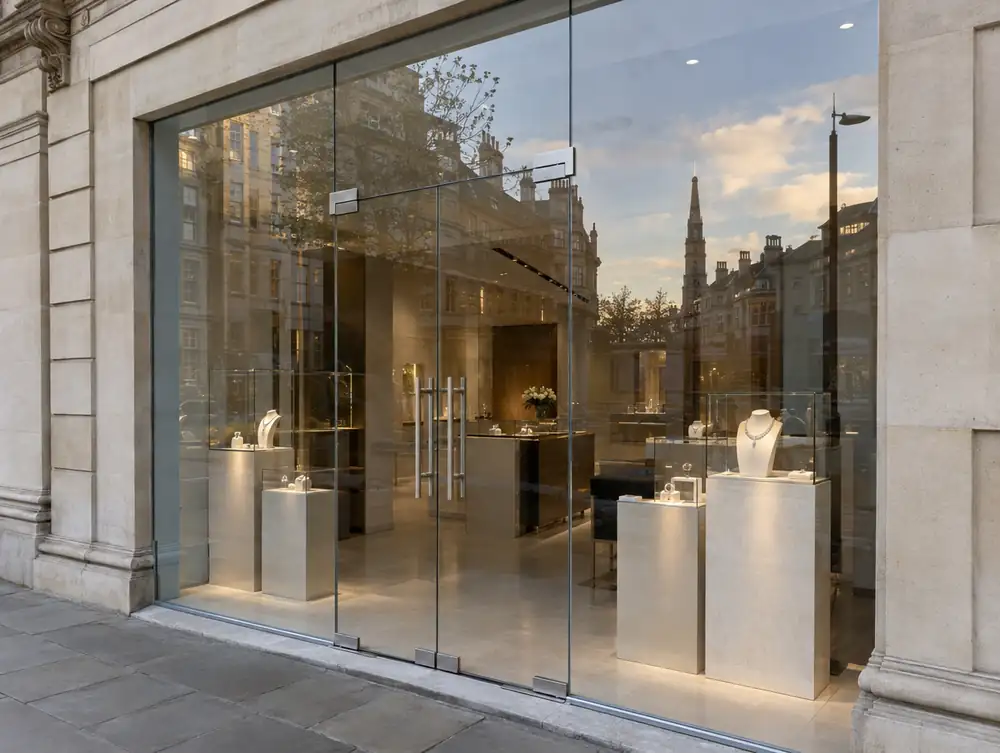
What should you think about before commissioning frameless glass shopfronts in Chelsea?
A corner unit is where frameless glass earns its price, because a glass-to-glass corner dissolves the edge of the building. For a corner plot in Chelsea we'd check the structure above the missing pier first, then mitre the glass so the joint stays as fine as the panes allow.
On a south or west-facing Chelsea frontage, a wall of clear glass will warm the shop and fade stock. We'd look at solar control coatings, blinds hidden in a ceiling slot or a retractable awning, and weigh up any loss of clarity with you.
If there are storeys above the shop, the frontage should feel like the base of the building and not a sign stuck on it. Lining up mullions with the windows overhead is a small move that settles the whole elevation at Chelsea premises.
Who approves frameless glass shopfronts in Chelsea?
For frameless glass shopfronts at premises in the Chelsea area, the deciding question in England is whether the building work materially affects the external appearance. If it does, planning permission is needed, while a true like-for-like replacement usually needs none. The council confirms the position for each site.
For Chelsea, the usual route for planning and advert applications is through Royal Borough of Kensington and Chelsea, and we confirm that when we visit.
What is a realistic budget for frameless glass shopfronts in Chelsea?
As a working budget, use £4,995 to £15,995 plus VAT for a typical frontage. Your place inside that range for frameless glass shopfronts depends mostly on how much of the existing frontage can stay and how much has to be put right first.
| Town | Chelsea |
|---|---|
| Area | Greater London |
| Postcode districts | SW10, SW3, SW5, SW7 |
| Planning authority | Royal Borough of Kensington and Chelsea |
| Building approval | Building Regulations (Approved Documents) |
| Distance from Great Barr | About 104 miles |
| Survey | Free for new work |
Does Royal Borough of Kensington and Chelsea publish shopfront guidance?
Yes, Shopfront Design Guidelines Supplementary Planning Document (2011). It tells applicants what the council expects from new and altered shopfronts. A few of the things it asks for:
- Stallriser height should not exceed the base of the pilasters, around 450mm, or the fascia depth, whichever is less.
- Box fascias are not to be used, and painted timber is treated as the most appropriate fascia on nineteenth-century buildings.
- External shutters are not acceptable across most of the borough, with internal open-link grilles preferred.
Questions about frameless glass shopfronts in Chelsea
Which glass should I choose for premises in Greater London?
Clear toughened is the starting point, with low-iron for a whiter look and toughened laminated where you want the pane to stay put after a break. The right one depends on your stock, your street and your insurer.
How do you stop people walking into the glass at my Chelsea shop?
Markings on the glass are designed as part of the front. We can turn them into a pattern, logo or frosted band that suits your brand, placed where the eye naturally catches them.
How much of my Chelsea shop will people see from the pavement?
All of it, which is both the point and the risk. Shelving backs, till positions and ceiling services become part of the front once the frames have gone, so we'd plan that view with you.
Do I need planning permission to change a shopfront in the Chelsea area?
Usually yes, if the work materially affects the building's external appearance. England's shop permitted development rights exclude creating, altering or replacing a shopfront, so there is no shortcut. A true like-for-like replacement usually needs no application, and the council confirms the position.
Does a new shopfront in the Chelsea area need Building Regulations approval?
Assume yes until building control says otherwise. England has no like-for-like exemption, though registered installers can self-certify replacement windows and doors in non-dwellings. That route doesn't cover structural glass, curtain walling or revolving doors.