Seen a frontage you admire? Bring the picture to our first talk about projecting signs in the Highlands and Moray, and we will work out what makes it succeed, from fascia depth to glass line, and what that means for your building.
What sits behind the existing fascia often decides the job. Old beams, abandoned cable runs and earlier frames are common finds, which is why our visit to the Highlands and Moray premises looks past the surface before anything is drawn or priced for projecting signs.
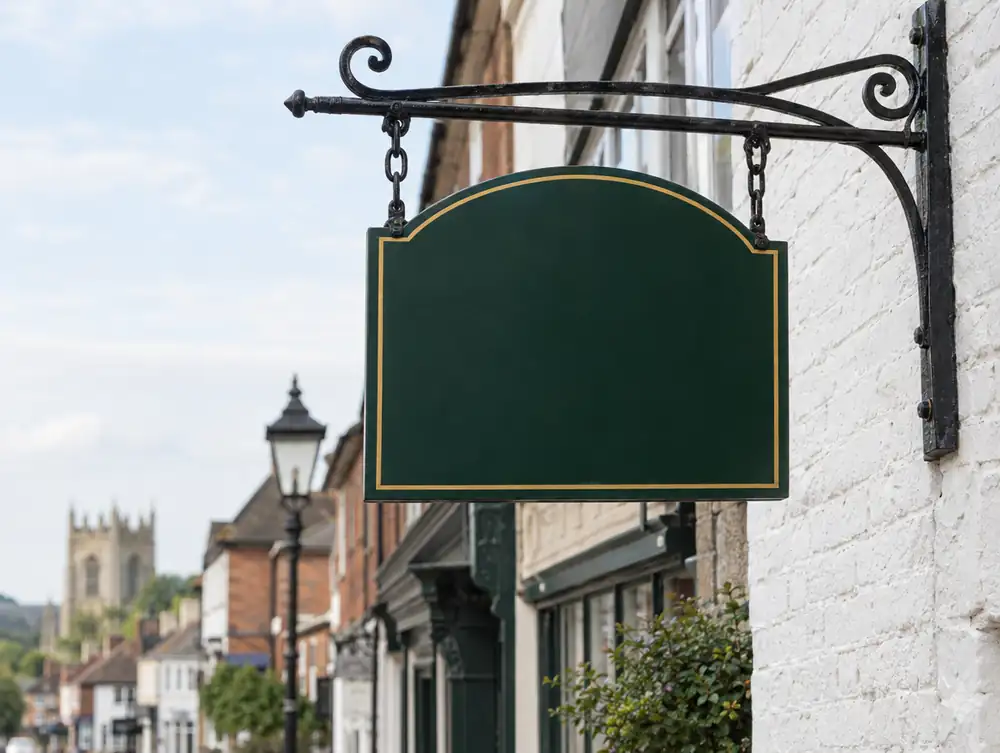
Where do you start with projecting signs in the Highlands and Moray?
Several businesses sharing one building need a plan. If yours sits on an upper floor in the Highlands and Moray, a slim projecting sign at street level may be the only thing that reaches passers-by, so we position it beside your own door.
Wall construction matters more than the sign itself. Around Inverness we check what sits behind the paint or render, since a bracket that looks secure on a hollow surface can work loose within a season.
What consents apply to projecting signs in the Highlands and Moray?
Shutters aren't named in Class 9A, so in Scotland they usually fall to the appearance test. The same goes for projecting signs at premises in the Highlands and Moray area: building work that materially affects the external appearance needs planning permission, and a true like-for-like usually doesn't. Ask the council to confirm the position for your site.
Class VI is the class for lit signs in Scotland, and it is tightly drawn: each character lit from within, the sign at least 2.5m up, no more than 0.25m of projection, and static lighting. One Scottish council says illuminated signs always need express consent, which doesn't match Class VI, so ask the council for the Highlands and Moray area before ordering.
How much do projecting signs cost in the Highlands and Moray?
Until the survey is done, plan on £395 to £1,295 plus VAT per sign. Unusual sizes, fine detail and phased working push the figure up, while a simple brief and clear access keep it toward the lower end.
| Area | Highlands and Moray |
|---|---|
| Nation | Scotland |
| Towns covered | 5 |
| Main town | Inverness |
| Planning regime | Scotland: 1997 Planning Act and the 1984 Advertisement Regulations |
| Building approval | Building warrant (Technical Handbook) |
| Survey | By arrangement |
Does The Highland Council publish shopfront guidance?
Yes, Shopfront Design Guide: Planning Guidance (2018). It tells applicants what the council expects from new and altered shopfronts. A few of the things it asks for:
- Stallrisers should be at least 400mm high, and glazing to ground level is generally not acceptable on traditional shopfronts.
- Fascias must not be internally lit or span more than one building, and lettering should fill no more than two-thirds of the fascia.
- Solid shutters are not supported, and external retractable shuttering is unlikely to be acceptable in conservation areas or on listed buildings.
Questions about projecting signs in the Highlands and Moray
Can a new panel go on my existing bracket in the Highlands and Moray?
Often, yes, once we have checked the bracket and fixings. Old ironwork can be stripped and repainted, and the panel can be made to fit it. A loose or corroded bracket has to come down first.
Is a hanging sign better than a fixed one for premises around Inverness?
It depends on the building and the exposure. Hanging signs suit traditional frontages and give a bit of movement, while fixed signs need less upkeep. On a windy elevation we usually suggest fixed.
Can you fit a projecting sign to a stone or brick wall in the Highlands and Moray?
Yes. Hard stone and sound brick both take resin anchors well, and soft brick needs a longer, wider fixing. We drill into mortar joints or discreet positions where the wall needs protecting.
Does a shop sign in the Highlands and Moray area need advertisement consent?
Not always. Scotland's 1984 Regulations let an unlit sign within Class IV(1) go up without an application, and Class VI does the same for a lit sign with each character lit from within. Class VI isn't available in conservation areas, and one council says lit signs always need express consent, so ask first.
Do roller shutters need planning permission in the Highlands and Moray area?
Usually yes, if they materially affect the external appearance. Class 9A doesn't name shutters, so in Scotland treat them as falling to the appearance test rather than assuming a permitted development route. Ask the council before ordering, as this is a reading of the rules and not an official statement.