For security glazing across Cambridgeshire, we draw first and order later. You see a scale drawing with signed-off dimensions before anything is made, so the frontage on paper is the frontage you get.
Most frontages share something with someone, be that a door to the flats above, a meter cupboard or a pilaster on the boundary. We pick those up early on security glazing in Cambridgeshire, because they are far easier to design around than to discover on the day.
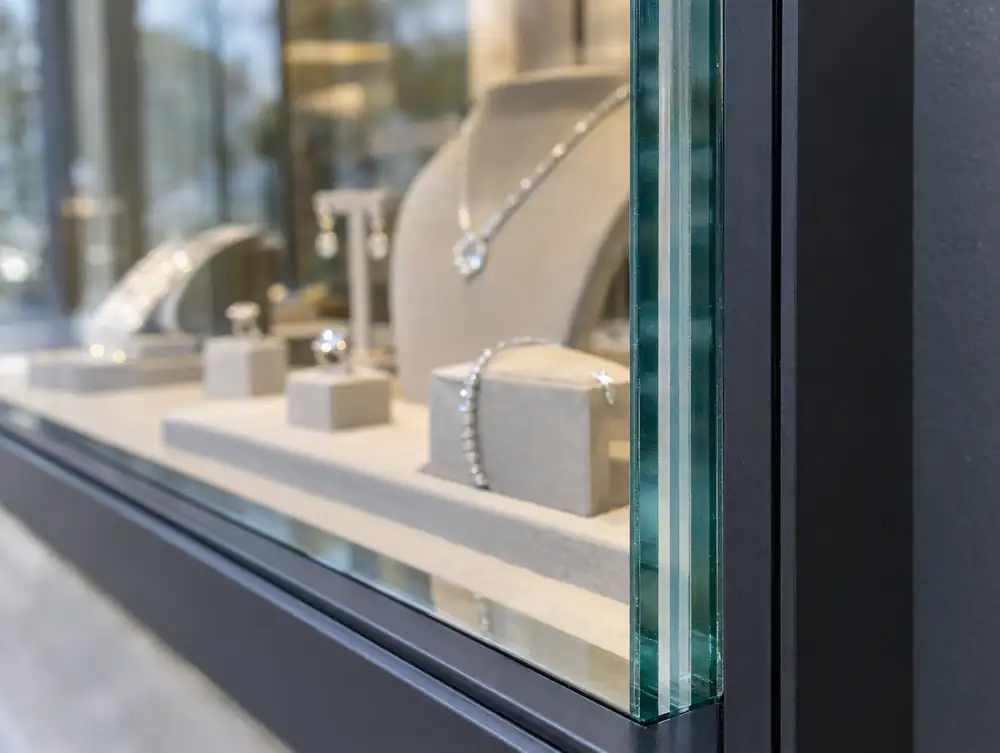
What makes security glazing work well for premises in Cambridgeshire?
The existing frame sets the limit. On a unit around Cambridge we check rebate depth, bead position and frame strength at survey, because a heavy pane in a light frame gives a false sense of safety.
Reglazing does not have to stop trade. Most frontages in Cambridgeshire can be changed a pane at a time, with closed-day or out-of-hours work keeping the shop secure at every stage.
What consents apply to security glazing in Cambridgeshire?
England has no permitted development route for changing a shopfront. Part 7 Class A of the General Permitted Development Order 2015 excludes creating, altering or replacing one, and it allows no alterations at all on article 2(3) land. That leaves two outcomes for security glazing at premises in the Cambridgeshire area: a planning application, or work that doesn't materially affect the external appearance.
How much does security glazing cost in Cambridgeshire?
The guide for security glazing is £195 to £495 plus VAT per m² of glass. Expect the lower end for simple work with clear access, and the upper end where detail, finish or awkward conditions add hours.
| Area | Cambridgeshire |
|---|---|
| Nation | England |
| Towns covered | 12 |
| Main town | Cambridge |
| Planning regime | England: TCPA 1990 and the 2007 Advertisement Regulations |
| Building approval | Building Regulations (Approved Documents) |
| Survey | Free for new work, from our Great Barr base |
Does Greater Cambridge publish shopfront guidance?
Yes, Appendix I: Shopfront guidance (Draft Greater Cambridge Local Plan). It tells applicants what the council expects from new and altered shopfronts. It is a draft, so check its status with the council before you rely on it. A few of the things it asks for:
- Original stallriser features should be kept and repaired unless beyond reasonable repair.
- Solid external roller shutters would only be approved if no other protection is adequate, and roller grilles need a case supported by police and insurer letters.
- Illuminated box fascias are not acceptable, and spotlights should be limited to two on most shopfronts or three on very wide ones.
Questions about security glazing in Cambridgeshire
What happens if a laminated pane on my premises in Cambridgeshire is cracked?
It usually stays in place and keeps the shop secure while new glass is made. Make it safe, then call us with your glass schedule. Repairs are charged call-outs, and the pane is ordered to the same build-up.
Should I fit a shutter or security glass in Cambridgeshire?
That depends on your risk, your hours and the look you want. Security glass keeps the frontage open and protects the pane, and an internal shutter adds a second layer for the stock. Many premises use both.
Can security glass go into my existing frames in Cambridgeshire?
Often, yes, if the rebates are deep enough and the frame can take the weight. We check both at survey. Where the frame falls short, we would suggest changing the most exposed panes and strengthening the rest.
Does a shop sign in the Cambridgeshire area need advertisement consent?
Not always. In England, an unlit sign within Class 5 of the 2007 Advertisement Regulations generally needs no application, and neither does a lit sign within Class 4B. Anything outside those classes needs consent, and Class 4B isn't available in conservation areas, so check before ordering.
Does a new shopfront in the Cambridgeshire area need Building Regulations approval?
Assume yes until building control says otherwise. England has no like-for-like exemption, though registered installers can self-certify replacement windows and doors in non-dwellings. That route doesn't cover structural glass, curtain walling or revolving doors.