One contract covers the frontage when you come to us for stallrisers and cladding in Cambridgeshire, so glass, frame, sign and shutter aren't separate trades to chase. You also keep one named contact from first visit to handover.
Daylight is only half the brief for stallrisers and cladding, because a frontage keeps working after dark. Think about how the glass, the sign and the view inside will read to someone walking past at six o'clock on a winter evening.
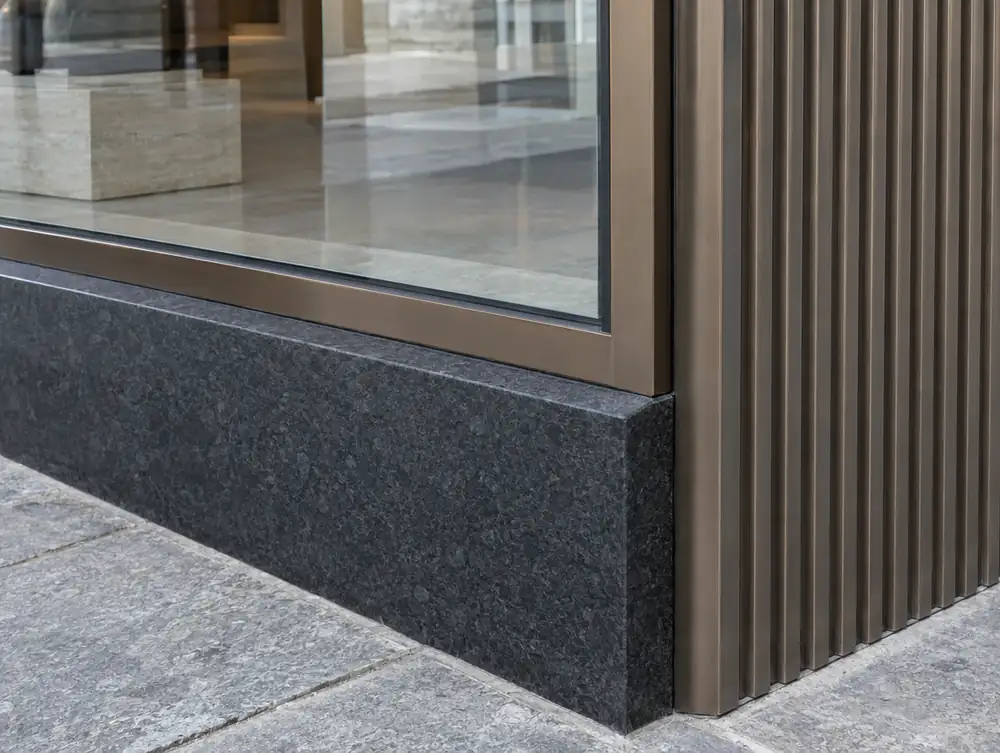
Where do you start with stallrisers and cladding in Cambridgeshire?
Road grit does the most damage at this level. On premises across Cambridgeshire that take winter salt or regular pavement washing, we fit a replaceable plinth so the lowest edge can be changed without disturbing the facing.
Neighbouring frontages are the first reference for height. At survey near Cambridge we note the sill lines on either side of your unit, then decide whether to match them or make a deliberate break.
What consents apply to stallrisers and cladding in Cambridgeshire?
Security grilles and shutters are named in England's rules: installing or replacing one on a shopfront sits outside the shop permitted development rights. The frontage itself is treated the same way, so for stallrisers and cladding at premises in the Cambridgeshire area, building work that materially affects the appearance needs planning permission. Confirm the position with the council before anything is ordered.
How much do stallrisers and cladding cost in Cambridgeshire?
Our guide band is £195 to £495 plus VAT per m². Scope is the biggest lever, so a tighter brief for stallrisers and cladding brings the figure down faster than any change of detail.
| Area | Cambridgeshire |
|---|---|
| Nation | England |
| Towns covered | 12 |
| Main town | Cambridge |
| Planning regime | England: TCPA 1990 and the 2007 Advertisement Regulations |
| Building approval | Building Regulations (Approved Documents) |
| Survey | Free for new work, from our Great Barr base |
Does Greater Cambridge publish shopfront guidance?
Yes, Appendix I: Shopfront guidance (Draft Greater Cambridge Local Plan). It tells applicants what the council expects from new and altered shopfronts. It is a draft, so check its status with the council before you rely on it. A few of the things it asks for:
- Original stallriser features should be kept and repaired unless beyond reasonable repair.
- Solid external roller shutters would only be approved if no other protection is adequate, and roller grilles need a case supported by police and insurer letters.
- Illuminated box fascias are not acceptable, and spotlights should be limited to two on most shopfronts or three on very wide ones.
Questions about stallrisers and cladding in Cambridgeshire
Can you match an existing tiled stallriser on premises in Cambridgeshire?
Often, yes, though an exact glaze match can be difficult. We take a sample tile, compare it with what is available, and suggest a specialist tile or a change at a natural break if the colour cannot be found.
Do you fit natural stone stallrisers across Cambridgeshire?
Yes. Stone is templated from the measured survey, then fixed with mechanical restraints and a ventilated cavity. Heavier stone may need a check of the wall behind before we confirm the thickness.
Can you reclad only the stallriser on my premises in Cambridgeshire?
Yes. It is one of the simplest ways to lift a tired frontage, provided the frame above is sound. We check the sill detail first, because a new facing must not trap water beneath it.
Does a new shopfront in the Cambridgeshire area need Building Regulations approval?
Assume yes until building control says otherwise. England has no like-for-like exemption, though registered installers can self-certify replacement windows and doors in non-dwellings. That route doesn't cover structural glass, curtain walling or revolving doors.
What rules apply to a fire exit door through a shopfront in the Cambridgeshire area?
It must open in the direction of escape and can't be locked against immediate use, and a dedicated fire exit can't be a sliding or revolving door. In England that comes from article 14(2) of the Regulatory Reform (Fire Safety) Order 2005, and the duty sits with the responsible person, normally the employer or whoever controls the premises for a business, otherwise the owner. An outward door can clash with section 153 of the Highways Act 1980 where it opens onto the footway, so raise it early.