From Inverness to the furthest corner of the Highlands and Moray, the sequence for canopies and awnings stays the same: survey, drawings, written price, then work on site. We travel from Great Barr in Birmingham and use vetted teams working under S&K Glazing.
What sits behind the existing fascia often decides the job. Old beams, abandoned cable runs and earlier frames are common finds, which is why our visit to the Highlands and Moray premises looks past the surface before anything is drawn or priced for canopies and awnings.
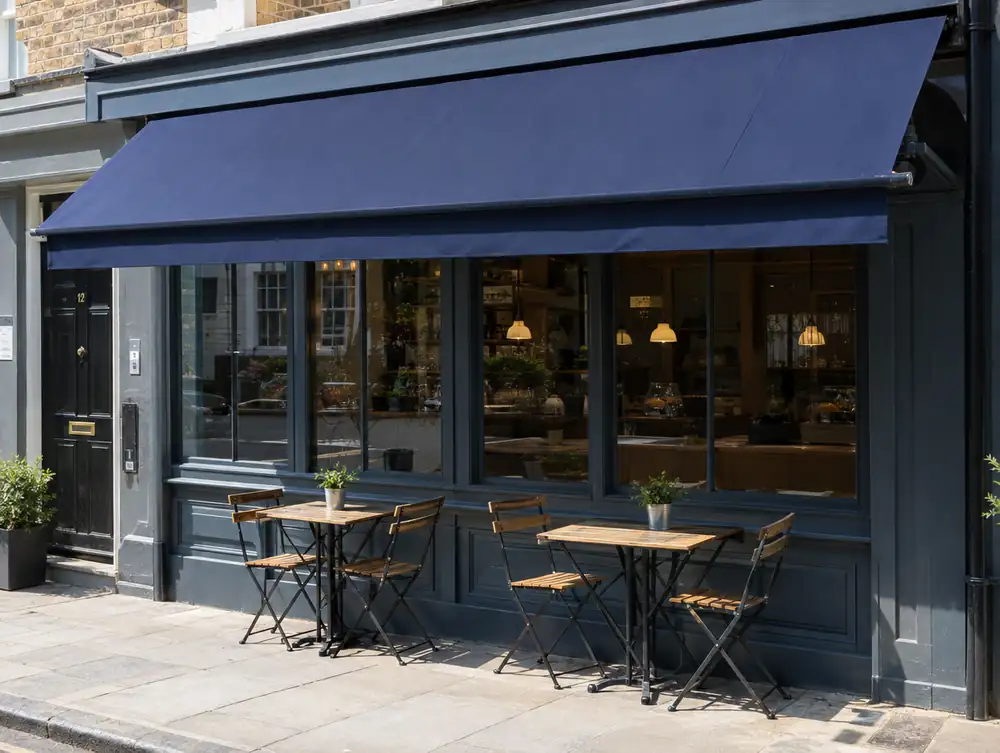
What should you settle before committing to canopies and awnings in the Highlands and Moray?
Pavement width sets the upper limit. For a frontage in the Highlands and Moray we measure the footway, the kerb line and any street furniture, so the arms stop where people and vehicles are safe.
Tables outside need a different cover from a window display. If you serve customers at the front of premises near Inverness, we size the shade for seated guests and allow for the low sun of an evening.
What consents apply to canopies and awnings in the Highlands and Moray?
Scottish guidance says like-for-like windows need no permission, and a true like-for-like frontage replacement usually follows the same logic. Class 7A covers altering or replacing an existing window, but it doesn't mention shopfronts, so ask before relying on it for a display window. For canopies and awnings at premises in the Highlands and Moray area, a material effect on the external appearance means planning permission, and the council confirms the position.
Class VI is the class for lit signs in Scotland, and it is tightly drawn: each character lit from within, the sign at least 2.5m up, no more than 0.25m of projection, and static lighting. One Scottish council says illuminated signs always need express consent, which doesn't match Class VI, so ask the council for the Highlands and Moray area before ordering.
How much do canopies and awnings cost in the Highlands and Moray?
A sensible starting budget is £1,495 to £9,995 plus VAT per canopy or awning. What shifts the figure is whatever can't be seen yet, such as the condition behind the old frontage or the services running through it.
| Area | Highlands and Moray |
|---|---|
| Nation | Scotland |
| Towns covered | 5 |
| Main town | Inverness |
| Planning regime | Scotland: 1997 Planning Act and the 1984 Advertisement Regulations |
| Building approval | Building warrant (Technical Handbook) |
| Survey | By arrangement |
Does The Highland Council publish shopfront guidance?
Yes, Shopfront Design Guide: Planning Guidance (2018). It tells applicants what the council expects from new and altered shopfronts. A few of the things it asks for:
- Stallrisers should be at least 400mm high, and glazing to ground level is generally not acceptable on traditional shopfronts.
- Fascias must not be internally lit or span more than one building, and lettering should fill no more than two-thirds of the fascia.
- Solid shutters are not supported, and external retractable shuttering is unlikely to be acceptable in conservation areas or on listed buildings.
Questions about canopies and awnings in the Highlands and Moray
Do you repair old blind boxes around Inverness?
Where they can be saved, yes. An original timber box can often be repaired and fitted with a new roller and cover, keeping the frontage's character. We open it up at survey to see the condition.
Will an awning make my premises in the Highlands and Moray cooler?
Yes, external shade stops sun before it reaches the glass. It can make a clear difference on south and west-facing frontages, and it also slows fading of stock in the window.
Can a new cover go on the awning frame on my premises in the Highlands and Moray?
Often, yes. If the arms, roller and gear are sound, we measure the frame and make a new cover to fit. Frames that have started to bend or seize are usually better replaced.
Do roller shutters need planning permission in the Highlands and Moray area?
Usually yes, if they materially affect the external appearance. Class 9A doesn't name shutters, so in Scotland treat them as falling to the appearance test rather than assuming a permitted development route. Ask the council before ordering, as this is a reading of the rules and not an official statement.
Do I need planning permission to alter a shopfront in the Highlands and Moray area?
Usually yes, if the work materially affects the external appearance. Class 9A, Scotland's shop permitted development right, doesn't cover work that alters or extends beyond the existing front. A true like-for-like replacement usually needs no permission, and the council confirms the position.