One contract covers the frontage when you come to us for structural glazing in Greater London, so glass, frame, sign and shutter aren't separate trades to chase. You also keep one named contact from first visit to handover.
Your frontage is read alongside its neighbours, so we note the fascia line, stallriser height and pilasters on either side before drawing structural glazing for Greater London premises. Matching those lines or breaking them on purpose can both work, whereas doing it by accident never does.
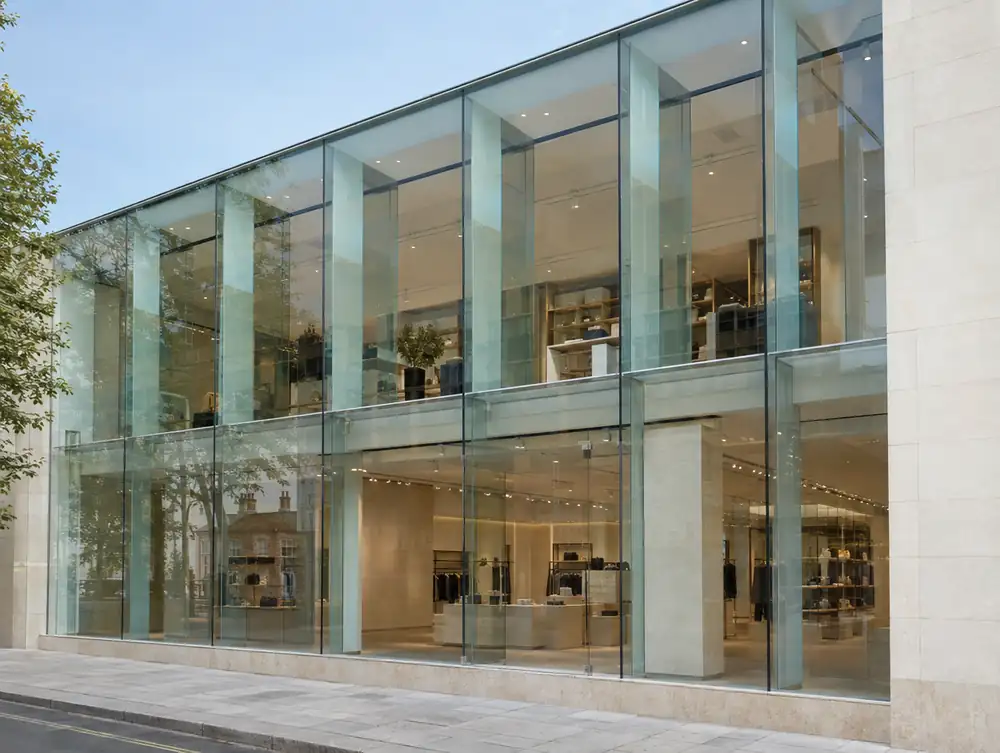
What makes structural glazing work well for premises in Greater London?
Narrow streets call for a different grid. Where premises around Central London open onto a tight street, one big pane can become two smaller ones with a fin on the joint, trading a little purity for a lift that can happen safely.
A flagship entrance often has a fixed opening date. Where a new unit in Greater London is working to one, we plan back from it and leave room for a windy lifting day or a damaged pane.
What consents apply to structural glazing in Greater London?
Security grilles and shutters are named in England's rules: installing or replacing one on a shopfront sits outside the shop permitted development rights. The frontage itself is treated the same way, so for structural glazing at premises in the Greater London area, building work that materially affects the appearance needs planning permission. Confirm the position with the council before anything is ordered.
How much does structural glazing cost in Greater London?
Our guide band is £950 to £1,850 plus VAT per m². Scope is the biggest lever, so a tighter brief for structural glazing brings the figure down faster than any change of detail.
| Area | Greater London |
|---|---|
| Nation | England |
| Towns covered | 235 |
| Main town | Central London |
| Planning regime | England: TCPA 1990 and the 2007 Advertisement Regulations |
| Building approval | Building Regulations (Approved Documents) |
| Survey | Free for new work, from our Great Barr base |
Does Royal Borough of Kensington and Chelsea publish shopfront guidance?
Yes, Shopfront Design Guidelines Supplementary Planning Document (2011). It tells applicants what the council expects from new and altered shopfronts. A few of the things it asks for:
- Stallriser height should not exceed the base of the pilasters, around 450mm, or the fascia depth, whichever is less.
- Box fascias are not to be used, and painted timber is treated as the most appropriate fascia on nineteenth-century buildings.
- External shutters are not acceptable across most of the borough, with internal open-link grilles preferred.
Questions about structural glazing in Greater London
Will my existing floor in Greater London take a concealed channel?
That depends on the depth of the floor build-up. Where it is too shallow, the channel can sit on the slab with the finish cut around it, or a raised detail can be drawn. We open up a small area at survey to find out.
Do you work with structural engineers on jobs around Central London?
Yes, an engineer's calculations form part of this work. If your project already has one, we supply glass and fixing data for their review, and if it does not, the engineering can be included in the quotation.
Can large glass reach premises on a narrow street in Greater London?
Often, yes, though pane size may need to change. We measure the street, the kerb and any overhead obstructions at survey, then size the glass around what a lifter can reach.
Does a new shopfront in the Greater London area need Building Regulations approval?
Assume yes until building control says otherwise. England has no like-for-like exemption, though registered installers can self-certify replacement windows and doors in non-dwellings. That route doesn't cover structural glass, curtain walling or revolving doors.
Do I need listed building consent for a shopfront in the Greater London area?
Usually yes, if the building is listed. In England the local planning authority decides, and Historic England is notified of Grade I and II* works and specified Grade II works. Like-for-like repair may not need consent, so ask the council before work starts.